Black Mirror. What’s new in Russian miltech in March 2025
Optical navigation system from Kalashnikov, satellite modem for drones, flying EW, and more
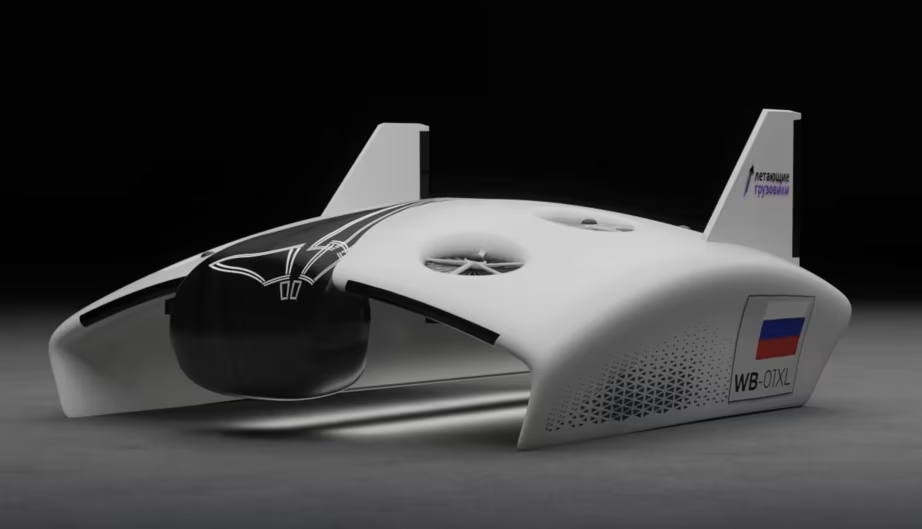
Image Credits: WingedBull
Despite sanctions, technological isolation, and a shortage of critical components, the Russian miltech continues to adapt and pose a threat to Ukraine and its allies. Starting next Friday, Defender will publish a weekly overview of the main news in Russian military innovations. This section opens with news of enemy miltech for March 2025.
Student UAV Avatar for reconnaissance to a depth of up to 40 kilometers
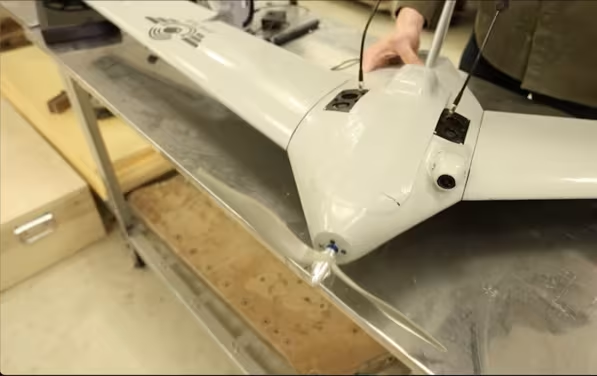
In Kazan, aviation students created the reconnaissance UAV Avatar. According to Russian media, the reconnaissance drone weighs up to 3 kg, has a wingspan of 1.8 meters, and is equipped with three cameras. One of them is intended for the operator and his orientation, the other two help maintain radio and video communication at a distance of up to 40 kilometers. The cameras also have a 30-fold zoom and thermal imagers.
Navigation system without satellite communication
Kalashnikov concern has created an onboard optical navigation system (BONS), which will allow UAVs to fly without satellite communication. It is currently being tested at the frontline.
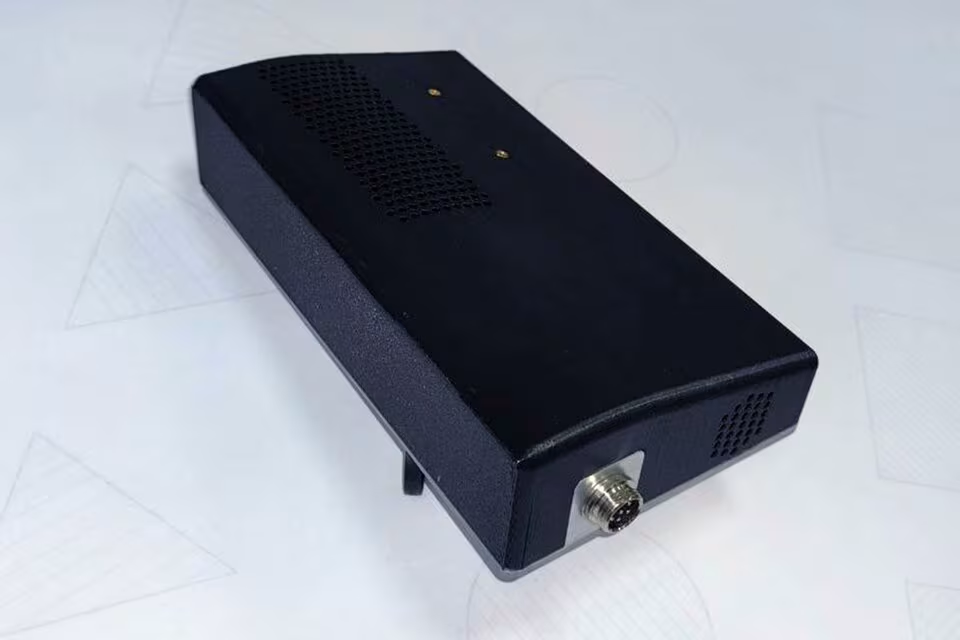
BONS helps determine geographical coordinates through the image of the surface over which the device flies. Based on the results of surface calculations, the system provides the UAV’s position, angle of descent, and ground speed of flight and transmits all the necessary information to its automatic control system.
In the absence of a surface map, when flying at low altitudes (in the range from 150 to 500 m) or outside the limits of the loaded map, BONS helps to calculate geographical coordinates by switching to the relevant mode.
Satellite modem for drones with an extended range
The Russian company Gonets has developed a compact satellite modem (52×62×10 mm) for UAVs, which allows operators to control drones at considerable distances. Thanks to satellite communication channels, the modem provides stable control of UAVs even outside the coverage area of traditional networks, opening up opportunities for hybrid control and data transmission. The device has already been certified, and its mass production will begin soon. In standby mode, the device consumes 10 times less energy than other modems.

Flying EW system
A drone with a multi-frequency electronic warfare system and a hybrid-photon control system was tested in the Sverdlovsk region. In essence, this is an electronic warfare system that can perform autonomous flights along specified routes, suppressing the work of other UAVs and ground robots. The weight of such a system is 100 kg.
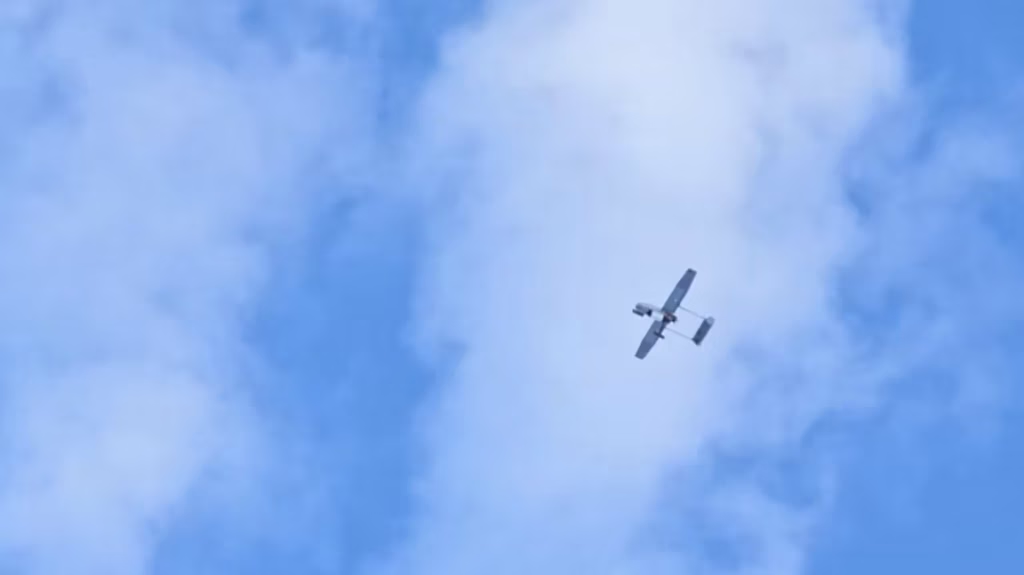
The operator can control the device in real time, even when the EW system is active, selecting the necessary frequencies to suppress enemy radio signals. In case of successful flight tests, the device will be launched into production.
Drone to replace the Mi-8 helicopter
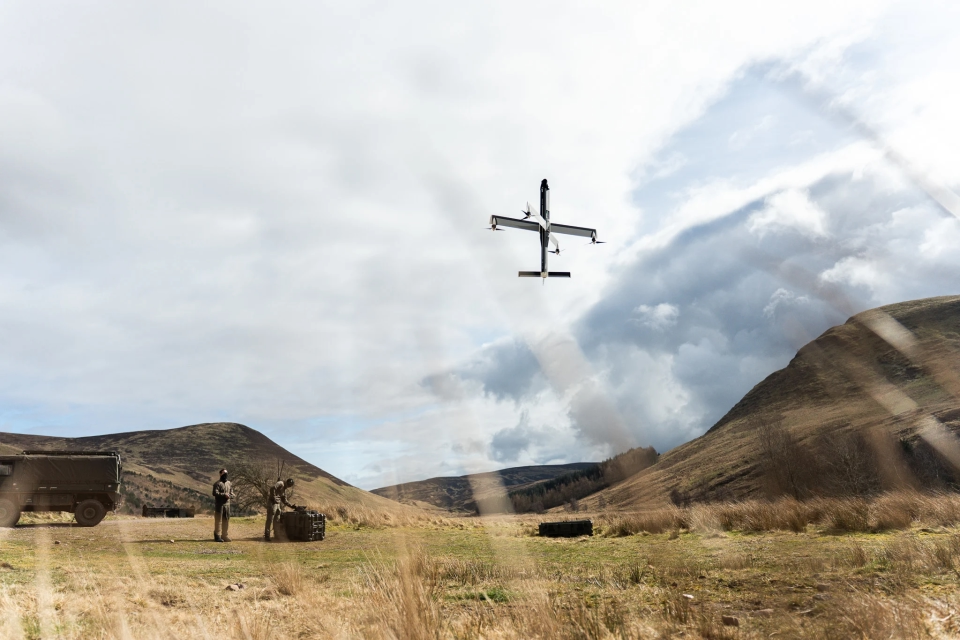
In 2026, Russia plans to conduct flight tests of the WingedBull 01XS and 01XL heavy transport drones, which can partially replace the Mi-8 helicopters. The design of the devices is in the final stage, and an investor has already been found. In parallel, production facilities are being prepared for the assembly of prototypes, which will begin in the coming months.
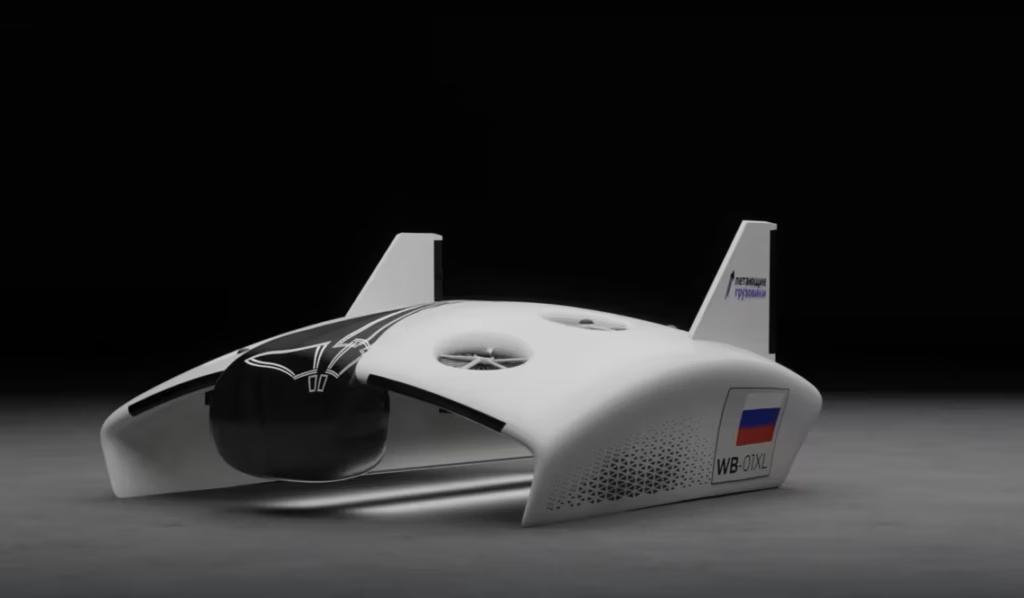
The WingedBull 01XL will have a length of 14 m, a wingspan of 12 m, will be able to carry 750 kg of cargo, and cover 700 km at speeds of up to 400 km/h. It will receive a gas turbine engine and six electric motors. The drone will be able to operate in the temperature range from -55 to +45°C. The 01XS model is more compact: 7 m long, 6 m wingspan, 250 kg payload. It will receive two combined internal combustion engines. The range and speed, as well as the temperature range, will be the same as the larger model.
Both UAVs will be able to land on unprepared sites. The developers promise that the drones will be cheaper than helicopters in operation.
The unmanned rover Sverchok will help the Russian military evacuate the wounded
Another development, created with the support of the Kulibin Club, is the unmanned rover Sverchok. It is designed to deliver cargo, transport ammunition, and evacuate wounded soldiers. The device’s carrying capacity exceeds 130 kg, and the maximum speed reaches 25 km/h. The radius of action is about 10 km from the operator. The People’s Front clarified that the rover moves not on tracks but on wheels because such a design is lighter and faster.
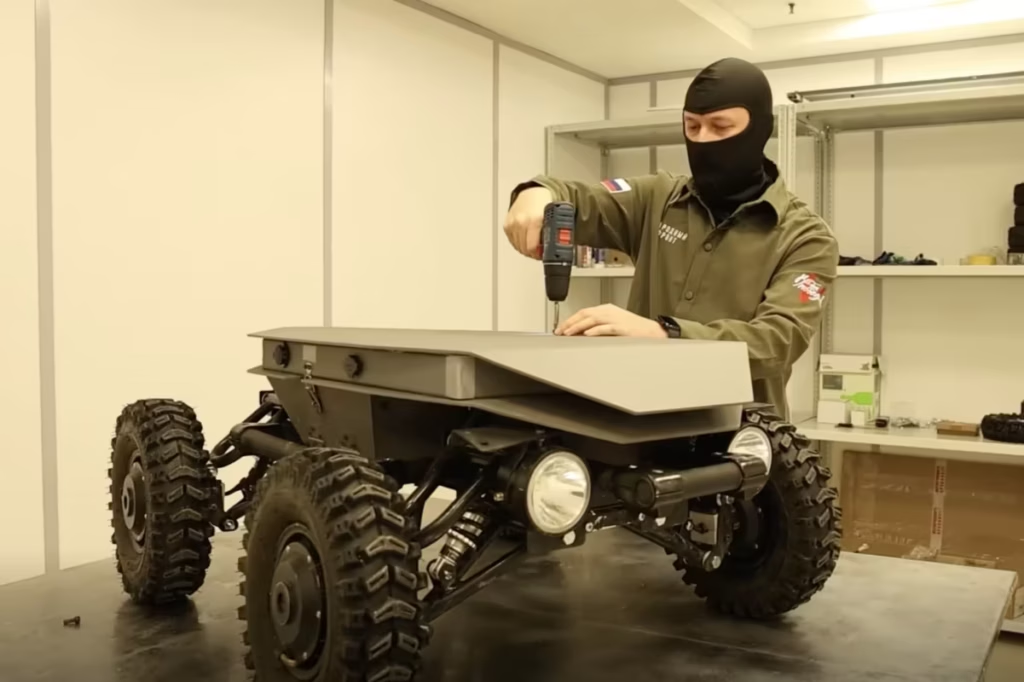
The project team has finalized the design and is ready to supply a six-wheeled improved version of the rover for the Russian military.
By submitting this form, you give Defender Media consent to the processing of personal data.
Надсилаючи цю форму, ви надаєте Defender Media згоду на обробку персональних даних.
Latest news
1

Volodymyr Zinovskyi has replaced TAF Industries founder Oleksandr Yakovenko as the company’s CEO
2
Skyeton unveils a version of Raybird UAV with a hydrogen-powered electric motor
3
The Ukrainian Council of Defence Industry launches the UCDI Investor Club. Its first project is a Ukrainian defence tech dealbook
4
Ukrainian CHUMA fibre-optic drones debut on Brave1 Market — carry up to 4 kg
5