The new Bebradron kamikaze drone from BlueBird Tech: what the developer says about it
The UAV is designed to engage manpower, command and observation posts (COPs) and individual armoured targets
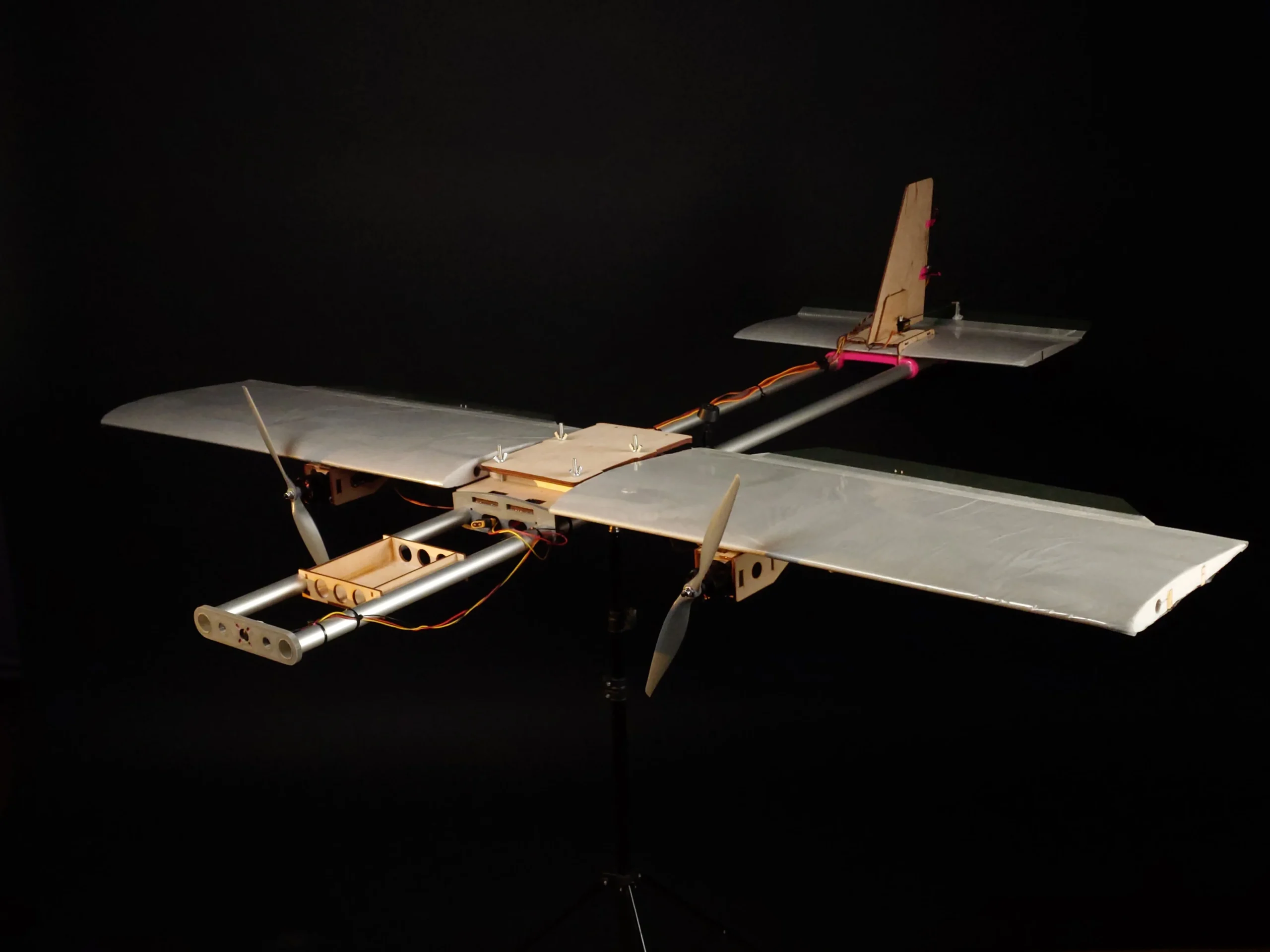
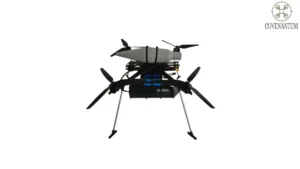
Image: BlueBird Tech
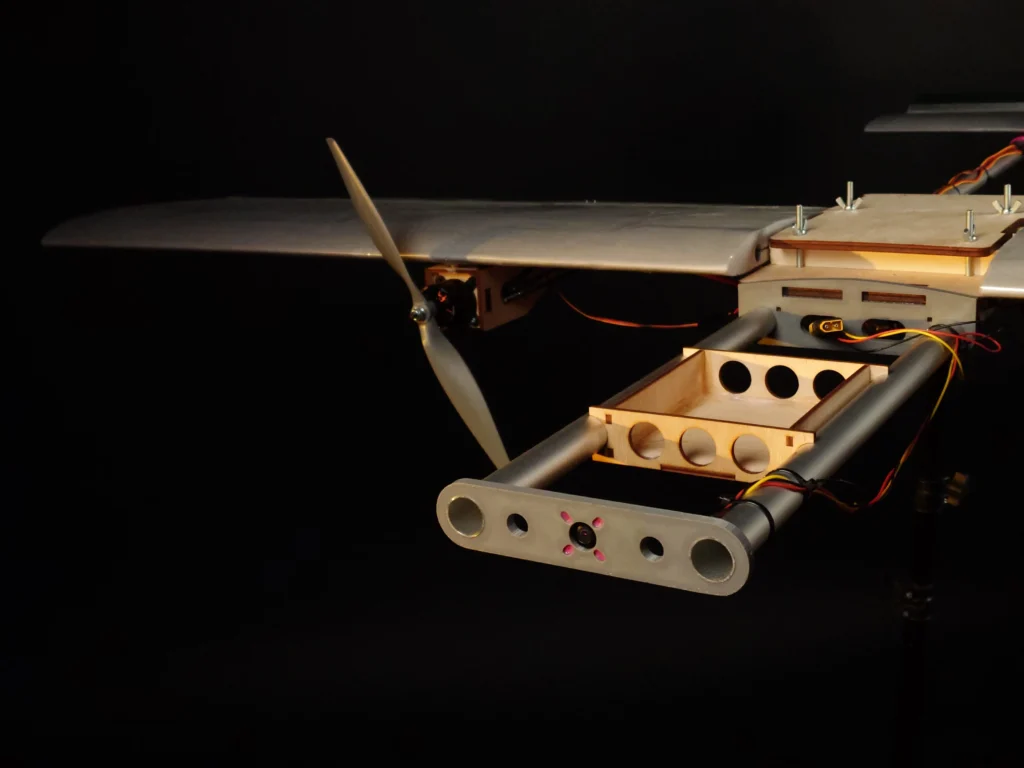
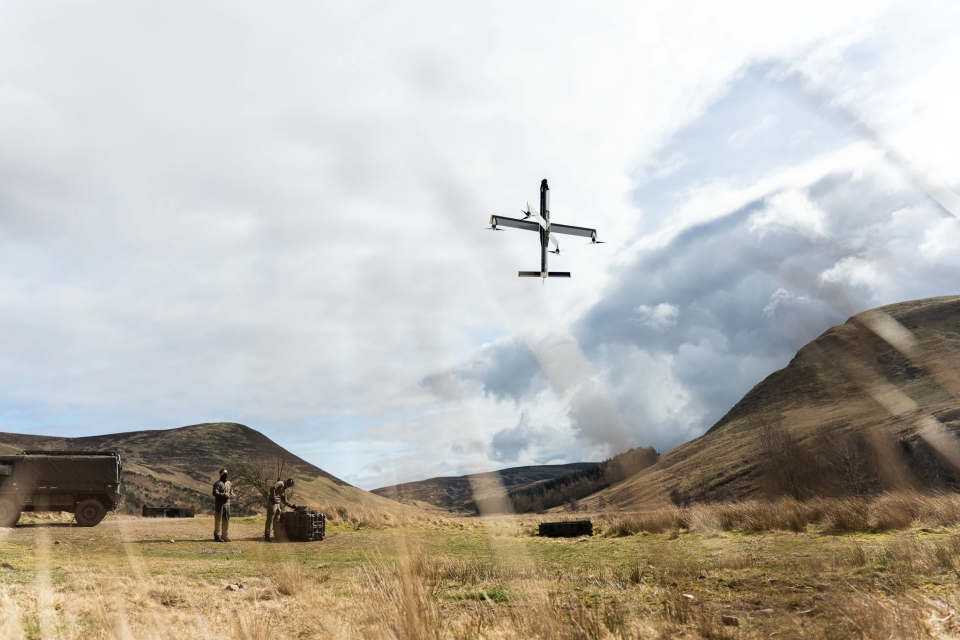
Recently, Ukrainian company BlueBird Tech unveiled the Bebradron strike drone, an aircraft-type drone with a payload of up to 7 kg and a range of up to 35 km. The drone is designed to target manpower, command and observation posts and certain types of armoured vehicles.
The Bebradron is a response to the russian Molniya, a successful product of the enemy’s defense industry that causes many problems for Ukrainian units in the kill zone. Defender Media spoke with BlueBird Tech development engineer Serhii about how Ukrainians reverse-engineered the Bebradron UAV, as well as its capabilities, components, and price.
A response to the Molniya and simplicity, like the Darts
Work on the Bebradron began about five months ago. Initially, the team planned to create a drone based on the logic of the Ukrainian Darts — a simple kamikaze aircraft with a low entry threshold for pilots.
The control architecture is similar to Darts. ‘Pilots who know how to fly Darts will easily fly our aircraft,’ says Serhii. At this stage, control is manual — either through FPV goggles or a ground station. The company plans to prepare a training base and provide training along with delivery.
At the same time, the team looked at russian developments. ‘We can say that our development is a response to the Russian Molniya. Unfortunately, the enemy has made a very successful development in terms of cheapness, efficiency and cost,’ explained the engineer.
The team did not have a ready-made trophy sample of Molniya. The design was based on available data and their own decisions. ‘You could say it’s reverse engineering, but from pictures,’ says Serhiy.
The manufacturer is currently actively gathering feedback from the military and preparing the product for codification.
Purpose and warhead
Priority targets for the Bebradron:
- infantry concentrations;
- command and observation posts;
- individual armoured vehicles.
‘The 7 kg warhead allows you to hit quite expensive enemy equipment (tanks, Buk and Smerch systems, etc.) or equipment that is important from an operational point of view, such as company or even brigade command posts,’ said the developer.
Launch catapult
The Bebradron is launched using a pneumatic catapult specially designed for this type of UAV. According to the engineer:
- the catapult is reusable;
- the compressor is powered by a car battery;
- pressure is built up in 4–5 minutes;
- pressure can be built up in advance — the catapult can be transported when loaded;
- according to test results, full deployment and launch took almost 6 minutes (and could have been faster if the catapult had been prepared in advance).
According to the developer, the catapult is slightly smaller than an aircraft and fits into almost any pickup truck; its size is about 1.5 metres.
Manual launch is possible, but only with a minimum load. In combat configuration, the total weight of the drone with its warhead can be close to 15 kg: such a mass is difficult and dangerous to launch by hand.
The acceleration of the catapult was not measured, but tests were conducted to determine the distance it could launch the aircraft without engines. ‘We placed the aircraft in the catapult, applied pressure, and it flew 9 metres without engines. This acceleration was sufficient: the aircraft gained altitude and completed its task,’ said the engineer.
Communication, electronic warfare, and adaptation
BlueBird Tech uses communication systems from Ukrainian manufacturers, in particular with PPCH.
Currently, electronic warfare countermeasures are seen as a combination of:
- PPCH for control;
- inertial logic in case of loss of communication: the drone continues to move in the same direction until control is restored.
The key focus is not on ‘universal stability’ but on rapid adaptation. ‘Everything is constantly changing: frequencies, saturation, even PPRCH does not always work. The main thing here is communication and speed of response,’ explained the developer.
The basic configuration uses popular FPV frequencies (in particular, 5.8 GHz), but this is only the beginning. ‘We are not tied to 5.8. We use what is needed for a specific part,’ says Serhii.
GPS and autonomy
Flight missions can be set from the remote control, but:
- missions depend on the availability of GPS, which is not very common on the front line’;
- optical navigation can theoretically be integrated, but it does not fit into the concept in terms of price — it will make the product more expensive.
- According to Sergey, GPS is currently used more for testing and as an orientation tool: in an inertial system, it actually helps as a compass to steer the aircraft more accurately.
At the same time, the company is developing guidance to improve efficiency under challenging conditions. The developers do not yet plan to include this feature in the basic configuration and will implement it on request.
Cost, delivery times and components
Approximate price:
- aircraft with communication — ~39,000 UAH;
- catapult — ~10,000 UAH.
Modifications:
- other VTX/bands — 0–1,000 UAH;
- specific powerful solutions — up to +10,000 UAH.
Delivery times — from two weeks to a month, depending on the batch and configuration.
Electronics — a mix of domestic and Chinese production, but the company is trying to increase the share of Ukrainian components. According to Serhii:
- video and control are almost always done using Ukrainian solutions;
- flight controllers are still Chinese, but Ukrainian ones are already being tested and are planned to be switched to;
Motors are also being tested — they need to be brought to stable operation.
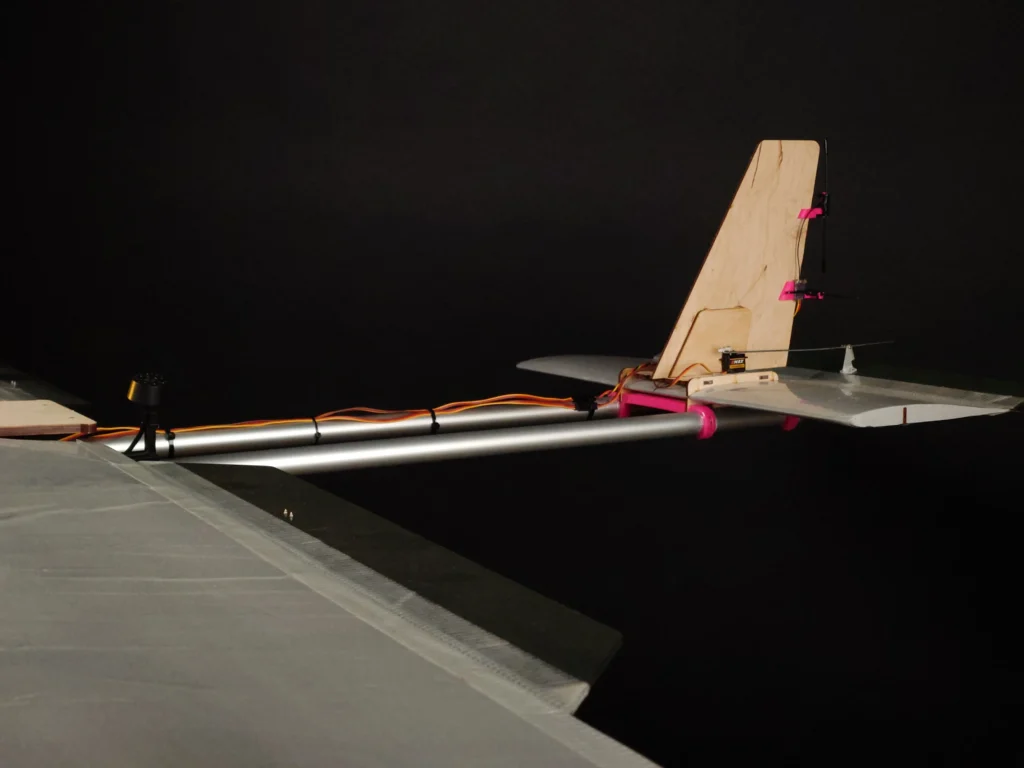
The fuselage is as Ukrainian as possible (plywood, aluminium pipes, film, etc.).
Serhii separately formulated a request to the Ukrainian market: it is difficult for component manufacturers to work steadily without large orders that provide seriality, predictability, and quality control.
BlueBird Tech is testing various solutions and establishing direct contacts with manufacturers so that it will be able to order large batches in the future.
Why ‘Bebradron’
The name was chosen deliberately — they were looking for something ironic and memorable, since the classic ‘bird’ nicknames for UAVs had almost all been taken. The initial option, P1SUN, was rejected because another manufacturer had a similar name. In the end, they turned to meme culture — specifically, the Ukrainian meme ‘nyukhay bebr’ (smell the beaver), which originated as a crude, absurd form of trolling: instead of explanations or arguments, a demonstrative action, such as hitting someone with a shovel.
The developers applied this logic to the product: the kamikaze drone does not signal or warn, its function is to fly in and hit the target. So the name ‘Bebradron’ is an ironic but fairly accurate message to the enemy: ‘smell the beaver’.
By submitting this form, you give Defender Media consent to the processing of personal data.
Надсилаючи цю форму, ви надаєте Defender Media згоду на обробку персональних даних.
Latest news
1
Volodymyr Zinovskyi has replaced TAF Industries founder Oleksandr Yakovenko as the company’s CEO
2
Skyeton unveils a version of Raybird UAV with a hydrogen-powered electric motor
3
The Ukrainian Council of Defence Industry launches the UCDI Investor Club. Its first project is a Ukrainian defence tech dealbook
4
Ukrainian CHUMA fibre-optic drones debut on Brave1 Market — carry up to 4 kg
5