Black Mirror #32. Micro-drones for urban environments, UGVs for minelaying, a new EW system and other Russian miltech innovations
Overview of Russian miltech developments for the first week of November
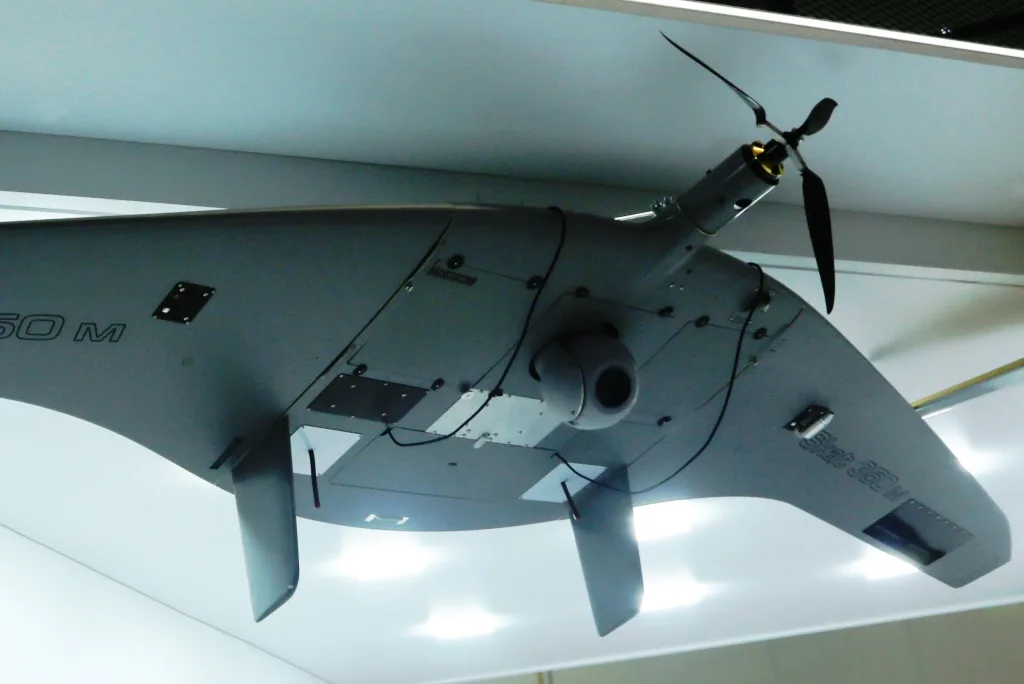
The reconnaissance UAV SKAT‑350M from Kalashnikov is now integrated with the strike drone KUB in a combined reconnaissance-strike complex
The Russians are rearming T-80 tanks with captured Bradley reactive armour, adapting drones as cruise-missile carriers, deploying micro-drones to operate in occupied cities and already using guided air bombs with turbojet engines. Read about these and other developments in Russian miltech in Defender Media’s weekly roundup.
Micro-drones Karakurt and Goliath to enter serial production
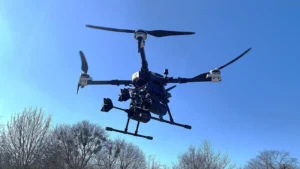
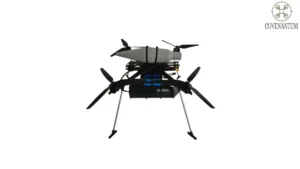
The Russian state concern Kalashnikov has announced the start of serial production of the micro-drones Karakurt-R and Goliath-RU. These drones are primarily intended for reconnaissance and fire-adjustment in dense urban environments. They were first displayed at an arms exhibition in February 2025; it is now claimed that the drones are already being used in combat in Ukraine.
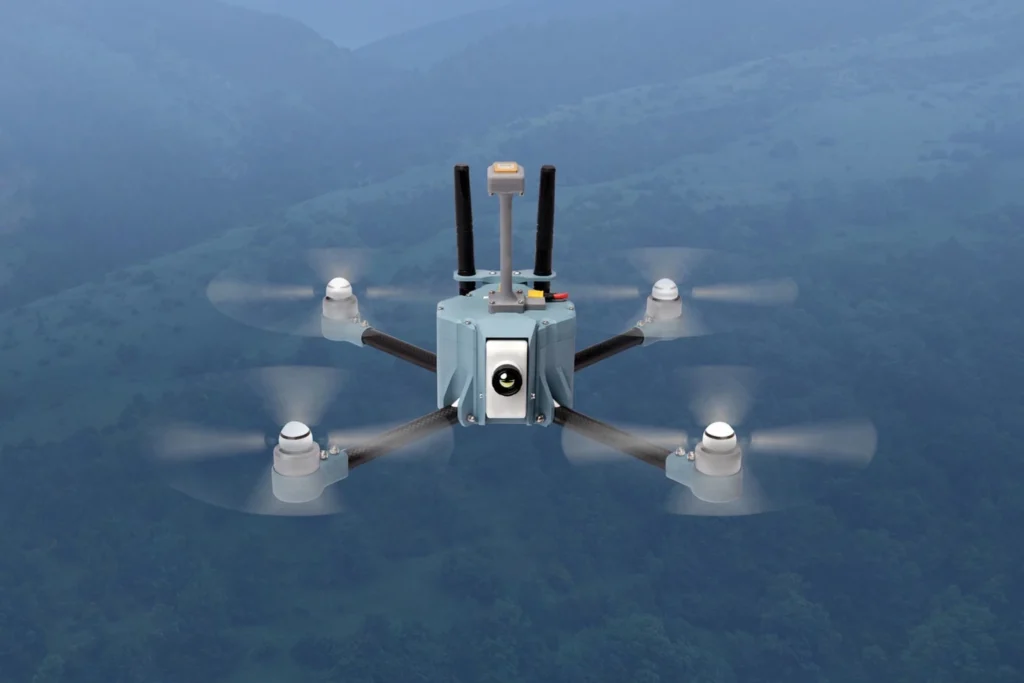
The Goliath-RU system is designed for real-time aerial reconnaissance. The drone weighs 1.2 kg, provides up to 40 minutes’ flight time, reaches speeds of up to 35 km/h and can operate up to 4 km from the operator. Its service ceiling is up to 250 m.
The Karakurt-R is a vertical-take-off drone weighing just 300 g. It can fly up to 2 km and remain airborne for up to 20 minutes. A notable feature of the model is rapid launch from a tube-style container in which the drone is transported.
Both models are weather-resistant and can be used in confined spaces where larger platforms are ineffective.
First confirmed combat use of the 9M729 cruise missile
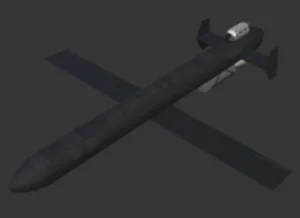
Ukrainian and US defence agencies have confirmed the first combat use of the 9M729 Novator cruise missile (western designation SSC-8). The 9M729 is a ground-launched medium-range system that previously contributed to the US withdrawal from the Intermediate-Range Nuclear Forces Treaty, Reuters reports.
Official data indicate that fragments of this missile have recently been identified at impact sites in Ukraine, including locations far from the front line: it is reported that on 5 October debris was found some 1,200 km from the launch site. The employment of the 9M729 in combat carries significant strategic and politico-security implications: the system is potentially capable of carrying either conventional or nuclear warheads, and its widespread use heightens tensions and complicates arms-control efforts in Europe.
Updated UGV Strannik for minelaying and logistics
The Strannik V2 UGV is a next-generation, modular ground robot designed for minelaying and logistics operations. It is a compact platform claimed to operate at distances of up to 15 km without external antennas and features an autopilot capable of obstacle avoidance. The platform is modular; its principal tasks include logistics, provision of local communications, and remote minelaying. The UGV can carry two anti-tank mines, with the ability to detonate each remotely and independently.
Kalashnikov merged its KUB kamikaze drone with its reconnaissance UAV SKAT‑350M
According to the Russian state agency TASS and the Kalashnikov concern’s press service, the company has completed the integration of its KUB loitering munitions with its SKAT-350M reconnaissance platform. This means SKAT can now operate as an autonomous detection and target-designation node for KUB, providing a single reconnaissance and strike link.
Integration with SKAT increases the speed and accuracy of employment and extends the effective engagement envelope.
Glide bombs with turbojet engines and a 200 km range
Ukrainian intelligence and several Russian specialised outlets report the introduction into Russian arsenals of glide bombs fitted with turbojet engines. The claimed flight range of these munitions is around 200 km.
The glide bomb is described as an intermediate solution between unguided bombs and cruise missiles. A powered glide-unit increases range and allows trajectory correction, while the cost of the munition is substantially lower than that of a full cruise missile. The Main Directorate of Intelligence (HUR) indicates these munitions may be referred to as Grom-1 and Grom-2. While the warheads are predominantly Chinese in origin, the explosive aviation bombs of the Kometa type that equip all UMPC variants include electronic components produced by companies from the US and Switzerland.
The Orion UAS becomes a carrier for the S8000 Banderol cruise missile
The Russian UAS Orion has been employed in modified configurations that reportedly enable it to carry the S8000 Banderol cruise missile. According to DIU, the drone’s operational radius is up to 250 km, or up to 300 km with a relay; endurance is up to 30 hours. Russian media have loudly nicknamed this drone the “Bayraktar killer”.
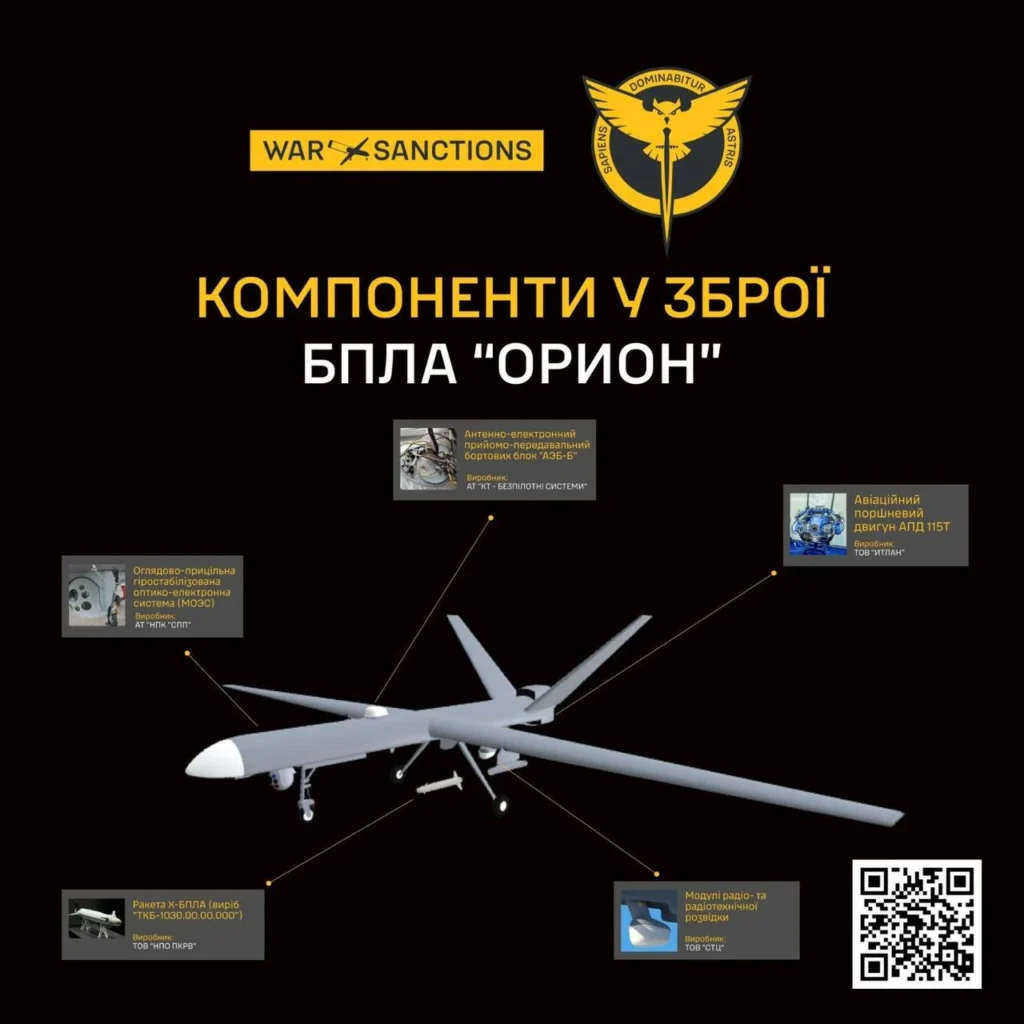
Forty-three Russian companies are involved in Orion’s production; a third of them are currently not subject to sanctions. Identified suppliers include manufacturers of electro-optical systems, ground communication stations and polymer-composite airframe materials.
FPV drum-style dispenser Skvorets
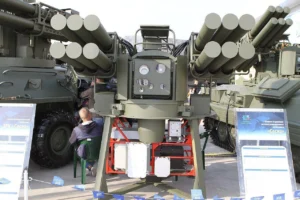
The Russians have unveiled a drum-style dispenser for FPV drones. It is claimed that this format will allow the carriage and dispersal of small charges or payloads from low-cost drones – opening new possibilities for tactical firepower and sabotage tasks. The principal advantage of the “drum” is rapid payload release.
EW system Shtora for suppressing video channels
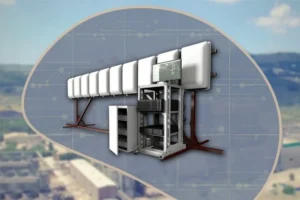
Russian units at the front are using or testing EW systems of the Shtora type, specialising in suppression of FPV drone video channels in the ~6.2–7.2 GHz band. It is reported that these complexes intercept a drone’s video on a given frequency, emulate it with an offset or overlay interference, causing the pilot to lose the image and the drone to become uncontrollable.
Reports of EW systems of this type first appeared in spring, when a prototype was shown at a military exhibition. According to Sergey Beskrestnov, the Russians initially intercept the video from an unknown FPV drone on a given frequency, determine it is hostile — by the unit designation set in the OSD menu or by an increase in signal strength — and then assess the battery charge and decide how long to apply jamming.
Communicators “Voron” capable of self-organising into a mesh network
Russian commentators describe a technological solution for self-organising mesh networks – the Voron communicators, which simultaneously act as repeaters. This architecture allows the deployment of resilient, scalable data-transmission networks with substantial coverage using relatively low transmitter power; it is reported that in field conditions this yields effective communications over tens of kilometres.
A claimed advantage of the Voron systems is operation without centralised servers and no requirement for internet access, enabling message exchange even under radio-interference conditions. Features include a proprietary messenger with group and private chats, the ability to forward messages to Telegram users without internet connectivity, and remote control of EW, ELINT equipment, communication terminals and VoronBOX devices for detonator activation.
According to the developers, the system supports integration with GPS trackers, motion sensors and other applications via an API and allows the radio module to be used in third-party devices. Data are encrypted at multiple levels. The system is undergoing field trials.
T-80 tanks fitted with captured reactive armour
The Russians are fitting captured Bradley reactive armour to their T-80V main battle tanks. Photographic evidence circulated by Russian sources shows Bradley tiles from the M2A2 ODS-SA fitted on a frame covering the turret and the glacis. This is a field, technically feasible modification, likely carried out by unit-level mechanics.
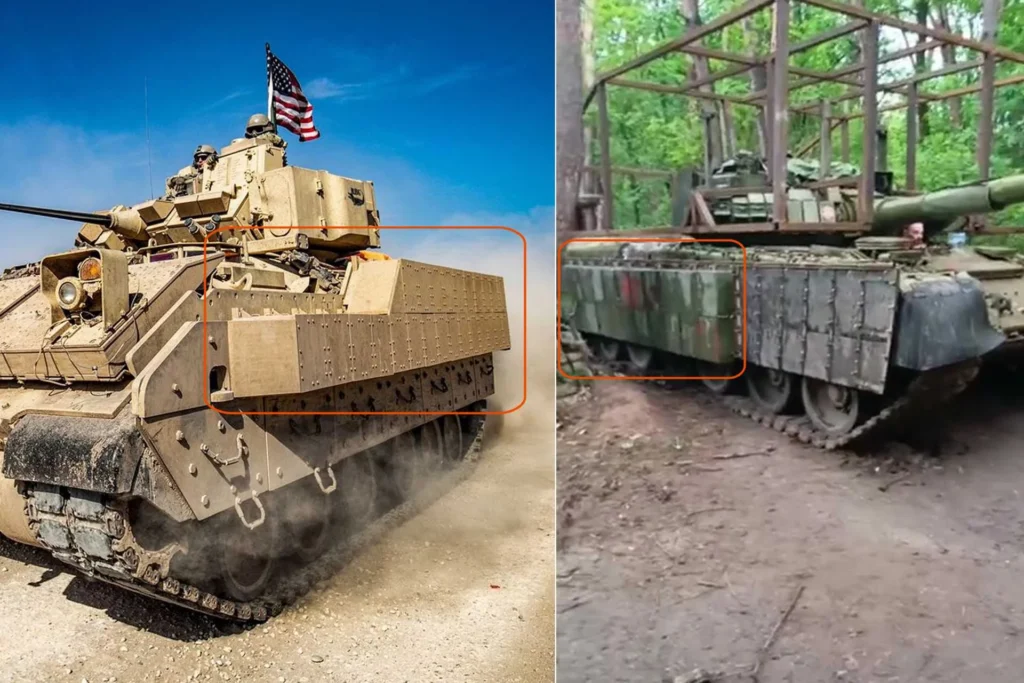
Such a measure indicates an effort to maintain protection against shaped-charge threats in the face of shortages of standard Kontakt-1/Kontakt-5 blocks: crews are re-purposing available captured components to preserve vehicle survivability in combat, Army Recognition reports.
By submitting this form, you give Defender Media consent to the processing of personal data.
Надсилаючи цю форму, ви надаєте Defender Media згоду на обробку персональних даних.
Latest news
1
Volodymyr Zinovskyi has replaced TAF Industries founder Oleksandr Yakovenko as the company’s CEO
2
Skyeton unveils a version of Raybird UAV with a hydrogen-powered electric motor
3
The Ukrainian Council of Defence Industry launches the UCDI Investor Club. Its first project is a Ukrainian defence tech dealbook
4
Ukrainian CHUMA fibre-optic drones debut on Brave1 Market — carry up to 4 kg
5