HIMERA 2.0: Highlights from the presentation by the Ukrainian tactical communications systems developer
After a major upgrade and codification, the company is ready to produce 100,000 radios per year

HIMERA CEO Misha Rudominsky presents updates from the startup / Photo provided by the company
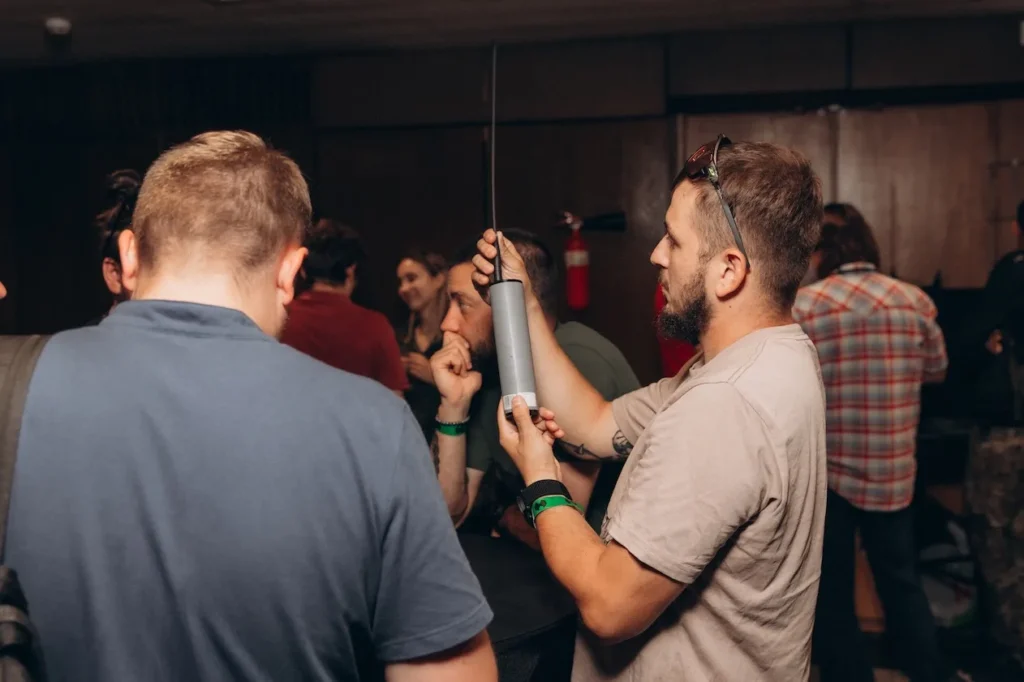
On August 6th, Ukrainian developer and manufacturer of tactical communication systems, HIMERA, held a presentation for industry experts, military personnel, and the media. During the event, the company showcased updates to its products, its readiness for mass production and government procurement, and shared how Ukrainian forces are using HIMERA’s communication equipment on the front line. Defender Media highlights the most important developments.
Key updates
At the event, HIMERA unveiled a major update to its tactical radios. According to the company’s speakers, the version 2.0 release brought the following improvements:
- Extended communication range and enhanced voice quality, with reduced noise;
- Support for portable repeaters with remote control and update capabilities;
- Improved display for voice communication screens.
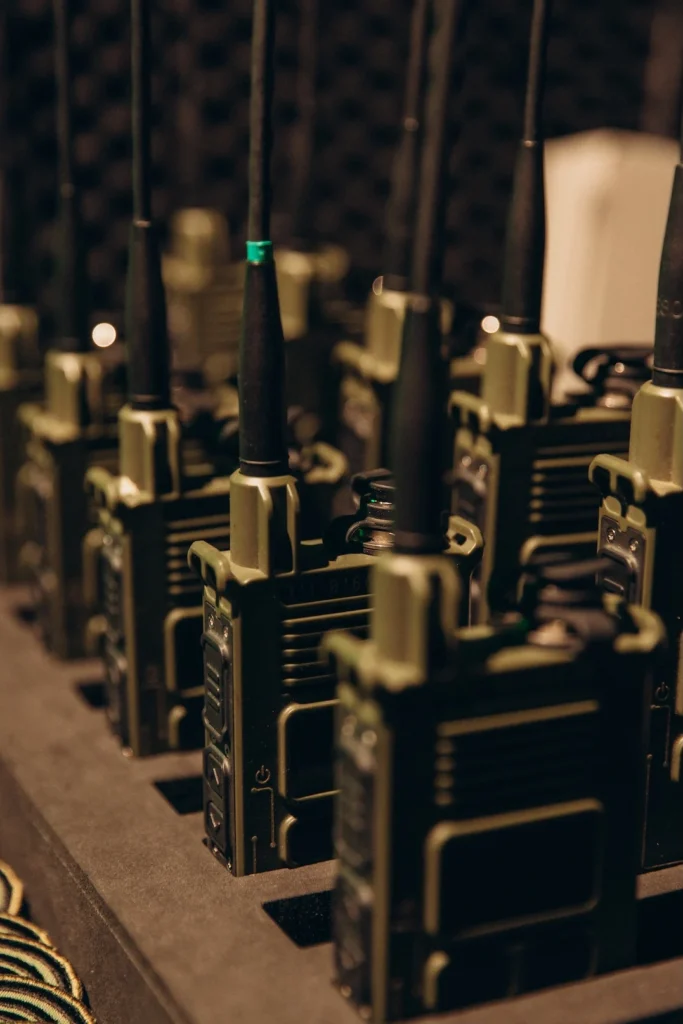
The company also introduced a new application for managing radios and repeaters. It now includes Ukrainian language support, new features, and an improved user experience.
According to HIMERA CEO Misha Rudominsky, the company’s communication systems currently have around 7,000 users within Ukraine’s Defence Forces. HIMERA’s flagship product – the G1 PRO radio – has already been codified by Ukraine’s Ministry of Defence and NATO. The company has also passed verification of its AES-256 encryption algorithm by the SSSCIP.
Rudominsky stated that the company is now operationally ready for mass production and large-scale procurement. He added that HIMERA could rapidly scale up production to 100,000 radios per year.
In his view, this would help overcome the dominance of foreign products in the tactical communications sector – a critical vulnerability during wartime.
“Ukraine’s Defence Forces still widely use foreign or civilian communication solutions, which creates significant security risks, dependency on external suppliers, and instability in logistics chains. In wartime conditions, this is a critical vulnerability,” said Rudominsky.
He noted that Ukrainians have already proven their ability to provide the military with high-quality domestically produced equipment – especially in the UAV sector. He believes Ukrainian developers can replicate that success in other areas, particularly communications.

“Ukrainian defenders must be able to rely on a national and trusted solution for secure tactical communication. This is not only a matter of security but also a component of state sovereignty in wartime,” he added.
What’s in the HIMERA product ecosystem?
The HIMERA ecosystem currently consists of four core products:
- The G1 PRO portable radio, which offers over 48 hours of autonomous operation;
- The B1 autonomous repeater;
- The E1 internet extender, designed for high throughput even in difficult terrain;
- The R1 repeater with internet relaying capabilities – enabling a fully wireless network configuration.
The company states that each product supports cutting-edge features to ensure a low detection, interception, and jamming probability, including AES-256 encryption, mesh/MANET network configuration, and pseudo-random frequency hopping.
How HIMERA’s products are used on the frontline
Also speaking at the event was an officer from Ukraine’s 13th National Guard Brigade Khartia, who shared a case study of HIMERA’s products in use at the front.
He explained that the brigade recently deployed HIMERA’s communication system in an area with particularly challenging terrain on the northern front. The network included B1 autonomous repeaters and R1 repeaters with IP connectivity, which ensured communications with frontline positions.
The rugged landscape hindered conventional comms systems, which failed to provide adequate coverage. In response, the brigade used a mesh-based solution to remotely establish coverage in previously unreachable areas.
The repeaters were deployed remotely by drone airdrop. The system functioned reliably for three weeks in field conditions, maintaining communication with forward units. “We are already demonstrating the effectiveness of modern solutions that adapt to terrain and operational demands in combat conditions,” commented Rudominsky.
The previous event of this kind held by HIMERA took place in March 2025. In May, the company received a $100,000 grant from Google for Startups. That same spring, HIMERA also secured its first international contract.
By submitting this form, you give Defender Media consent to the processing of personal data.
Надсилаючи цю форму, ви надаєте Defender Media згоду на обробку персональних даних.
Latest news
1
Volodymyr Zinovskyi has replaced TAF Industries founder Oleksandr Yakovenko as the company’s CEO
2
Skyeton unveils a version of Raybird UAV with a hydrogen-powered electric motor
3
The Ukrainian Council of Defence Industry launches the UCDI Investor Club. Its first project is a Ukrainian defence tech dealbook
4
Ukrainian CHUMA fibre-optic drones debut on Brave1 Market — carry up to 4 kg
5