Updated Darts, Virtus, Airfox, and Frontyr: Brave1 cluster tests drones with a flight range of up to 40 km
The tests featured developments by the Steel Hornets, Germany’s Stark, Wind Force, and the young team Frontyr

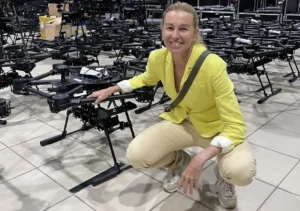
Photo by Militarniy
Brave1 cluster has conducted field tests of new drones with a flight range of up to 40 kilometers. The test flights featured reconnaissance and strike drones developed by both Ukrainian and international manufacturers. Militarnyi released a detailed report covering the showcased systems — here’s a recap of the highlights from Defender Media.
Darts from Steel Hornets
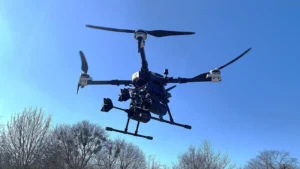
Darts drones, developed by the Stalevi Shershni (Steel Hornets) team, are among the most widely used strike drones in service with the Ukrainian Armed Forces. The manufacturer has recently begun supplying upgraded Darts with dual motors to Defence Forces units. The new model is significantly more powerful than its predecessor — capable of carrying up to 12–14 kg of payload. According to the company, the drone successfully performed combat missions with more than 8 kg on board during field trials.
The drone also proves effective at a 40 km range, which the company considers optimal for this platform. During recent tests, the UAV — equipped with additional batteries — simulated multiple attack runs, covered a total distance of 45 km, and returned safely with charge to spare. The upgraded Darts are also known to be resistant to electronic warfare systems and feature automatic target tracking.
In addition, work is ongoing to integrate an airborne repeater, which will enable communication beyond line of sight. Although this module is still undergoing testing, the company plans to present it during the next trial.
The updated model has been submitted for evaluation under the Brave1 initiative, which is seeking kamikaze drones capable of operating at distances greater than 40 km and interacting with airborne repeaters. Only systems that fully meet the technical requirements — the list of which remains classified for security reasons — will be allowed to proceed to the final stage of testing.
Virtus from Stark
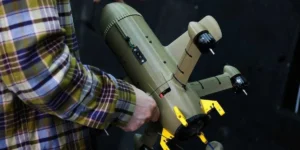
Another strike drone that took part in the Brave1 trials is the Virtus, developed by the German company Stark. This vertical take-off UAV with a range of up to 40 kilometres is being prepared for combat deployment in Ukraine. The drone can carry a 5 kg warhead. Active flight testing of its automatic targeting systems is currently underway.
According to a company representative, the guidance system was independently developed in line with the drone’s unique aerodynamic design. Its key components are of European origin, while the warhead is domestically produced and can be configured for various roles: high-explosive, fragmentation, or shaped-charge.
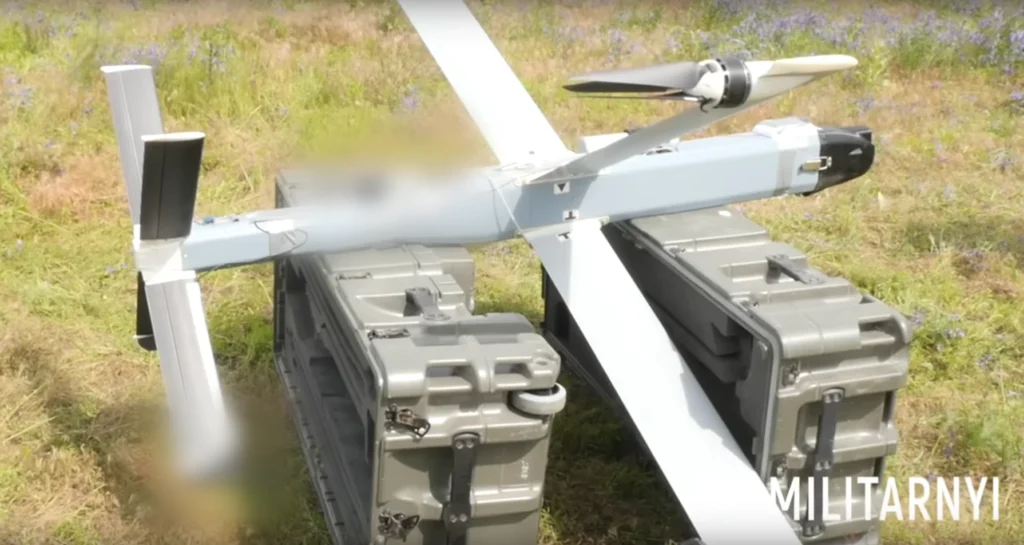
Following testing, the prototypes were deployed to the frontline for combat trials. Units receiving the system are supplied with a control station, ground antenna, and three to five drones per kit.
Airfox by Wind Force
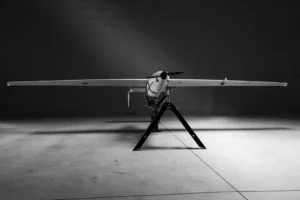
This drone is available in two variants: as an interceptor and as a long-range reconnaissance aircraft. The reconnaissance version is relatively slow, with a maximum payload of 3 kg and a flight range of up to 100 km. The interceptor version is faster and designed to engage aerial targets, including enemy aircraft. These drones are equipped with warheads weighing between 0.5 and 1 kg and can reach speeds of up to 220 km/h, making them suitable for interception missions.
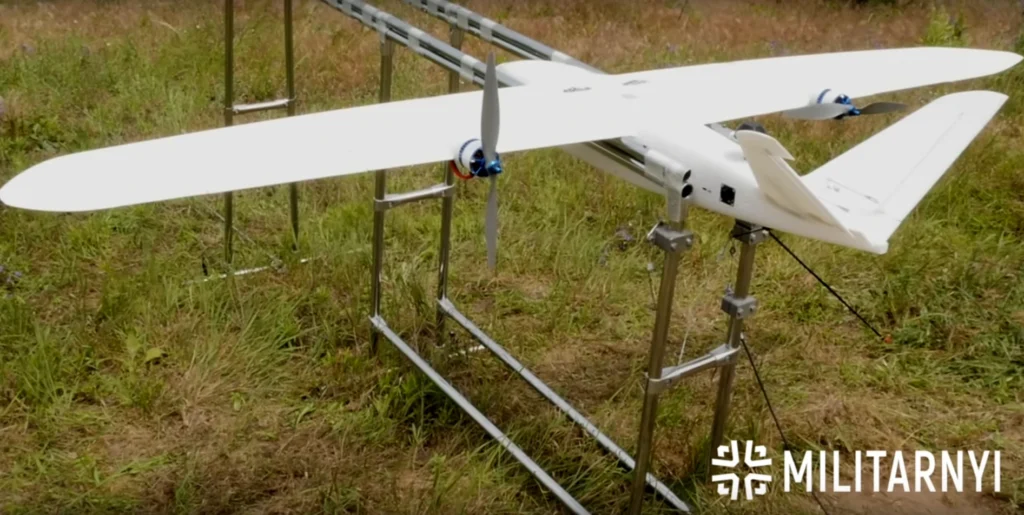
Combat deployment of these drones against aerial targets is expected in the coming weeks. Development of the aircraft and guidance systems continues in close coordination with military units.
Frontyr
The Frontyr strike drone, developed by the company of the same name, is a kamikaze drone capable of carrying up to 4 kg of explosives. One of its key features is the ability to fly autonomously in radio silence. According to the developers, the drone can carry out missions without constant operator input, using its internal navigation system. Once in the combat zone, it can approach a target undetected, switch to video mode, and enable the operator to destroy the enemy using precise imagery.
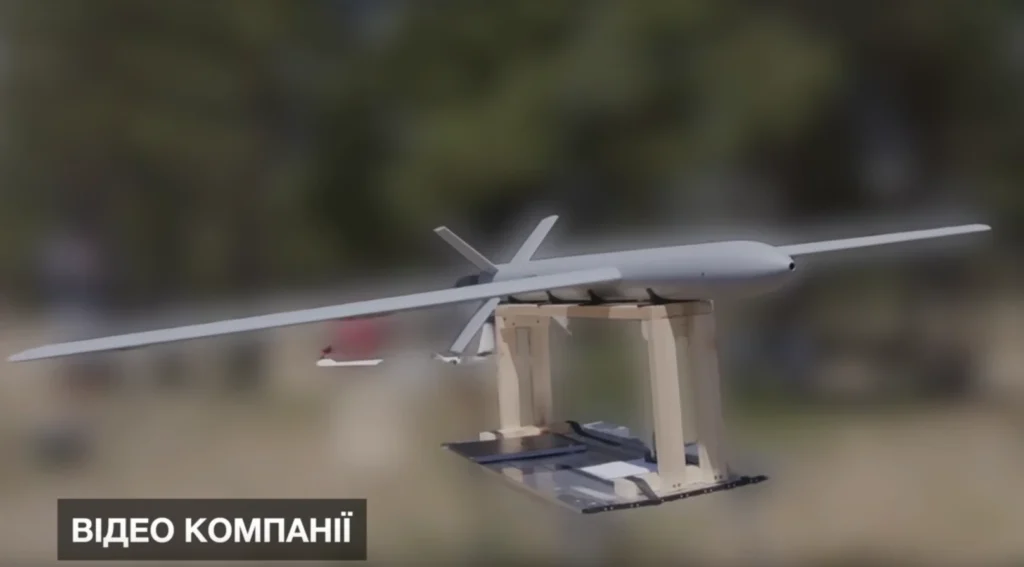
Another goal of the manufacturer is to ensure that unmanned systems are as mobile and user-friendly as possible, enabling crews to complete missions quickly and retreat safely. The military receives a fully mobile system compact enough to fit into a small minivan. Each set includes two repeaters and up to eight strike drones, and a crew of three to four personnel can operate the system effectively from a safe distance.
Defender Media reminds that Ukraine and the European Union recently announced the launch of BraveTech EU — a new initiative to support the defence sector, which will allocate €100 million to identify technological game-changers for the war.
By submitting this form, you give Defender Media consent to the processing of personal data.
Надсилаючи цю форму, ви надаєте Defender Media згоду на обробку персональних даних.
Latest news
1
Volodymyr Zinovskyi has replaced TAF Industries founder Oleksandr Yakovenko as the company’s CEO
2
Skyeton unveils a version of Raybird UAV with a hydrogen-powered electric motor
3
The Ukrainian Council of Defence Industry launches the UCDI Investor Club. Its first project is a Ukrainian defence tech dealbook
4
Ukrainian CHUMA fibre-optic drones debut on Brave1 Market — carry up to 4 kg
5