How the 14th mechanised brigade tests FPV drone interceptors — Army TV report
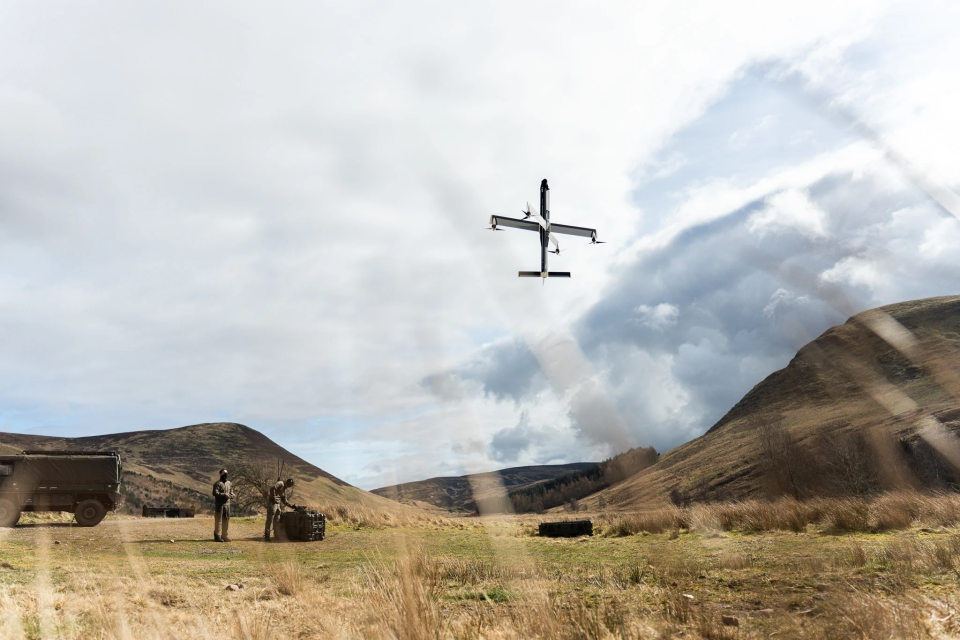
During training exercises, one FPV drone simulates an enemy UAV while another performs an interception mission
Video screenshot
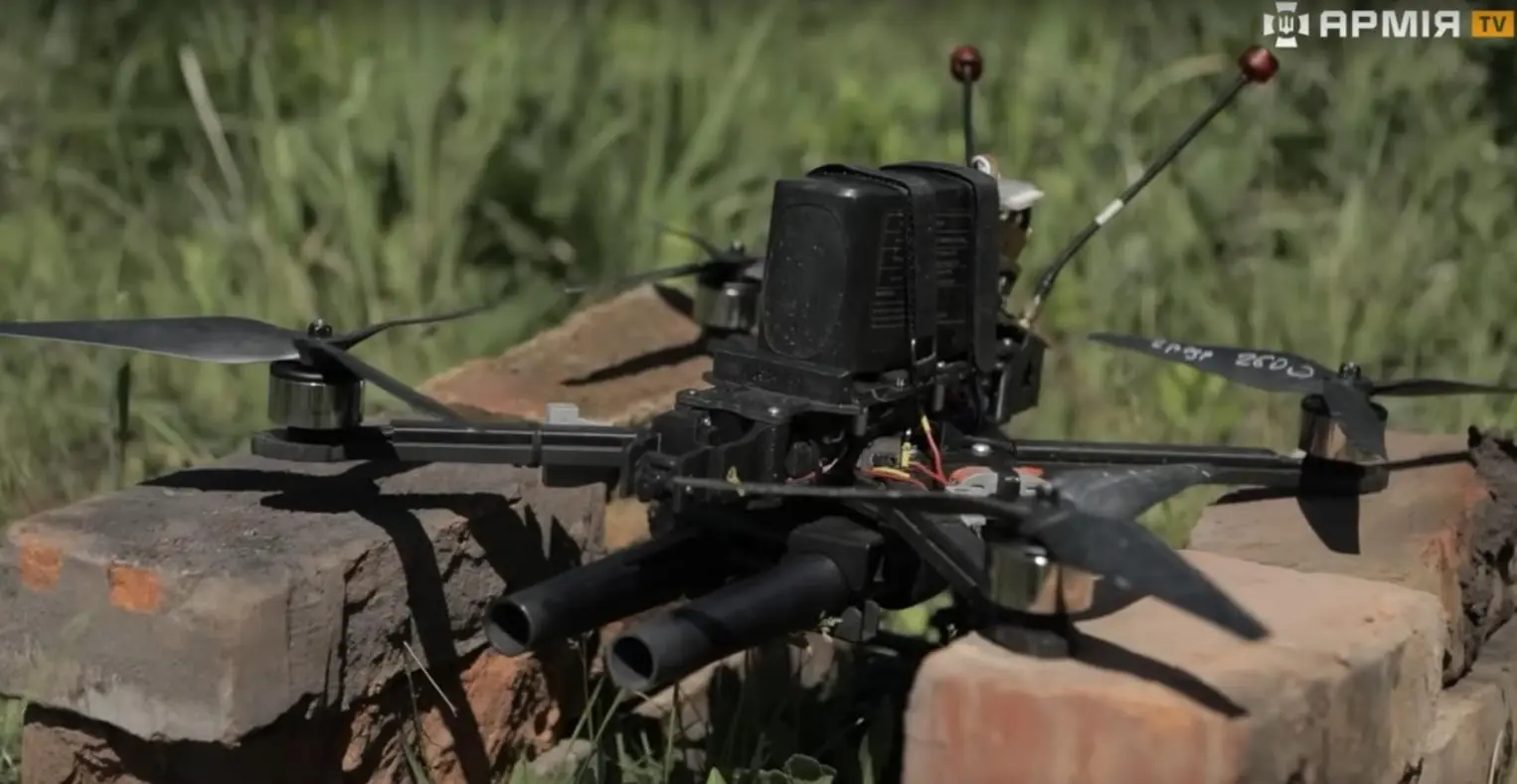
The Sapsan Unmanned Systems Battalion of the 14th Separate Mechanised Brigade has begun testing a new type of FPV drone. These interceptor drones are equipped with two smoothbore barrels of 12-gauge calibre instead of explosive payloads. According to the unit, the drones are capable of targeting both enemy FPV drones and more heavily protected aerial targets.
As part of the interception training, one FPV drone simulates an enemy UAV by towing a target, while another — the interceptor — engages in neutralising it. The operator manoeuvres the interceptor into effective firing range and opens fire. A successful hit causes the target to lose control and crash, enabling crews to rehearse tactical response scenarios to enemy UAV activity.
The tests are conducted at a forest-based training ground, where in addition to natural obstacles such as trees and branches, artificial barriers like ribbons and narrow gaps have been added to increase difficulty.
Operators complete a two-week training course on flight simulators, practising 5–6 hours daily. This is followed by field exercises on a training route where pilots develop precision control, micro-manoeuvring, and flying in restricted environments such as vegetation or fortified positions.
Earlier this month, the Ukrainian-made Varta DroneHunter — another FPV interceptor — was showcased at a defence exhibition in Latvia. Designed for kinetic interception of small and medium UAVs, the system targets reconnaissance and strike drones and is intended to protect strategic infrastructure and mobile convoys operating in high-risk zones.
By submitting this form, you give Defender Media consent to the processing of personal data.
Надсилаючи цю форму, ви надаєте Defender Media згоду на обробку персональних даних.
Latest news
1
Volodymyr Zinovskyi has replaced TAF Industries founder Oleksandr Yakovenko as the company’s CEO
2
Skyeton unveils a version of Raybird UAV with a hydrogen-powered electric motor
3
The Ukrainian Council of Defence Industry launches the UCDI Investor Club. Its first project is a Ukrainian defence tech dealbook
4
Ukrainian CHUMA fibre-optic drones debut on Brave1 Market — carry up to 4 kg
5