Brave1 tested fibre-optic drones at 20–40 km: what Vyriy, 3DTech, Ptashka Drones and others demonstrated
Manufacturers tested 30+ kilometer coils and drones on digital communication

Photo: Brave1
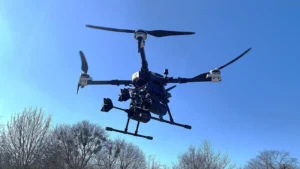
Last week, Brave1 held a demo day featuring fibre-optic drone manufacturers. The cluster’s press team told Defender Media that drones equipped with 30- and 40-kilometre coils, Ethernet media converters, and 10–11-inch drones with 20-kilometre fibre-optic coils were tested at the proving ground. Defender Media shares details of the tests based on information from the cluster team and a video report by “Militarnyi”.
For many manufacturers, the issue of 30–40 km coils became a logical continuation of previous developments. The market had already seen numerous requests for extended range, prompting some manufacturers to undertake this challenge independently. This demo day marked the first large-scale testing of such systems within the Brave1 initiative.
Achieving reliable operation with 10-inch drones and 20 km of fibre optic proved challenging for many manufacturers. Some only began work in this direction after the event’s theme was announced. Demand for these capabilities is substantial, and given the enemy’s advancements, Ukrainian developers must also deliver consistent performance. Achieving this requires well-optimised drones, carefully selected batteries, and the lightest possible coils.
Bombus from BeeTA Technologies
The “Bombus” drone, equipped with a 20 km fibre-optic coil, is among the most widely deployed on the battlefield. It is relatively low-cost, though it cannot carry a large payload. Nevertheless, it is effective for disabling enemy antennas, communications equipment, and towers—offering a cost-efficient method of conducting precision strikes at 20 km to sever communication between enemy units and operators.
A version mounted on a 15-inch platform is also available for defence units. It can carry an average payload of 3.5 kg, and in some cases up to 4 kg, depending on mission requirements, weather conditions, and terrain.
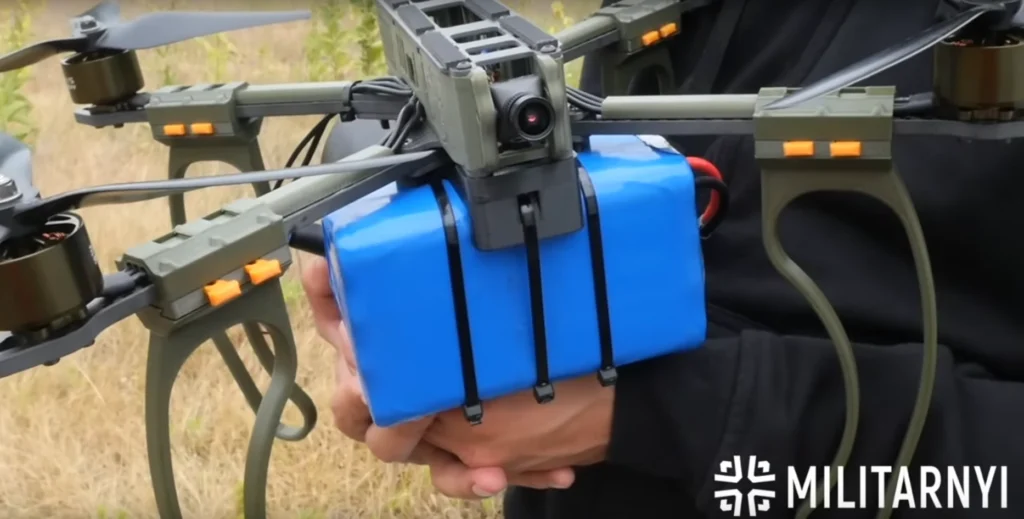
In addition, the manufacturer has a version with a range of 30 km. It is designed to be used for ambushes or hitting remote artillery positions. The current combat load of such a drone is 2 kg. According to the company, the demand for such drones is growing rapidly.
Vyriy drone
The Vyriy team presented its answer to Russian drones with digital optics. During tests, the drone worked stably at a distance of up to 40 km. Theoretically, the system is capable of providing communication up to 60 km, but at such a distance the risk of physical damage to the fiber increases significantly.
The basic configurations of “Vyriy” are drones with a 10 or 15 inch frame, operating at a distance of up to 20 km. Digital optics are currently being supplied in test volumes, but are expected in large batches, since its cost is half the average market price: a 10-inch drone with a 15-kilometer fiber-optic coil costs less than 25 thousand UAH.
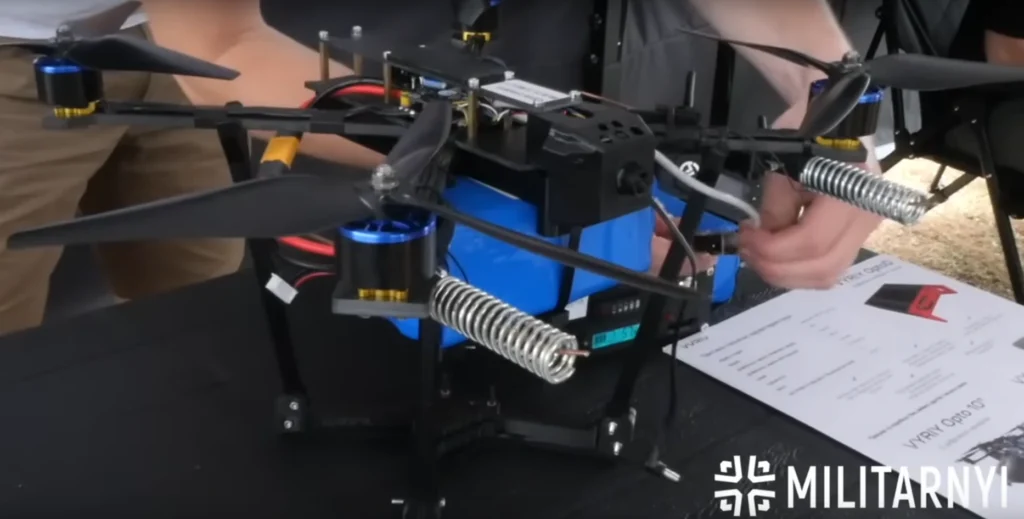
The digital system “Vyriy” consists of a camera and a microcomputer on one board, which outputs a signal via standard Ethernet. Another microcomputer operates on the ground, which decodes the image and provides control of the drone. The system is as close as possible to the basic Internet infrastructure. The manufacturers call the stability of the supply of components and image quality the key advantages of their solution.
Ptashka drone
Ptashka Drone presented models with a flight range of 35 km, 30 km, as well as a 10-inch drone with a range of 20 km at the tests. According to a company representative, at the request of the military, Ptashka Drone is developing drones with a longer range and at the same time more compact in size. In particular, a 15-inch drone with a range of 35 km and a warhead weighing 1.5 kg was presented. The smaller model — the 10-inch drone — has the same warhead and is designed for a 20 km flight.
A standout feature of production is the company’s proprietary two-stage optical fibre winding process, which helps prevent tangling or twisting..
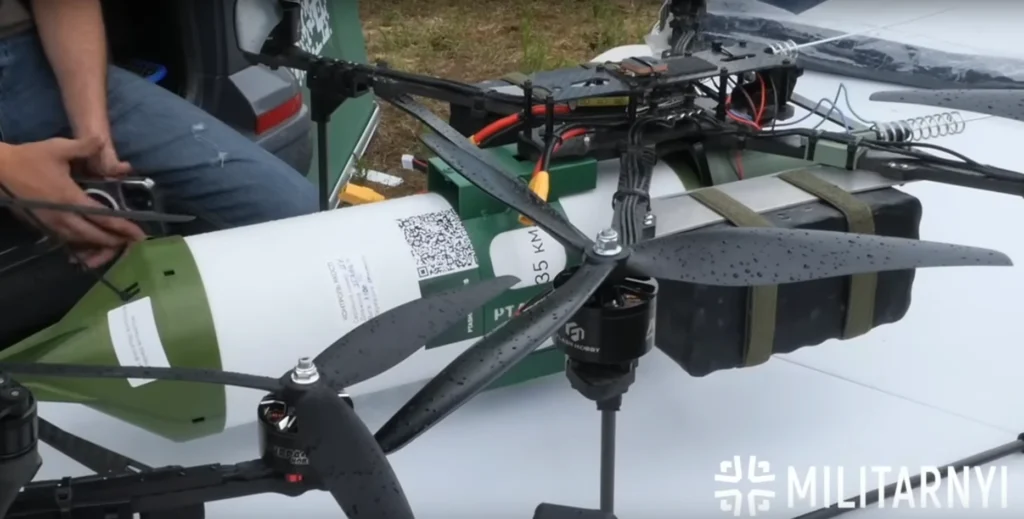
Despite common concerns regarding the complexity of long-reel operations, Ptashka reports that their drones consistently reach 30–35 km and achieve an 80% mission success rate.
TechnoHawk
TechnoHawk presented three drone configurations, with operational ranges of 15, 20, and 25 km. Its flagship model is a 12-inch drone equipped with an aerial optical module and digital communications, supporting missions up to 25 km.
The company is focused on scalable digital solutions. One such innovation is a pilot assistant—a system that enables even inexperienced operators to fly the drone following intensive training.
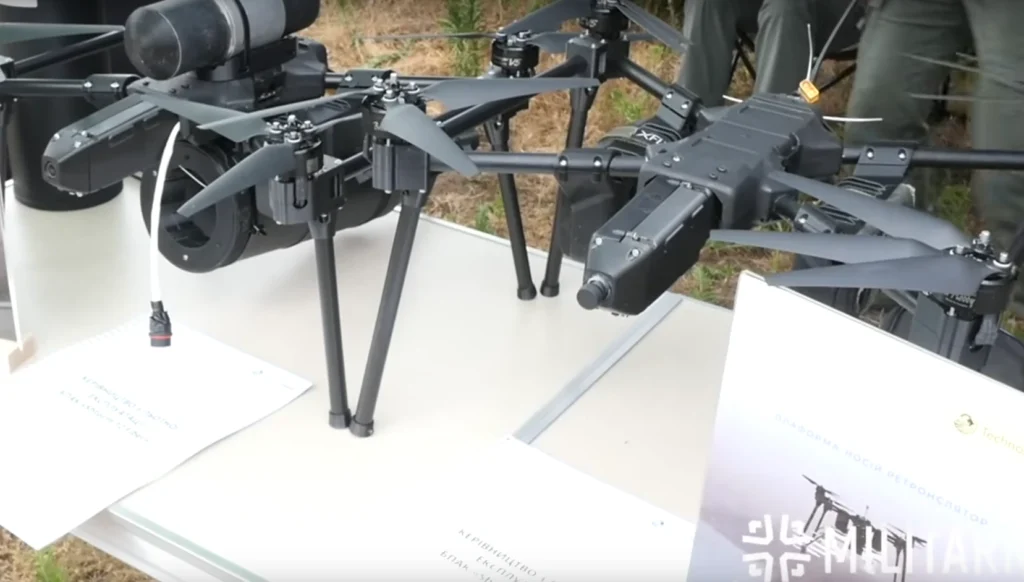
The TechnoHawk maintains a full production cycle, from drone assembly to coils and winding fiber optics. With R&D recently completed, the company has already carried out successful combat deployments and is now entering the scaling phase.
DeTech
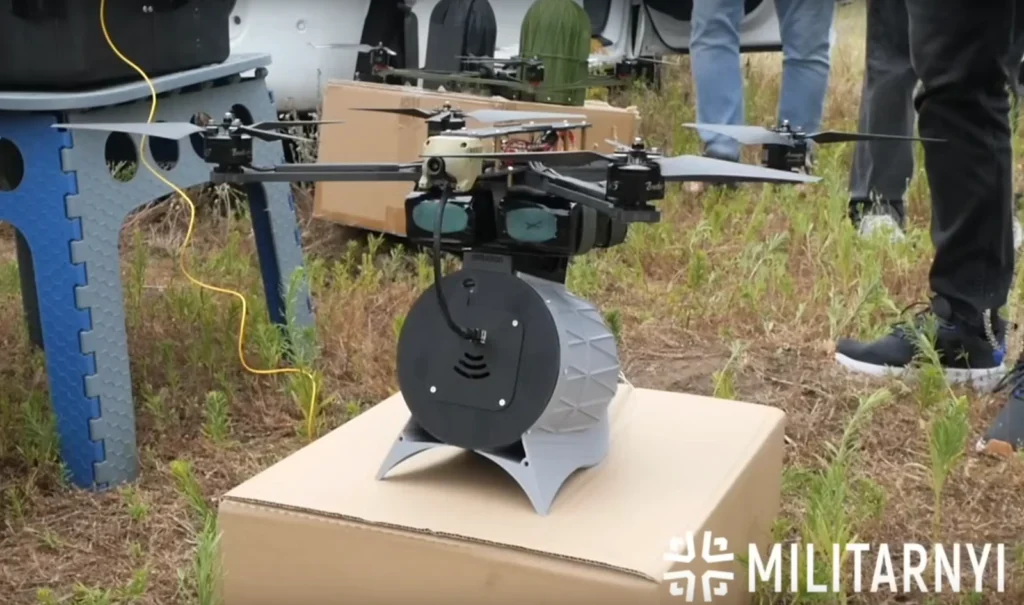
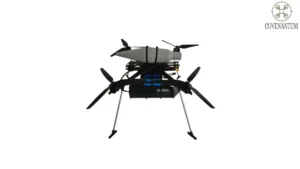
Among DeTech’s flagship developments is a 13-inch drone equipped with a 20 km coil and a 2.5 kg payload. A distinctive design feature is the inclusion of stabilising legs on the coil, allowing the drone to lie in ambush and activate when a target appears.
Although it is confirmed to operate effectively at 20 km, flights using that coil have not yet been carried out. However, the drone has already been deployed in missions up to 15 km. The coil is produced by a partner, while DeTech focuses on drone assembly and parts of the communication system.
“Khyzhaks” from 3DTech
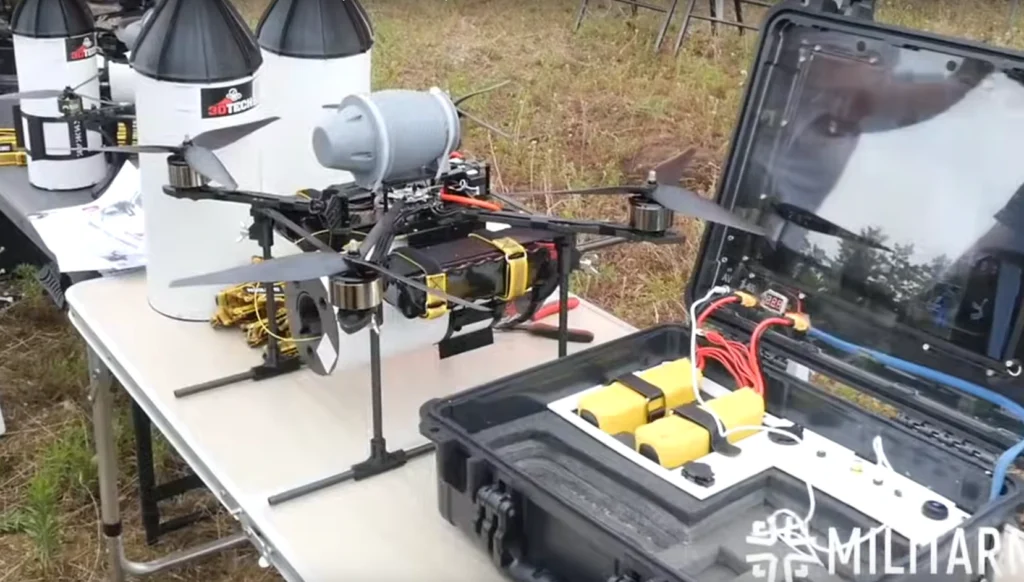
The company presented drones with its own coils with a range of 30, 35 and 40 km to the demo day. According to the team, these models have been field-tested and are currently in demand. Due to their complex design, such drones are used for specialised tasks: the longer the coil, the more difficult it becomes to achieve precise and consistent unwinding. Multiple factors influence efficiency, which is why drones with longer reels are generally reserved for niche missions.
3DTech h also has 10-inch drone prototypes designed for 10, 20, and 25 km operations, each carrying a payload of 1.3–1.5 kg. Although they were not displayed at the demo, the company plans to present them at a later date.
Fiber optic winding machines from Mekhanik Lab
Mekhanik Lab specialises in two key areas of fibre-optic hardware: winding machines and the production of finished spools. All machines are designed and manufactured in-house and are tailored specifically for fibre-optic applications. Each unit can produce coils of up to 50 km—provided a suitable drone is available to carry them.
The machines operate at speeds of up to 20 km/h and ensure precise fibre layering. This eliminates twists and loops during deployment, which is essential for seamless drone operation.
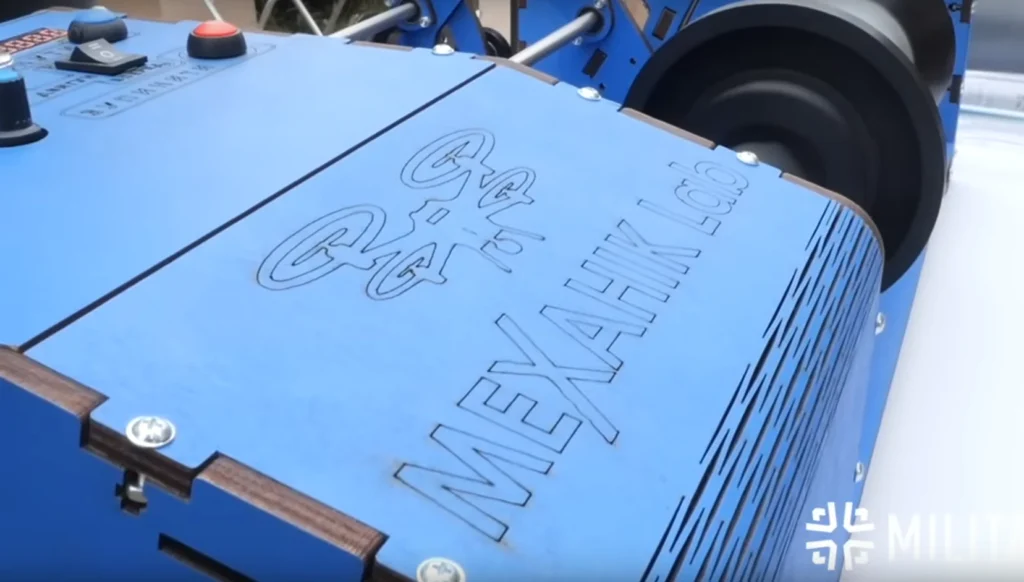
The company manufactures all spool and coil components internally, including printing, lubrication, assembly, and testing. Customers can purchase both winding machines and ready-to-use spools in lengths of 5, 10, 15, 20, 25, 30, 35, 40, 45, and 50 km. The most popular option is currently the 40 km spool, weighing 3.2 kg, which is compatible with drones using 15- or 19-inch propellers, depending on payload.
The machines are typically purchased by military units with internal workshops or drone manufacturers working with fibre optics. These buyers use the machines to establish fibre-winding departments for in-house integration into their UAV projects.
By submitting this form, you give Defender Media consent to the processing of personal data.
Надсилаючи цю форму, ви надаєте Defender Media згоду на обробку персональних даних.
Latest news
1
Volodymyr Zinovskyi has replaced TAF Industries founder Oleksandr Yakovenko as the company’s CEO
2
Skyeton unveils a version of Raybird UAV with a hydrogen-powered electric motor
3
The Ukrainian Council of Defence Industry launches the UCDI Investor Club. Its first project is a Ukrainian defence tech dealbook
4
Ukrainian CHUMA fibre-optic drones debut on Brave1 Market — carry up to 4 kg
5