Black Mirror #11. Upgraded ZALA T‑20, V2U AI drone, laser shields against UAVs, and other updates in Russian miltech
Weekly overview of Russian military innovations

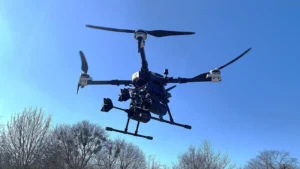
Модернізований ZALA Т-20, фото з сайту виробника
This week, Putin announced that Russia is establishing unmanned systems as a separate branch of the armed forces. This comes exactly one year after Ukraine became the first country in the world to introduce its own Unmanned Systems Forces. Russia continues to copy the innovative solutions of the Ukrainians – and, according to most military experts, is making greater progress in scaling these solutions.
Other Russian miltech news is covered in the latest issue of Black Mirror, a weekly compilation that Defender Media gathers for domestic manufacturers and the military to help them understand current and future challenges. This week, the Russians presented upgraded reconnaissance drones from ZALA with a range of over 500 km, a new V2U artificial intelligence strike drone, and laser interception systems for FPV drones. At the same time, Russian scientists are creating new nanostructured magnets for the military, and Russian drone pilots are mastering ambush tactics. Read more in Black Mirror #12.
The ZALA T-20 can now fly for 7 hours and up to 500 km
Russian drone manufacturer ZALA has upgraded its T-20 reconnaissance UAV. The company has optimised the fuselage design, reduced aerodynamic drag, and improved the drone’s overall flight efficiency. The old batteries have been replaced with next-generation high-capacity power cells. As a result, the drone’s flight duration now exceeds 7 hours, with a range of up to 500 km.
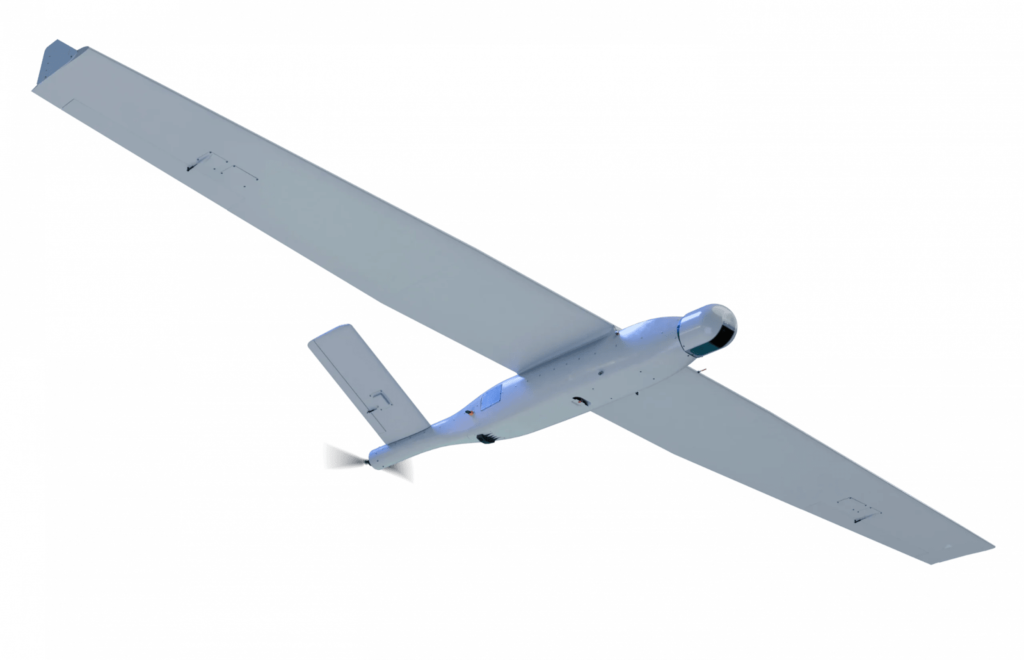
In addition, the updated ZALA UAV has been equipped with new communications and navigation modules that allow it to operate at longer distances, even in challenging conditions and without satellite connectivity. The drone also features a new onboard computer and enhanced software based on artificial intelligence algorithms.
Russia’s New AI-Powered V2U Drone: Unpacked by Ukraine’s Defence Intelligence
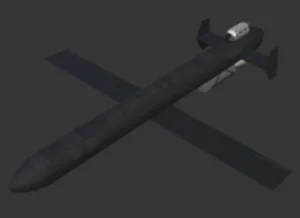
The Main Intelligence Directorate of Ukraine has published data on the design, electronic base and sources of supply of the new Russian V2U strike drone, which is actively used by Russia in the Sumy direction.
A special feature of the drone is its ability to autonomously search and select targets using artificial intelligence. The computing system is based on the Chinese minicomputer Leetop A203. As a central processor, it uses a high-speed assembly based on NVIDIA Jetson Orin.
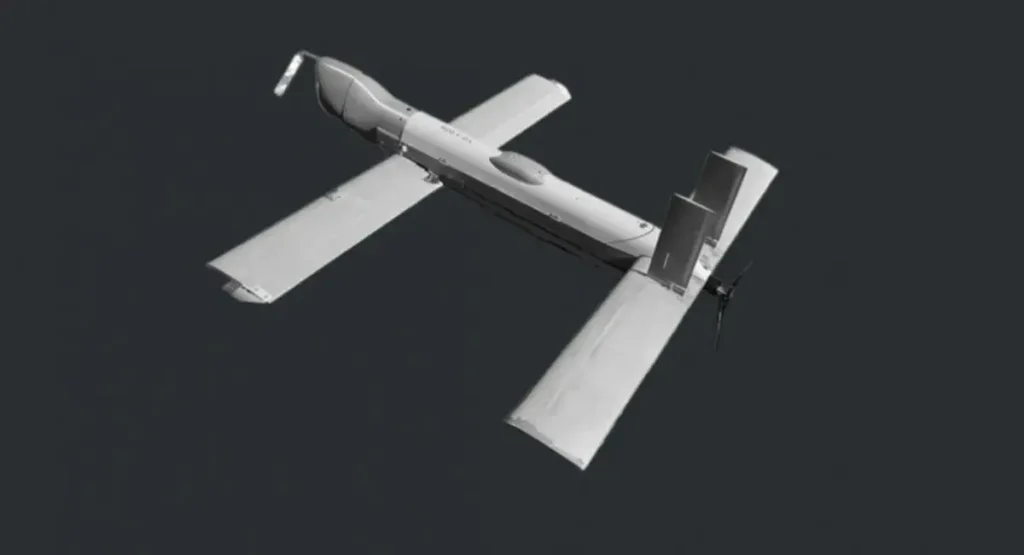
The V2U is equipped with only a single GPS module — a detail that likely indicates Russia’s move away from satellite navigation due to the effectiveness of Ukrainian EW systems. Instead, the drone appears to rely on computer vision for navigation: it compares live camera footage with preloaded terrain images to orient itself on the battlefield.
The V2U can also be operated in FPV mode via LTE. It is fitted with a Microdrive Tandem-4GS-OEM-11 router that uses a SIM card from a Ukrainian mobile operator. Despite the Russian labeling, the modem’s components are of Chinese origin.
Nanostructured magnets for defence
Scientists from Tver State University have created nanostructured magnetic materials that operate at temperatures up to 550 degrees. This makes them indispensable in areas where conventional magnets lose their properties. In the future, they can be used in electric motors, navigation systems and guidance systems in the aerospace and aviation industries, radar systems, magnetic resonance tomographs, etc.
It was created because modern microelectronics and devices require magnets not only to have the best magnetic properties, but also to have their characteristics stable at different temperatures.
Laser systems against UAVs
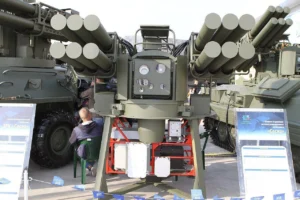
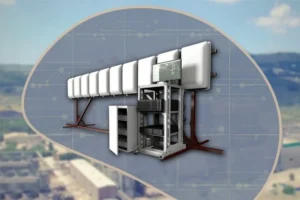
The Russians tested eight laser systems against UAVs at once. These are both compact mobile installations and stationary high-power systems. The event was organized by the Military-Industrial Complex Board and the Ministry of Industry and Trade of the Russian Federation together with military enterprises.
According to its results, laser systems will soon be on full combat duty. On the eve of the event, the Russian Ministry of Defence announced that it plans to make unmanned troops a separate branch of the armed forces, as well as open a Higher Military School for UAS. At least, such an idea is being discussed.
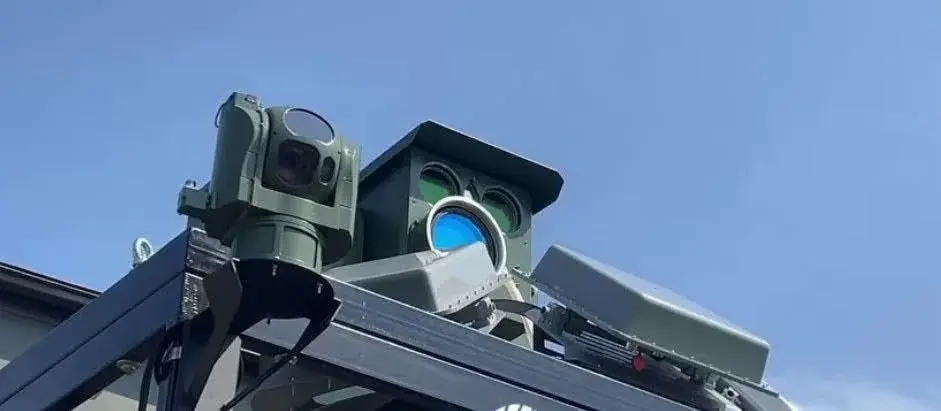
The laser complex is equipped with an additional turret multispectral thermal imaging and television module for searching for air targets, as well as a multifunctional AFAR-radar guidance with 4-way active PHA. This provides all-round visibility in the azimuthal plane from -10 to +90. This allows you to intercept kamikaze UAVs diving at large angles.
FPV drones in ambush
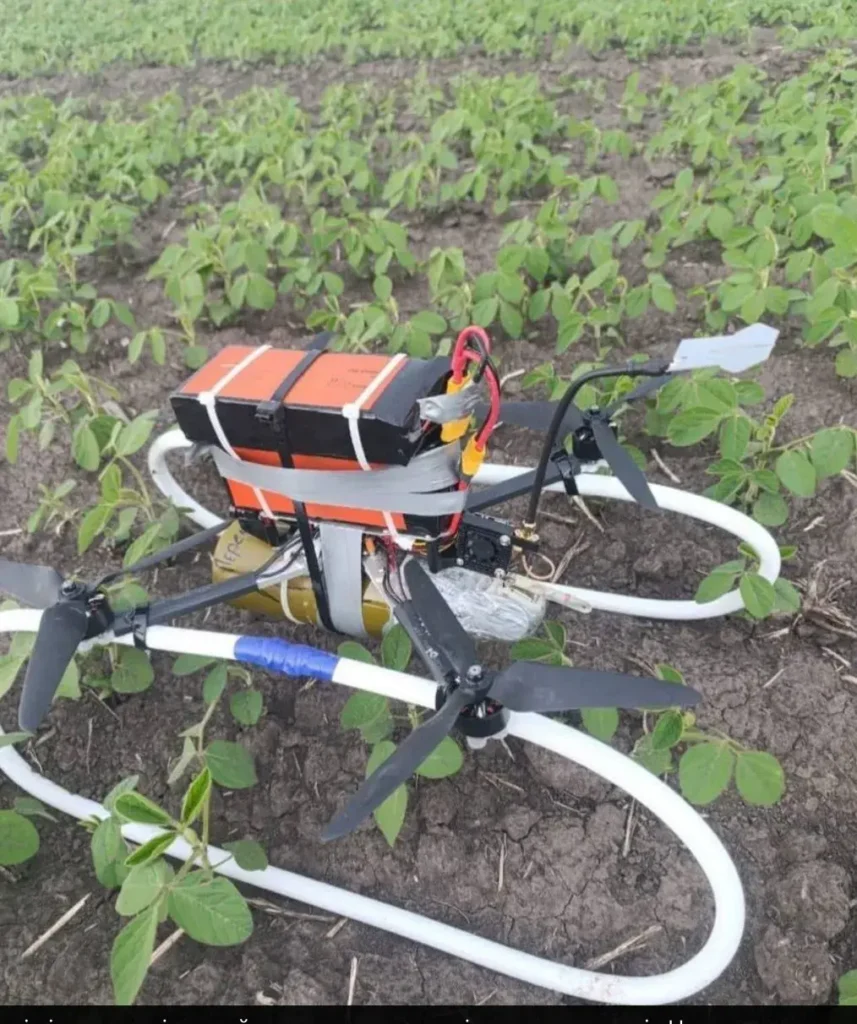
Russia continues to borrow tactics pioneered by Ukraine’s armed forces — the latest example being a new method of deploying fibre-optic drones. According to Ukrainian expert Serhii “Flash” Beskrestnov, the tactic involves fitting drones with special mounts that allow them to land and wait motionless on the ground until a target appears.
New tests of the Strekoza 3.0 drone
The Russian company Laboratory of the Future showed a new stage of testing its Strekoza 3.0 UAV. It was tested on the railway’s contact network.
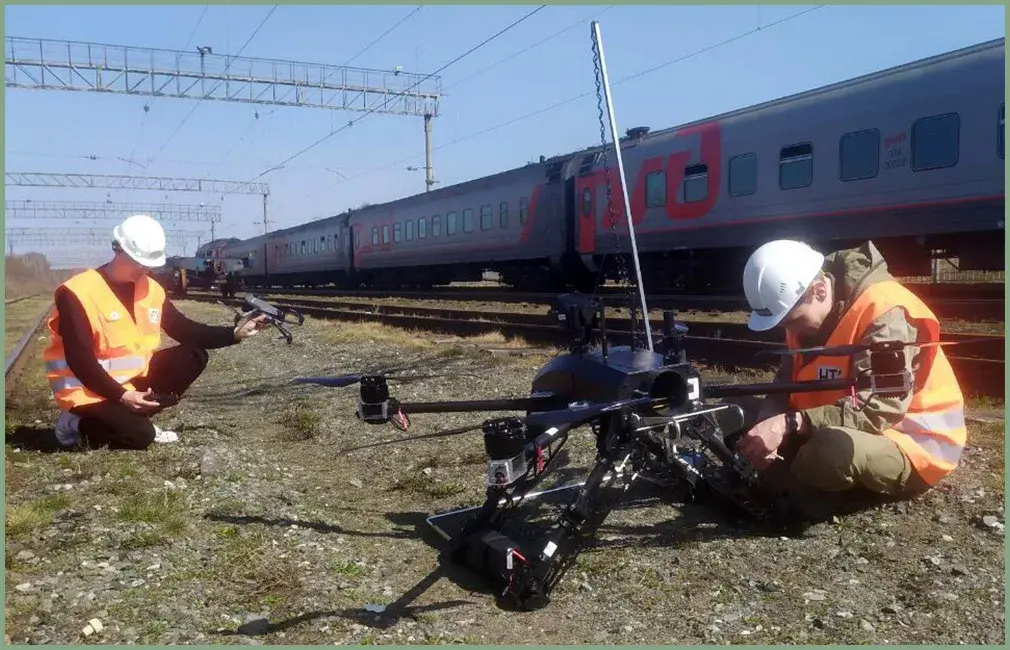
The copter is equipped with a Chinese thermal imaging sensor, as well as a TV sensor, which provide not only the detection of breaks and thinning of wires, but also engineering reconnaissance of railway tracks for demining, as well as the presence of sabotage and reconnaissance groups.
In essence, the Strekoza 3.0 drone is a multi-purpose reconnaissance platform and can relay to combat control points of various groups of troops of the Russian Armed Forces.
By submitting this form, you give Defender Media consent to the processing of personal data.
Надсилаючи цю форму, ви надаєте Defender Media згоду на обробку персональних даних.
Latest news
1
Volodymyr Zinovskyi has replaced TAF Industries founder Oleksandr Yakovenko as the company’s CEO
2
Skyeton unveils a version of Raybird UAV with a hydrogen-powered electric motor
3
The Ukrainian Council of Defence Industry launches the UCDI Investor Club. Its first project is a Ukrainian defence tech dealbook
4
Ukrainian CHUMA fibre-optic drones debut on Brave1 Market — carry up to 4 kg
5