Black Mirror #21. Orlan as an FPV сarrier, interceptor drone swarms, Valkyrie, and other Russian miltech updates
Review of new Russian miltech developments for the third week of August
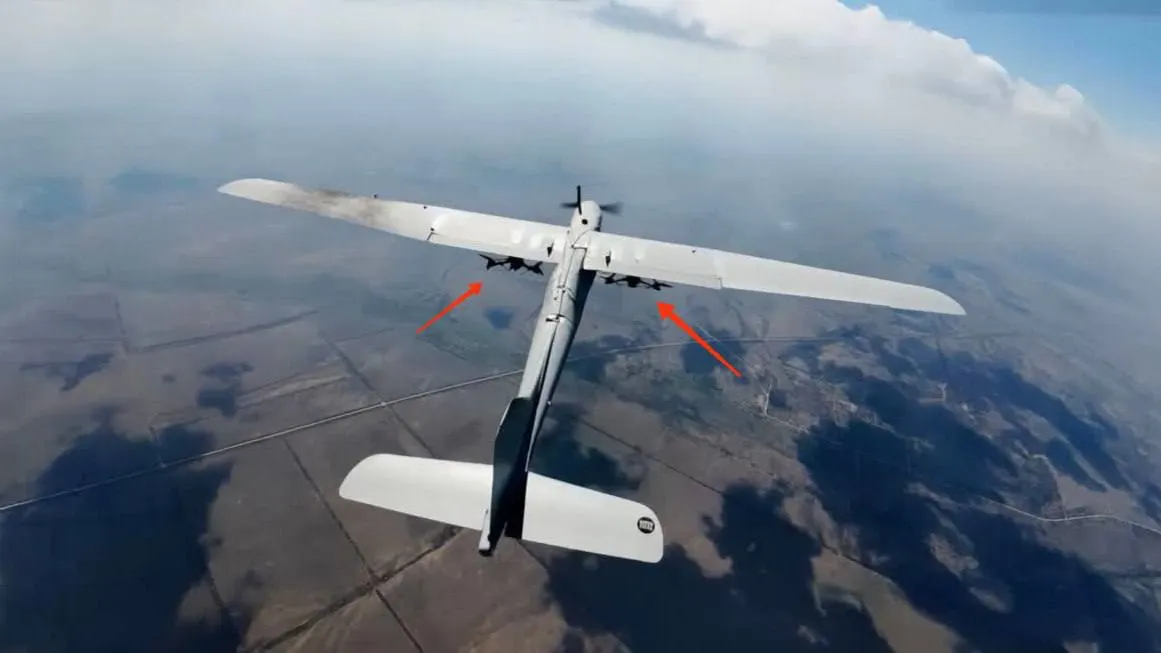
In the photo: Orlan-10 as FPV carrier / Source here and below: Internet
Last week, Russia’s military industry unveiled a range of new technologies aimed at strengthening its arsenal. Among them are upgraded capabilities for the Orlan and SKAT-350M drones, a gesture-based drone control system, and a new antenna complex in Kaliningrad that could potentially intercept NATO communications. In addition, Russia is pursuing systemic changes to the management of its airspace.
See details in the new Black Mirror #21.
SKAT-350M equipped with anti-Interceptor drone system
Russian SKAT-350M UAVs are now being fitted with serially produced counter-interceptor systems designed to evade interceptor drones. The system relies on a sensor that detects an approaching drone and triggers evasive manoeuvres by the UAV.
The SKAT-350M is manufactured by Izhevsk Aviation Plant LLC, part of the Kalashnikov Concern. The first sightings of this evasion system on the drones were reported several months ago, but its wider deployment now indicates that these modules have entered mass production.
Interceptor drones working in conjunction
The Archangel project worked out the neutralisation of a conditional target by interceptor drones working in conjunction with a carrier aircraft. With its help, the drones were raised to a height of 1.5 km, and then they practised approaches to the target. Moreover, there were two targets: a drone and an escort vehicle.
New unidentified UAV
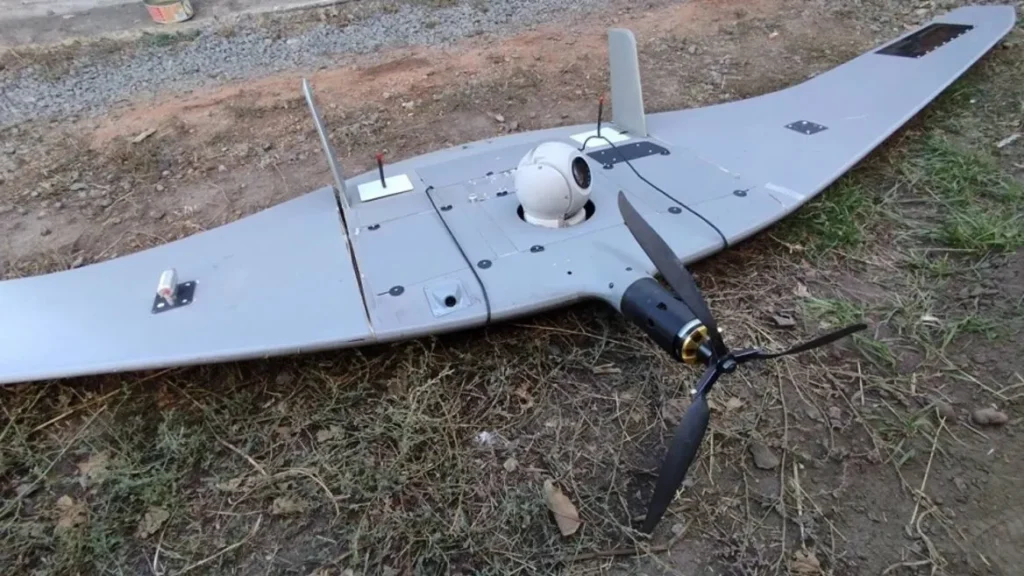
Another Russian unmanned novelty has appeared: a UAV equipped with a camera and two LTE modems, thanks to which it transmits video in real time via mobile base stations. It also receives commands to adjust the course in real time.
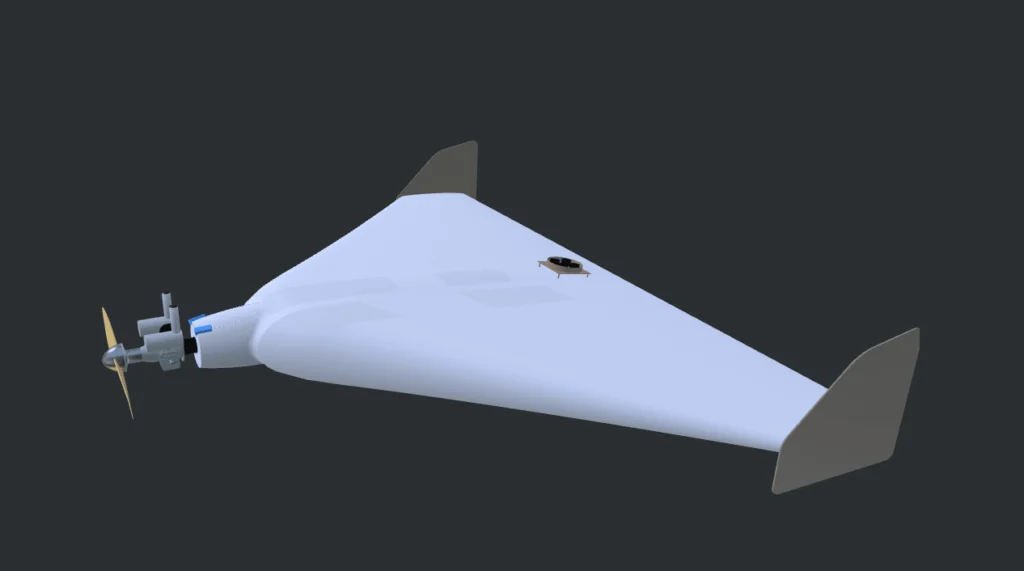
The drone can be used for reconnaissance and as a false target to overload the Ukrainian air defence. It seems that half of the components, in particular the communication modules, are made in China. Structurally, the drone has a “delta-wing” fuselage, similar to the Shahed-131, but somewhat smaller. Navigation is carried out by an interference-proof satellite positioning system with four patch antennas and Chinese Allystar modules.
Valkyrie drone on the cloud
The Moscow KB Valkyrie, which has been sanctioned, has developed a universal drone for data transmission under electronic warfare conditions. According to the general director of the design bureau, the drone can stay in the air for up to 24 hours. Satellite communication allows the use of UAVs outside the direct line-of-sight radio range. The drone is able to transmit streaming video or other information to a cloud server for further processing using neural networks.
It is assumed that UAVs will be used not only for military purposes, but also for monitoring infrastructure or searching for forest fires.
Controlling drones using gestures
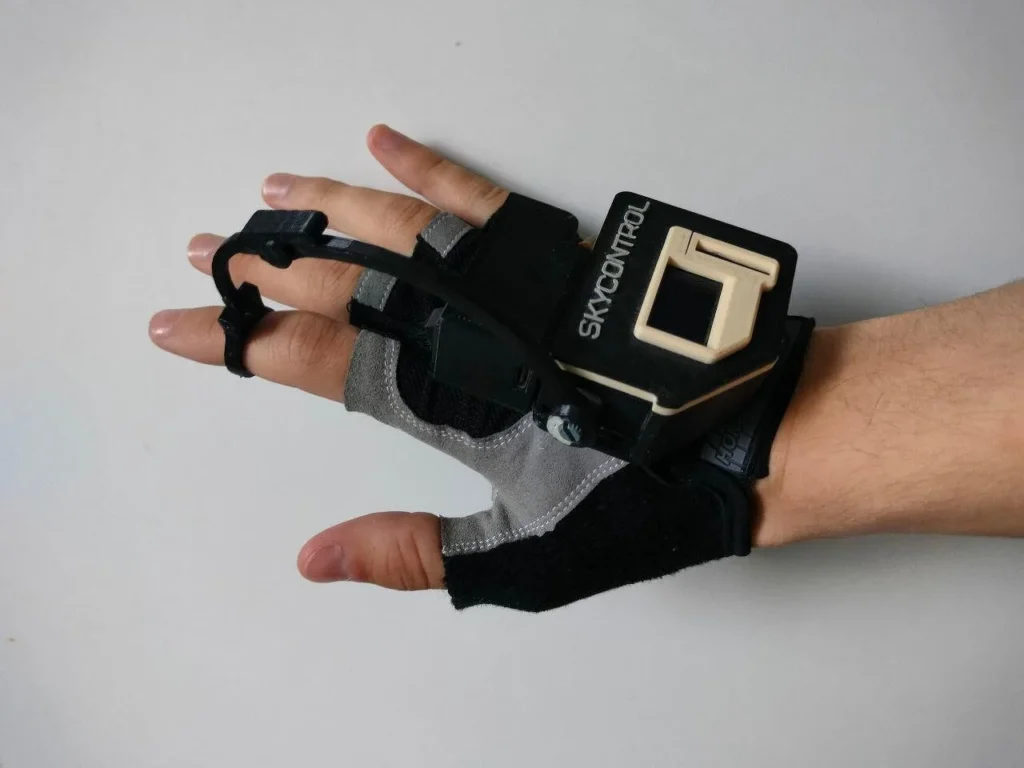
Students from several Russian universities have developed a UAV control system called SkyControl, which allows you to control drones using hand gestures. For this, a glove is used that synchronises with the aircraft and transmits the operator’s movements to it in real time.
A drone synchronised with the system repeats the movement of the hand: if it rises, the UAV flies up, if you move your hand to the right, it will fly to the right, etc. At the same time, everything is ergonomically placed in a small housing that easily adapts to any size of the operator’s palm.
Cheburashka drone and Peppa communication complex
At the Drone-garage exhibition in Skolkovo, the Aviron company presented its developments – the first single-board drone-constructor in Russia, Cheburashka, and Peppa communication complex.
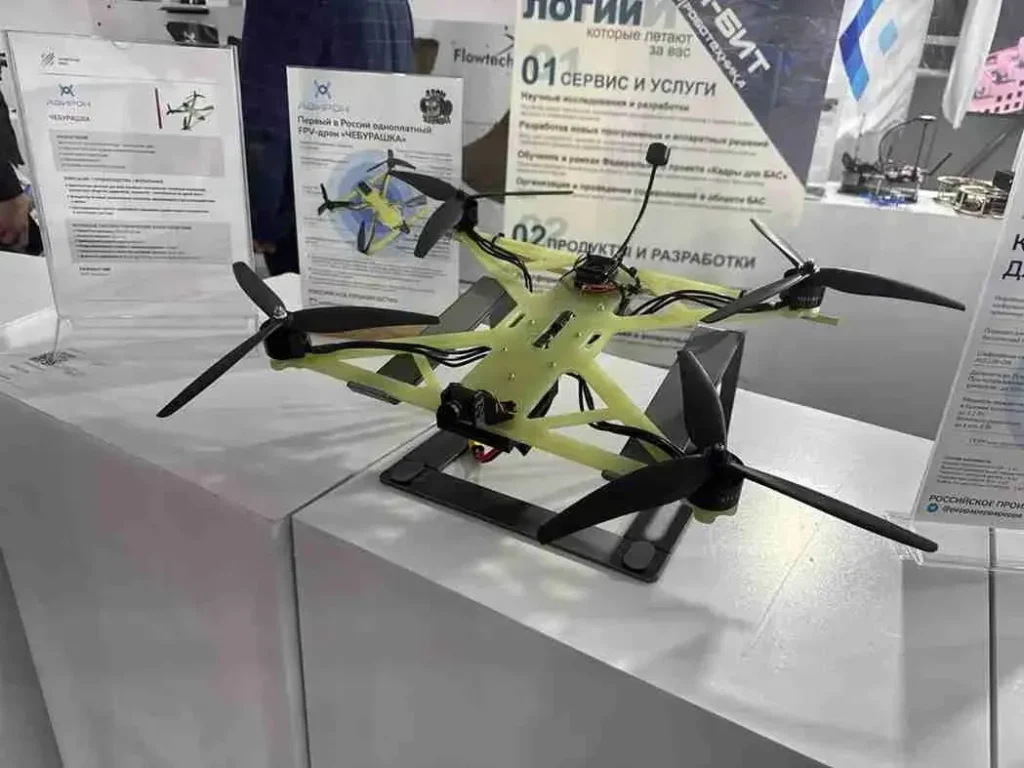
The drone is assembled on a single board that combines a flight controller, a speed regulator and radio communication. This simplifies assembly, and the textolite frame reduces the price. The cruising speed of Cheburashka reaches 80 km/h, the control range is 35 km, and the localisation of components is 80%.
Peppa is suitable for any type of unmanned equipment and is able to provide communication for the same 35 km, and when using an amplifier, the range can be increased to 100 km. The electronic warfare-resistant communication has been successfully used on the drones Shpak, Osa, Ovod, and VT-40.
Plan for Russia’s Digital Sky
The State Telecommunications Company, the National Technological Research Institute Foundation, and the geotechnology operator Terra Tech will work on creating a “digital sky of Russia”. The parties signed a cooperation agreement at the Unmanned Systems: Technologies of the Future international forum in Moscow.
In particular, this involves launching new projects aimed at sharing data from satellites, drones and robotic systems for remote sensing of the Earth. In the future, the “digital sky of Russia” should unite all existing technologies and platforms from the air, space and digital spaces into an environment with end-to-end inter-sectoral regulation.
Reconnaissance Orlan converted into FPV drone carrier
Russian forces have modified their Orlan reconnaissance UAV into a carrier for FPV drones, according to the 118th Separate Mechanized Brigade of the Armed Forces of Ukraine. Ukrainian troops released footage from an interceptor drone’s camera, showing the Orlan — now acting as a mothership — carrying two quadcopter-type UAVs under its wings.
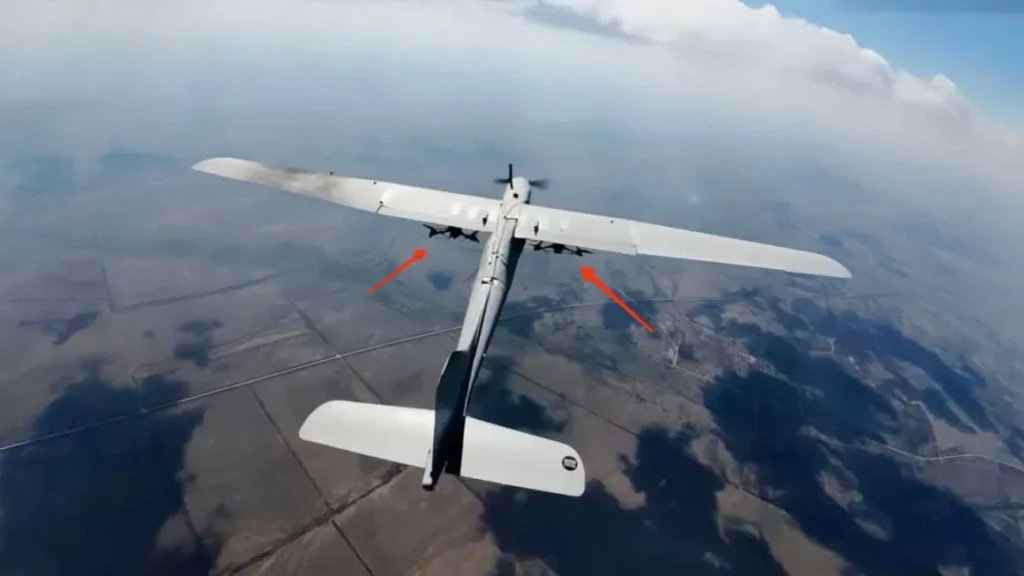
The addition of these drones to the suspension points reportedly reduces the Orlan’s maximum operating speed from 150 to 130 km/h and its maximum altitude from 5,000 to 3,700 metres. In this configuration, the Orlan-10 also serves as a relay block carrier.
Antenna complex for direction finding of NATO communications
In Kaliningrad, in the centre of Europe, Russia is building a large-scale antenna complex that can detect NATO communications. For the first time, information about this project appeared in OSINT materials back in 2023. The pattern is clearly visible on satellite images: concentric circles, radially arranged canals and a system of access roads to the central area.
Today, the area has a continuous perimeter fence and checkpoint. There are no foundations for large antenna dishes or protective structures inside the perimeter, except for a levelled central area. Instead, at least six concentric rings can be seen. On the outer ring and along the entire perimeter, uniform holes in the ground are visible, resembling places for installing antenna poles. This is probably a circularly disposed antenna array (CDAA).
Thanks to this architecture, the system provides ultra-long-range radio direction finding up to 7,400 km, which allows for monitoring radio signals at intercontinental distances. Such a system would allow Russia to effectively monitor NATO electronic communications in Eastern Europe and the Baltic region.
By submitting this form, you give Defender Media consent to the processing of personal data.
Надсилаючи цю форму, ви надаєте Defender Media згоду на обробку персональних даних.
Latest news
1

Volodymyr Zinovskyi has replaced TAF Industries founder Oleksandr Yakovenko as the company’s CEO
2
Skyeton unveils a version of Raybird UAV with a hydrogen-powered electric motor
3

The Ukrainian Council of Defence Industry launches the UCDI Investor Club. Its first project is a Ukrainian defence tech dealbook
4
Ukrainian CHUMA fibre-optic drones debut on Brave1 Market — carry up to 4 kg
5