Ukrainian smart-air defence developer MaXon raises $300,000 – the project aims to protect Ukrainian cities from Shahed drones
The company plans to raise a bridge round soon to further scale its solution
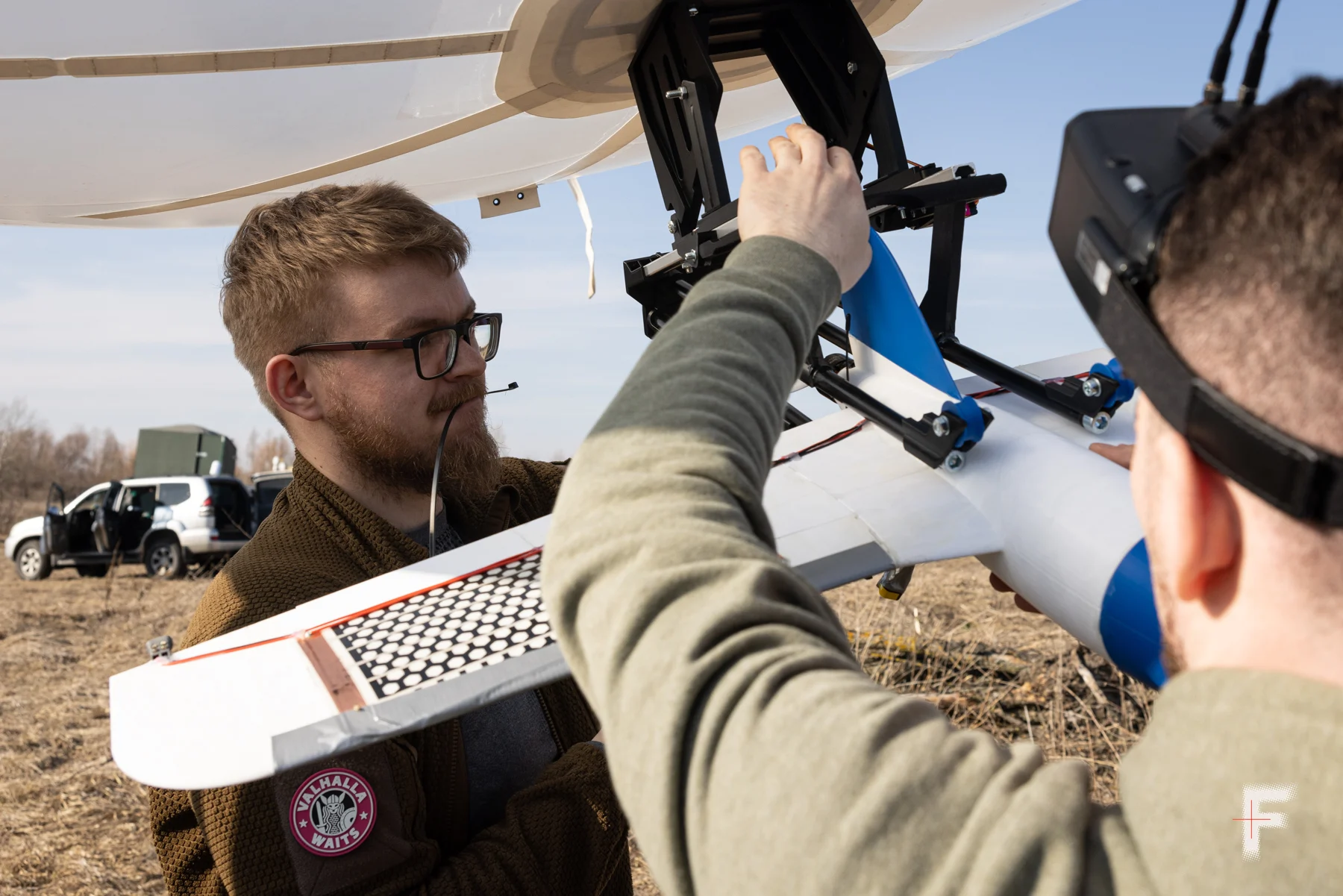
MaXon founder Oleksii Solntsev with an interceptor drone attached to an Aerobavovna balloon / Photo courtesy: Frontliner
Ukrainian defence tech company MaXon Systems has raised $300,000 in investment, founder Oleksii Solntsev told Defender Media. The pre-seed round involved Freedom Fund, Defender Ventures (the fund within the Defence Builder accelerator ecosystem), and one business angel. The funds will be used to accelerate R&D and scale the solution.
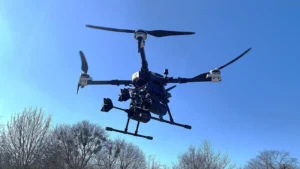
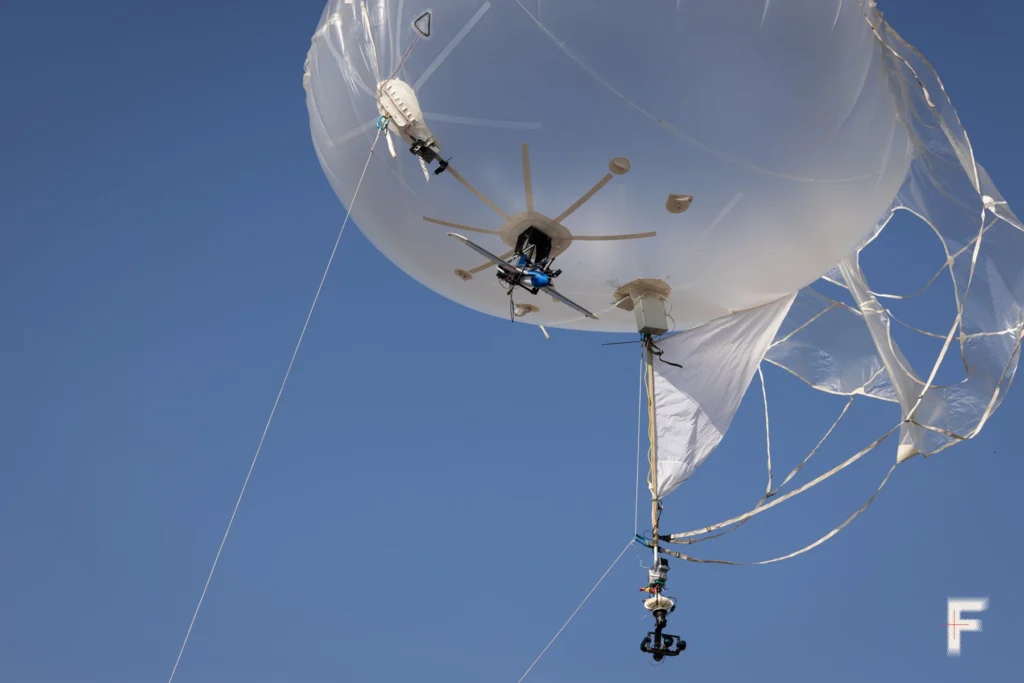
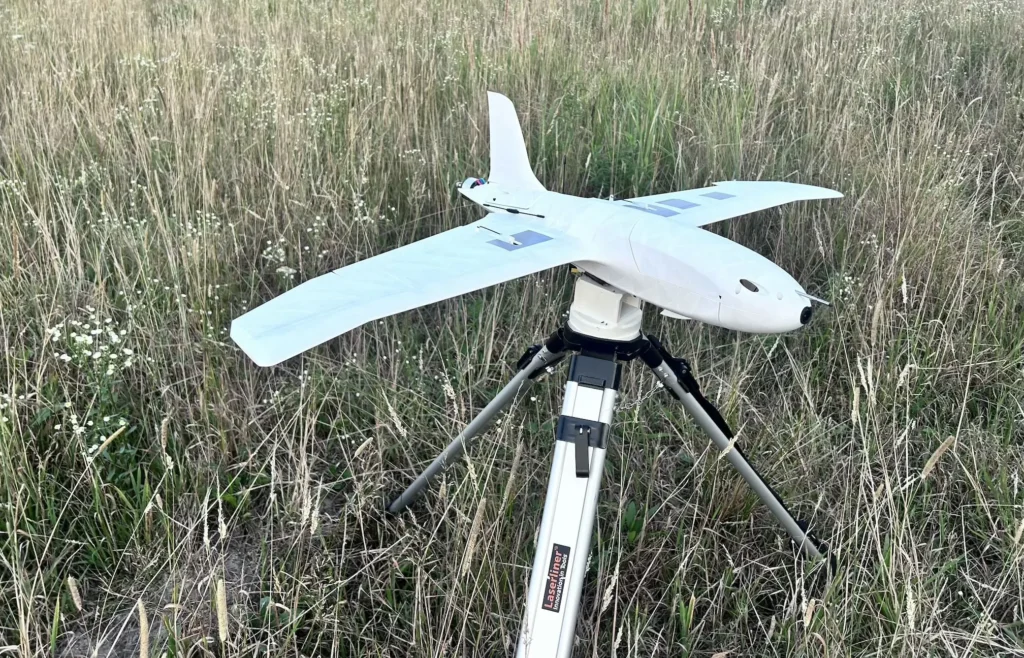
MaXon is developing an autonomous air-to-air defence system designed to protect large cities from Shahed drones and their modifications. The system comprises an aerial or ground platform, its own detection and targeting system, and interceptor drones.
Combat trials of MaXon began three weeks ago. Ukraine’s state defence tech cluster Brave1 says the system is already showing its first positive results. According to Solntsev, if the system’s assumptions are confirmed, deploying 20–25 MaXon units would be enough to protect all of Kyiv from Shahed attacks. Defender Media spoke with the company’s founder, investors and partners.
“A team of system engineers”
Oleksii Solntsev founded MaXon about seven months ago, in early 2025. Previously, he co-founded and served as CEO of the Ukrainian–German venture SmartZavod, which developed hybrid manufacturing technology for complex, high-precision industrial parts.
For MaXon, he managed to bring together people with the right skills and experience. “It’s a strong team of system engineers,” says Solntsev, who has also worked for European automotive giants. The experience of solving complex engineering problems in industrial corporations and a deep-tech start-up is now being applied to developing the autonomous air defence system.
The trigger for the project was a call for ideas to counter Shahed drones, announced in Denmark. This confirmed that no truly effective countermeasure to Russian–Iranian drones had yet been found, and the problem was more urgent than ever. After taking part in the event, the MaXon team began working with the Brave1 cluster and systematically researching Shahed interception. Contacts with Ukraine’s Armed Forces Institute and military intelligence allowed them to go even deeper.
“We broke down the process of destroying Shaheds into stages and started working systematically on each of them,” Solntsev explains.
How the MaXon air defence system works
The first stage was the placement of the aerial defence system. The team had to determine where and how Shaheds fly, and how to deploy interceptor platforms for maximum effectiveness. The second stage was detection – without detecting a Shahed, you can’t shoot it down. MaXon developed its own Shahed detection and targeting system.
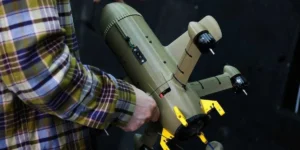
The interceptor drones themselves are also MaXon’s own development. Their warhead was designed with assistance from Ukraine’s Armed Forces Institute and a partner company specialising in munitions.
“So: preliminary analysis – detection – launch – approach – detection by the interceptor – final targeting – destruction. We already have positive results at each stage,” says Solntsev.
According to Solntsev, developing the system in such a short time was possible thanks to Ukraine’s ecosystem of advanced manufacturers and tech companies – MaXon has integrated many solutions from external partners.
The aerostats used as aerial platforms for the interceptor drones were built by the Ukrainian company Aerobavovna. The detection system was based on the thermal imaging cameras from the Ukrainian firm Oko Сamera.
“We have had a positive experience of cooperation, MaXon has a great team, and their solution looks promising,” said Aerobavovna CEO Yurii Vysoven.
CEO of Oko Camera Denys Nikolaenko says he met Solntsev in 2024 during a pitch at the NATO–Ukraine Defence Innovators Forum in Kraków. “I liked his energy and our shared vision for localising defence production in Ukraine,” he says. “At first, we provided cameras for testing and advised on how to achieve the highest image quality – and even then, we were impressed by how effectively our cameras detected Shaheds. We are proud to have become part of this collaboration – it has tremendous potential.”
The interceptor drones are made up of 90% Ukrainian components. The “last mile” interception technology currently being tested was sourced from Ukrainian–European provider Dremian.
MaXon met most of these partners thanks to Brave1, which also helped secure the initial investment.
“MaXon’s technology is about completeness and algorithmic precision,” says Solntsev. “Thanks to our own algorithm, software, and technology stack, we can detect a Shahed anywhere, regardless of radar coverage quality, and the level of automation we aim for removes human error, shortens operator training, and enables the protection of large perimeters.”
The system works as follows: aerostats with interceptor drones and the Shahed detection system are placed around the city’s perimeter. According to Solntsev, the MaXon detection system has already confirmed Shahed detections at 12–16 km ranges in combat conditions.
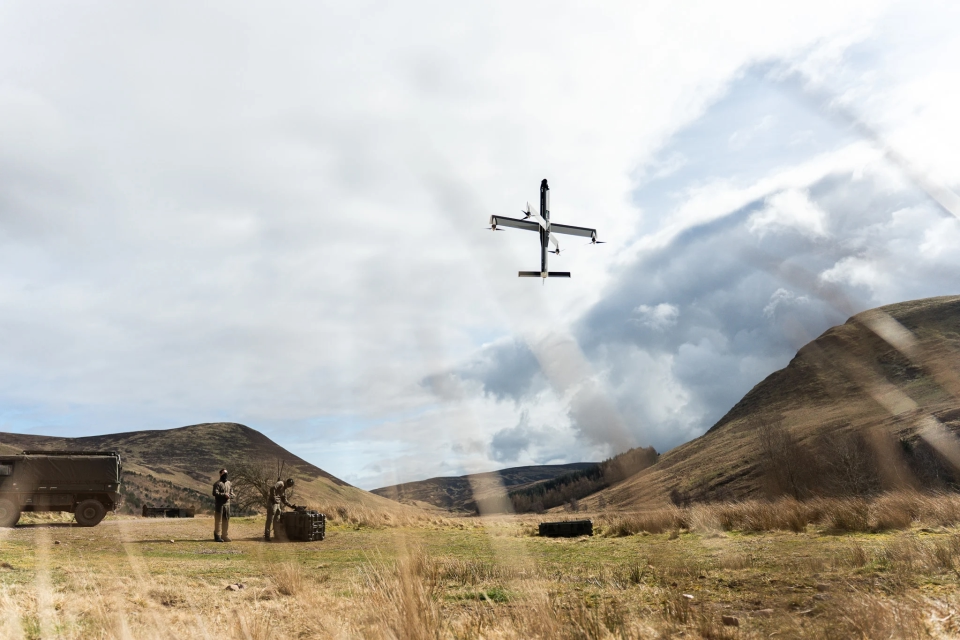
Once a target is detected, the operator launches the interceptor drones, which automatically home in using radar or MaXon’s own targeting system. The drones can reach speeds of up to 300 km/h – more than enough to handle current versions of the Shahed and Geran drones. The team is already preparing for trials of a new propulsion type that will allow effective interception of jet-powered Shahed variants.
Solntsev says that 20–25 MaXon systems would be enough to protect Kyiv, with the cost of downing a single Shahed at $3,500–4,000.
What’s next
According to Solntsev, the system has been in combat trials for three weeks and “the technology is showing excellent results.” Brave1 confirms this. This success motivates the team to continue fundraising to increase R&D and scale production.
The current round will allow MaXon to take the working prototype to a production-ready product and fulfil its first military requests. The team already has preliminary commitments and is actively talking to investors about joining the next funding round.
Daria Yaniieva, Investment Director at Sigma Software Labs and partner at Defender Ventures, says she has known Solntsev from previous projects in the tech ecosystem, so her trust in the team was high from the outset. “At an early stage, it’s all about the team – and here it’s truly strong, systematic and adaptable in its approach,” she says. “MaXon is working on a very painful yet global problem, where unique solutions could become the new standard for a rapidly growing market. It’s important that more such technologies emerge – and fast iterations plus the founder’s adaptability give a chance to scale them quickly.”
Solntsev says the project team has doubled in size over the past three months. “What sets us apart is our boldness, our experience in building genuinely complex integrated systems, and our breakneck R&D pace, based on systematic scientific approaches,” he explains. “We love Ukraine and want to smash as many Shaheds as possible.”
By submitting this form, you give Defender Media consent to the processing of personal data.
Надсилаючи цю форму, ви надаєте Defender Media згоду на обробку персональних даних.
Latest news
1
Volodymyr Zinovskyi has replaced TAF Industries founder Oleksandr Yakovenko as the company’s CEO
2
Skyeton unveils a version of Raybird UAV with a hydrogen-powered electric motor
3
The Ukrainian Council of Defence Industry launches the UCDI Investor Club. Its first project is a Ukrainian defence tech dealbook
4
Ukrainian CHUMA fibre-optic drones debut on Brave1 Market — carry up to 4 kg
5