Black Mirror #19. Ground mother drone Argus, VTOL Sova-20, hydrogen-powered UAV, and other novelties of Russian miltech
Review of new Russian miltech developments for the first week of August
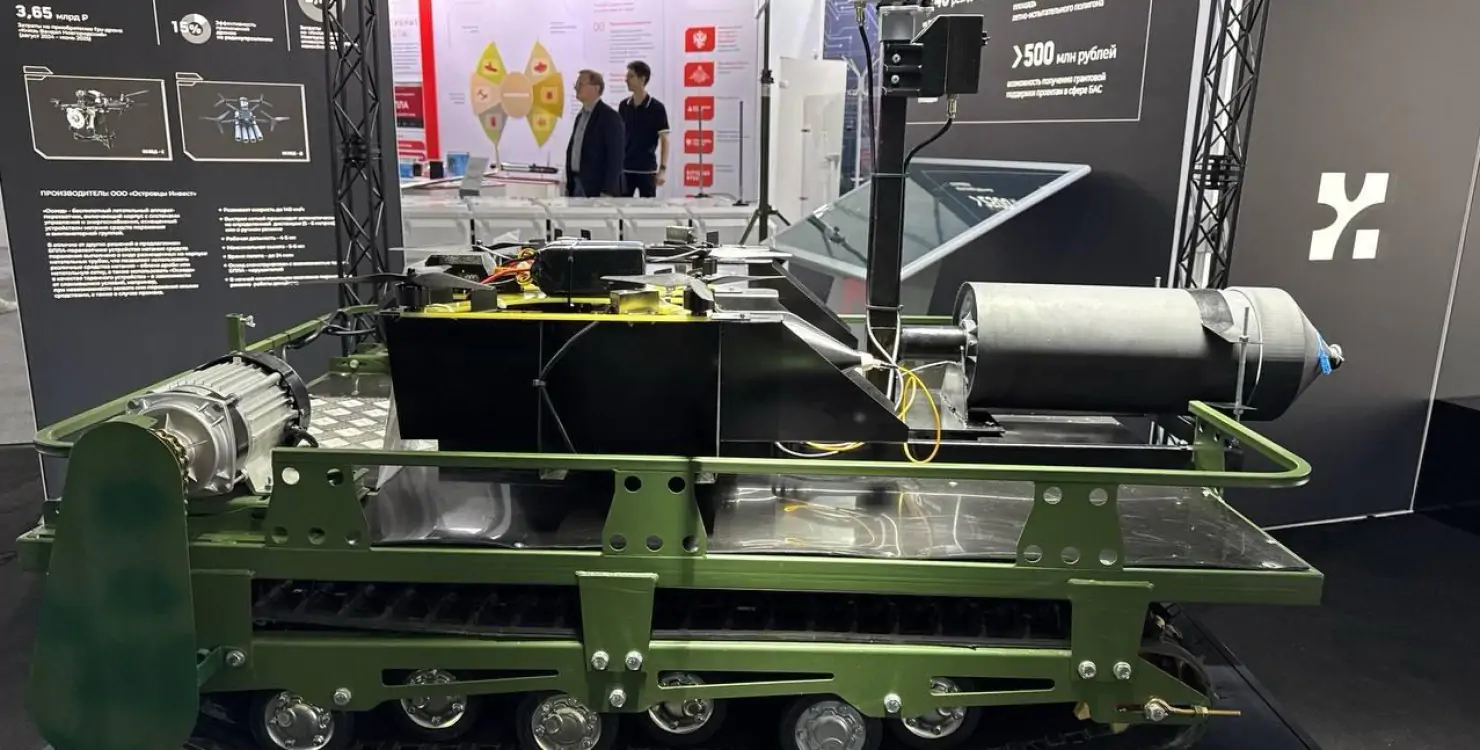
The Dronobus complex for transporting and launching drones / Source: Internet
The Russian military-industrial complex continues to develop new technologies aimed at waging a protracted war. This week, the focus has been on a ground platform with “sleeping” drones for conducting an ambush, technologies for identifying UAVs by sound, the unmanned complex Krestnik-M for combating surface objects.
These and other new Russian miltech developments — in “Black Mirror” #19.
Ground platform with “sleeping” drones
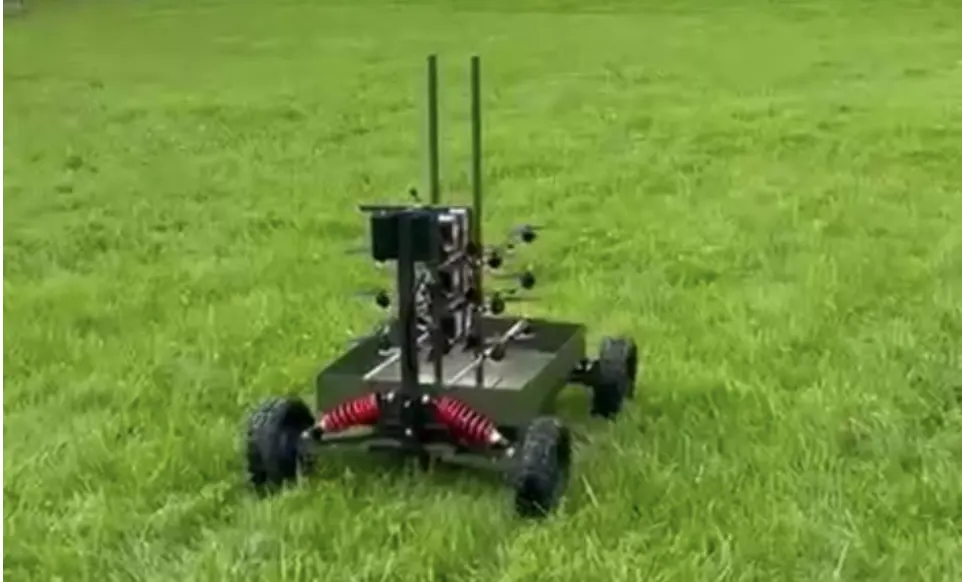
‘Mother UGVs’ are now appearing on the other side, too (just days ago, Ukrainian company IRV unveiled the Karakurt UGV at IRON DEMO 2025, capable of carrying and launching up to six FPV drones). This week at the Archipelago 2025 tech event in Skolkovo, Russia showcased the Argus ground platform, equipped with so-called “sleeping” drones. One operator can bring such a platform to the application area and leave it in an ambush. The ground control station includes a feature that allows for creating a “drone swarm.”
Any drone from Argus can be put into deep sleep mode and then turned on by one operator from a remote control. Thanks to the deep sleep board, drones can be in standby mode for many days. At the same time, some drones can perform the communication relay function or carry sensors.
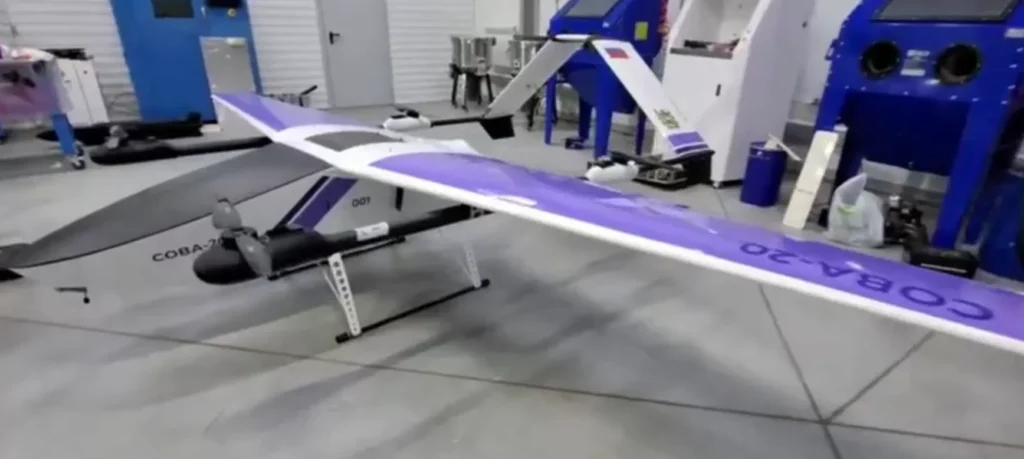
VTOL Sova-20
The Tomsk Research and Production Centre for Drones has completed the development of the new VTOL Sova-20. The device is now being prepared for flight tests. In the future, it is planned to deliver medicines, equipment, and other critical cargo to remote settlements.
The UAV is equipped with a hybrid power plant and can transport up to 40 kg of payload over a distance of up to 1,000 kilometres. It can take off from any flat area measuring 10×10 meters.
Acoustic UAV detection system
The Saratov Polytechnic University has developed a module that identifies drones using acoustic signals in background noise and changing operating scenarios. The new system can “work effectively in conditions of urban noise and poor visibility and adapt to new drone models.”
A hybrid approach was used for production, combining time-frequency sound analysis methods with deep learning algorithms using AI. The system consists of an audio preprocessing module, a neural network classifier based on convolutional and recurrent layers trained on a dataset of UAV sounds, and a web interface for recording audio via a microphone, visualising the results in real time, and classifying drone types.
The system was trained using data augmentation techniques, such as noise and speed changes and transfer learning. The developers say the new solution integrates into existing infrastructure and works on standard equipment.
Russians want to simplify aerial photography with drones
Currently, drone operators must obtain a license from the Federal Security Service to work with state secrets, then give the materials to the “security forces” for verification. In time, all this takes about two months, and under such conditions, the shooting loses its relevance. Now the Russian Ministry of Transport wants to simplify these procedures.
Russian market participants believe that it is possible to establish no-fly zones where the military needs them and cancel the mandatory coordination of the shooting results in other places. Also, landowners can be allowed to shoot their land without approval, provided that the results are used for “personal purposes,” and the approval of the Ministry of Defence should be obtained only in case of transferring the results to other persons.
Optical transmitting and receiving modules for drones
Russia will develop optical transmitting and receiving modules for base stations and drones to solve the problem of limited range, vulnerability to interference and channel overload when controlling UAVs. Such a tender for 19.8 million rubles with the codename Thread-4 from the Ryazan RDRTU appeared on the state procurement portal.
The project involves developing and manufacturing optical communication line modules for drones operating with increased optical losses and solar flares. The optical channel is more protected from radio interference and does not require licensed frequencies. Thanks to such technology, it is possible to significantly increase the range and stability of communication between UAVs and base stations.
The appearance of such modules will allow for the mass use of drones in the same area without mutual interference, which will at least reduce the risk of losing control of them.
Hexacopter Korvet heads into serial production
A video has surfaced showing tests of the Russian hexacopter Korvet by the company “Russkoye Oruzhie.” The Wikipedia page for the drone states that production began as early as 2024, but serial manufacturing is only now planned to commence. The drone will be capable of carrying a 15 kg payload, including munitions or other cargo, and can reach altitudes of up to 600 metres.
Most sources state that the drone’s range reaches up to 75 km, but the aforementioned Wikipedia page cites a more realistic figure of 15 km. Nevertheless, the specifications of the “Korvet” have likely improved compared to the drone’s initial version.
Hydrogen-powered UAV
The first hydrogen fuel cell drone in Russia was presented on Sakhalin. According to an engineer from the Centre for Hydrogen Energy, hydrogen is stored in a composite cylinder under a pressure of 350 atmospheres and enters “at the moment of electrochemical reaction”.
The drone can stay in the air for up to 4 hours and carry loads of up to 5 kg. It was assembled in Moscow in cooperation with the Wings of Sakhalin Scientific Centre and is currently in the final stages of certification.
Interceptor drone Skvorets PVO
The Russian Centre for Unmanned Systems and Technologies first showed the artificial intelligence drone Skvorets PVO, designed to intercept enemy drones. Its artificial intelligence and active interception system allow it to automatically capture a target, and its high speed (up to 270 km/h) allows it to catch up with and destroy it. The CBST also presented the Digital Watch distribution network of acoustic sensors for detecting, classifying, and determining the direction of movement of drones.
Dronobus complex for transporting and launching drones
The Korney Scientific and Technical Centre presented the Dronobus complex for transporting and launching drones with fibre-optic control. At maximum carrying capacity, the platform can transport up to 150 kg over a distance of up to 10 km, while the length of the fibre-optic cable that provides control reaches 10 km for the ground platform and 15 km for the drone.
Krestnik-M drone for combating surface objects
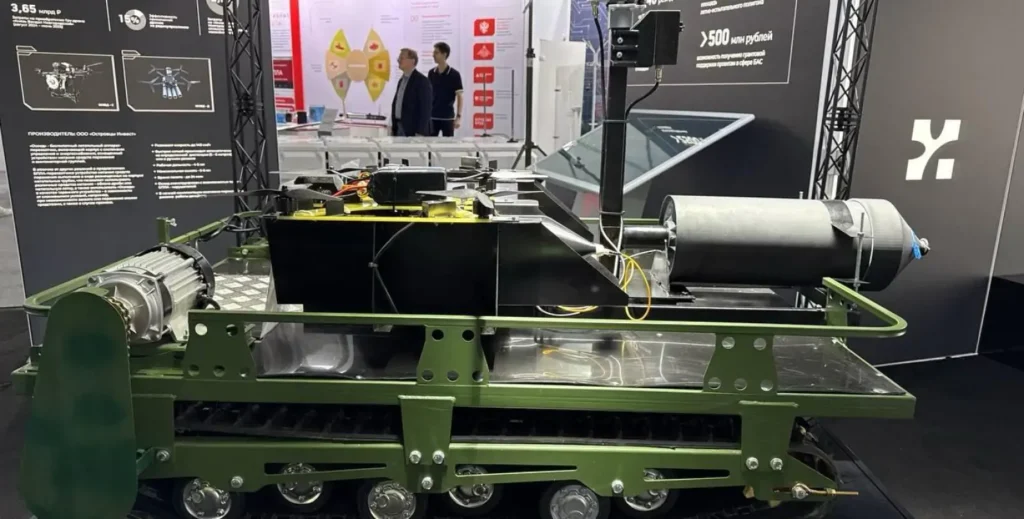
The Krestnik-M unmanned aviation complex for combating surface objects was first presented at the International Forum Unmanned Systems: Technologies of the Future in Skolkovo.
Information about the product is presented as part of the Foundation for Advanced Research (FAR) exposition. This complex is designed to combat surface dynamic and stationary objects. It can be launched from land, air, and surface platforms.
By submitting this form, you give Defender Media consent to the processing of personal data.
Надсилаючи цю форму, ви надаєте Defender Media згоду на обробку персональних даних.
Latest news
1

Volodymyr Zinovskyi has replaced TAF Industries founder Oleksandr Yakovenko as the company’s CEO
2
Skyeton unveils a version of Raybird UAV with a hydrogen-powered electric motor
3
The Ukrainian Council of Defence Industry launches the UCDI Investor Club. Its first project is a Ukrainian defence tech dealbook
4
Ukrainian CHUMA fibre-optic drones debut on Brave1 Market — carry up to 4 kg
5