Head of the SSU “Alpha” unit Yevheniy Khmara — on requirements for manufacturers and innovations awaited at the front
The army needs auto-targeting turrets, 20 km fibre-optic UAVs, and high-precision munitions for operational-tactical use
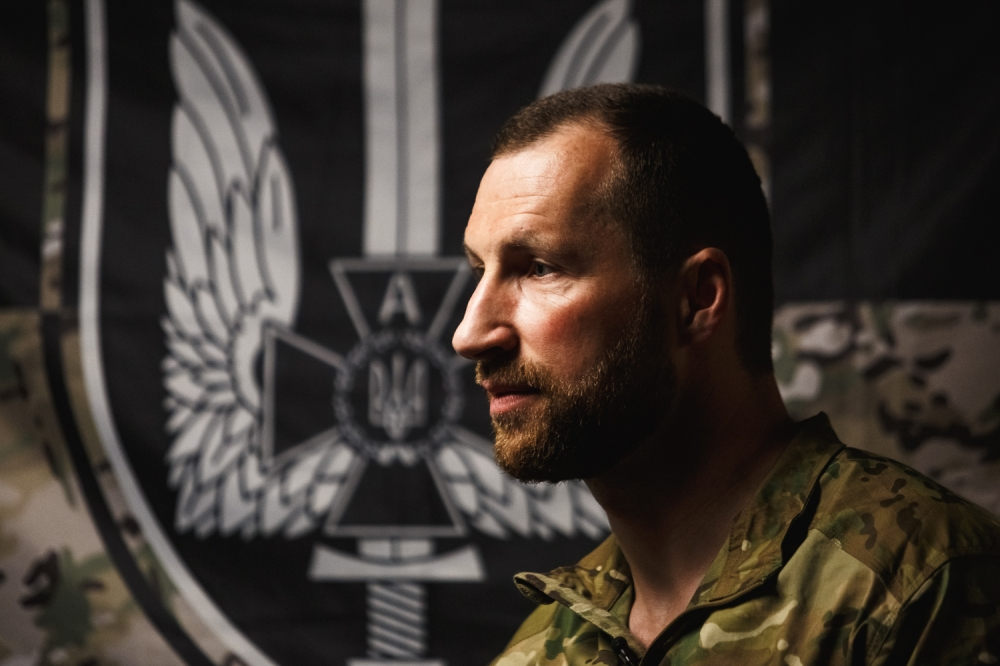
Photo: Yurii Stefanyak/Ukraїner
The Alpha Centre of the Security Service of Ukraine (SBU) is one of the Defence Forces’ most effective units when it comes to eliminating enemy targets. Major General Yevheniy Khmara, head of Alpha, made a surprise appearance at the recent Defence Tech Era forum, held to mark the two-year anniversary of the Brave1 cluster. In a public interview from the conference stage, Khmara explained how technology — particularly various types of drones — enables special forces to carry out missions across multiple zones, from the front line to deep behind enemy lines. The Defender outlines the key points from his talk, focusing on the use of defence innovations, cooperation between the military and manufacturers, and the technologies the Defence Forces still lack.
How innovations are implemented at the front line
Innovations are introduced at the front in two main ways: either when new technologies emerge that influence tactics, or when the combat situation itself necessitates the development of new tools.
In the first scenario, initiatives usually come from companies or developers who offer solutions based on their own inventions or battlefield experience. They approach the military with proposals for testing particular tools and expect support, resources, and feedback in return. The willingness of commanders at various levels to support promising innovations plays a key role here.
The second scenario occurs when the tactical situation on the ground demands the creation of a new tool. In such cases, close cooperation is required between manufacturers and combat units capable of testing and refining developments in real time. This is more challenging, as it often means pulling the most capable combat teams away from their current missions.
Approximately 80% of innovations follow the first scenario, and only 20% arise directly from tactical needs. Nevertheless, both approaches are equally important, as they complement one another and ensure flexibility in adapting to the ever-changing battlefield.
How interaction with manufacturers works
According to Khmara, manufacturers must be ready to work alongside the military — literally in the trenches — and refine their products under real combat conditions. Teams that demonstrate this level of engagement deliver the kind of results both sides expect. At the same time, civilians sometimes fail to understand how testing works or why feedback is not gathered as quickly as they might hope.
He also highlighted four key requirements that the military both upholds and expects from manufacturers. The first is confidentiality: everything developed or discussed must remain within a limited circle until the appropriate time. The second is integrity — in conduct, in communication, and in matters of pricing.
The third is commitment: a serious, responsible attitude towards the task at hand and genuine involvement in the process. The fourth is efficiency: what is agreed upon must be delivered. The military expects the same level of dedication from manufacturers as they demand from themselves — where every word and every action is aimed at achieving a result. For their part, they strive to communicate promptly about any issues and work together to find solutions, even when the process is less than perfect.
What technologies do the Defence Forces of Ukraine need?
There is currently no single “magic” technology that could radically alter the situation on the front, Khmara says. Instead, the Defence Forces require a balanced set of tools that function effectively across different zones and operational depths—from the front line to the strategic rear.
In the near rear, one of the key priorities is developing automated systems to counter enemy tactical UAVs. These include, in particular, self-guided turrets capable of destroying FPV drones and other unmanned aerial vehicles. It is essential not only to design such systems, but also to ensure their mass deployment, provide training for personnel, and establish smooth cooperation between developers and the military.
At the tactical depth, Khmara highlights the need for fibre-optic drones with a cable length of at least 20 km. These would help achieve at least parity with the enemy in buffer zones. In the operational-tactical zone, the priority is high-precision delivery systems capable of deploying powerful warheads—especially for striking fortified dugouts and enemy shelters.
At the strategic depth, a major achievement has been the mass production of long-range drones, with tens of thousands already in service. However, there remains a pressing need for supporting systems—alternative navigation, orientation, and mapping tools. These systems must be compatible with various types of unmanned platforms and be able to function reliably under any conditions.
By submitting this form, you give Defender Media consent to the processing of personal data.
Надсилаючи цю форму, ви надаєте Defender Media згоду на обробку персональних даних.
Latest news
1
Volodymyr Zinovskyi has replaced TAF Industries founder Oleksandr Yakovenko as the company’s CEO
2
Skyeton unveils a version of Raybird UAV with a hydrogen-powered electric motor
3
The Ukrainian Council of Defence Industry launches the UCDI Investor Club. Its first project is a Ukrainian defence tech dealbook
4
Ukrainian CHUMA fibre-optic drones debut on Brave1 Market — carry up to 4 kg
5