Dorozvidka #4: “Bars”, Achilles, “Techno Taras”, and $100,000 for DrillApp
Weekly roundup of news Defender didn’t cover

Image Credits: The Serhiy Prytula Foundation
In the Dorozvidka section, Defender publishes news from the editorial backlog over the past week, along with notable content from Ukrainian and international media. Today’s selection includes updates on Ukraine’s missile program, an interview with the commander of a drone regiment, update on investments in a military training app, personnel changes at the Ministry of Defence, and troubling news from one of Ukraine’s leading EW manufacturers.
Ukrainian “Bars” missile: details emerge
BBC journalists uncovered new information about the Ukrainian “Bars” missile, which was first mentioned on April 11 by the Minister for Strategic Industries, Herman Smetanin.
According to BBC’s government sources, “Bars” belongs to the class of so-called cruise “missile-drones.” Notably, this is a private-sector development. The missile’s range is approximately 700–800 km.
Sources say the missile’s key advantage is the ability to mass-produce it in Ukraine. Images and detailed specifications remain classified.
DrillApp secures $100,000 in funding
Ukrainian startup DrillApp, which develops a training app for the military, has raised $100,000, according to a Forbes article citing the company’s press release.
DrillApp has not disclosed its investors but says they include business angels and veterans. The company plans to use the funds to develop an FPV drone course, a module on international humanitarian law, a psychological stabilisation program, and a B2B platform for professional defence training.
The app has over 200,000 users, including 50,000 active service members. DrillApp is being tested in NATO structures by instructors from Canada, Poland, and Estonia and has received localization requests from Israel and the U.S.
Fire at Kvertus
On the night of April 14–15, a fire broke out at the facilities of Ukrainian defence tech company Kvertus, which produces EW and ELINT systems. The company’s CEO, Yaroslav Filimonov, reported the incident on Facebook.
According to Filimonov, the fire destroyed part of the warehouse and components and damaged the second floor where production took place. The cause is under investigation. No employees were injured.
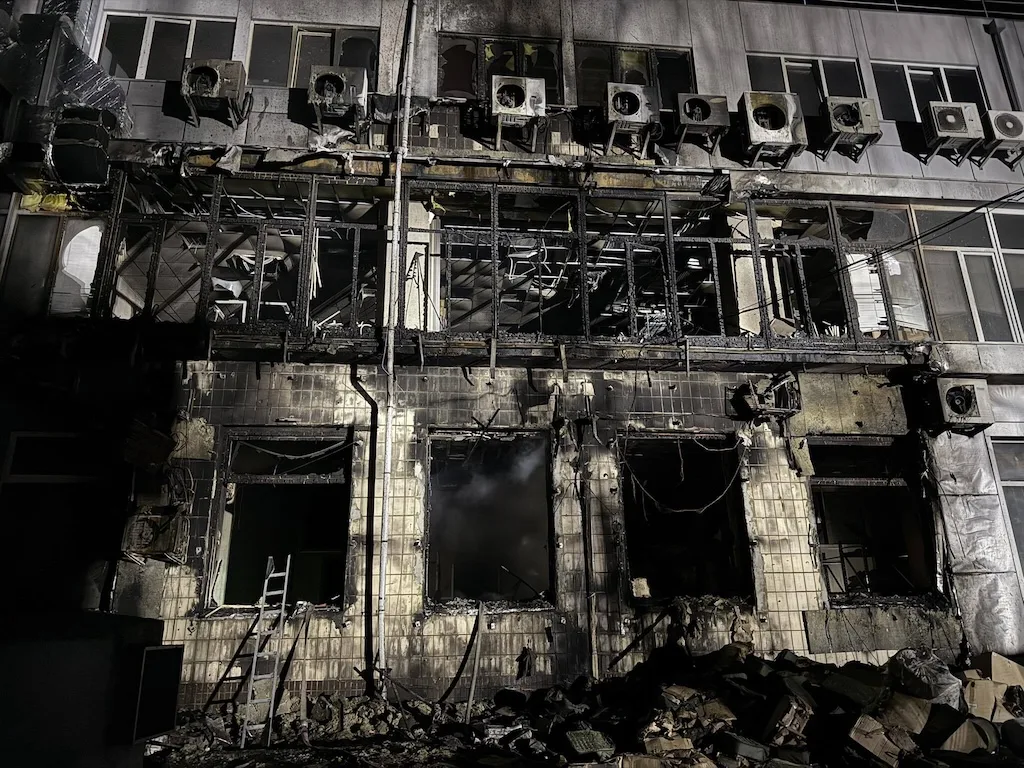
Filimonov wrote that the fire is a serious challenge but “definitely not the end” for the company. He confirmed that Kvertus continues to operate as usual. “Production, shipments, testing, field trials — everything is on schedule. We are already taking steps to minimize the incident’s impact on productivity,” he said.
Kvertus is one of the largest private producers of ELINT and EW equipment in Ukraine. The company employs over 100 people and manufactures more than 1,000 devices each month. Its product range includes anti-drone rifles and large-scale EW systems for infrastructure protection and electronic reconnaissance.
Oleh Berestovyi resigns from the Ministry of Defence
Head of the IT Department at the Ukrainian Ministry of Defence, Oleh Berestovyi, has announced his resignation on LinkedIn. Berestovyi stated that he is stepping down “voluntarily, of his own accord, and without conflict with the team.” He held the position for a year and a half.
He noted that he had been preparing for his departure with Deputy Defence Minister Kateryna Chernohorenko over the past two months and had trained a successor, whose name has not yet been disclosed.
During Berestovyi’s tenure, the ministry developed and launched the “Army+” app (with around 800,000 users), “Reserve+” (with about 4 million users), and several other products.
Achilles on the realities of drone warfare
The press service of Ukraine’s Ground Forces published an interview with Yurii Fedorenko, commander of the 429th drone regiment, call sign “Achilles.” He spoke about how drone systems have evolved from aerial reconnaissance to strike drone swarms, and how one of the most effective drone units in the Defence Forces was formed from volunteers and former territorial defence fighters.
“Techno Taras” – an effective drone interceptor
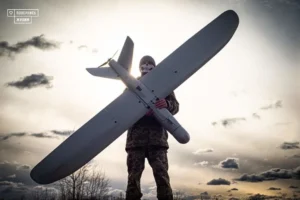
The Serhiy Prytula Foundation told “Militarnyi” about “Techno Taras,” a fixed-wing drone interceptor currently used by Ukrainian forces to down Russian reconnaissance UAVs.
The manufacturer has not been disclosed, but the Prytula Foundation contributed to its development, particularly advising on communications systems capable of operating in hostile EW environments. The interceptor’s range is up to 35 km, and it can fly at altitudes of up to 6,000 meters. The airframe, initiation board, and warhead are all made in Ukraine, with plans to integrate domestic motors in the future.
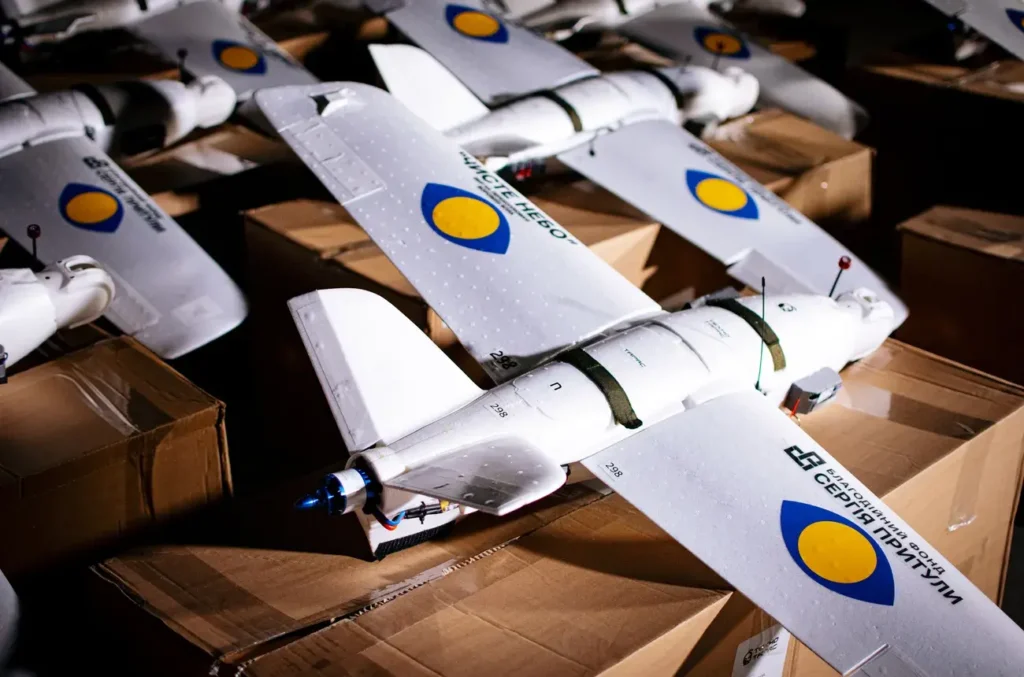
The foundation’s director, Andrii Shuvalov, calls “Techno Taras” an effective tool for “blinding the enemy.” “We’re seeing extremely high demand for this product,” he said.
Such drones effectively replace expensive anti-air missiles that Ukrainian forces previously used to down Russian recon UAVS. Each “Techno Taras” drone costs $1,600. It can stay airborne for over an hour and reach speeds of 160 km/h — enough to intercept Russian UAVs. The drones have already taken down Russian “Merlin” recon aircraft worth over $300,000.
The Prytula Foundation has delivered 274 “Techno Taras” units to frontline forces. Of those, 160 have been deployed, with 133 enemy UAVs shot down — an 83% interception rate. The foundation notes that these drones have significantly reduced the number of Russian recon flights over Ukrainian positions and frontline towns.
By submitting this form, you give Defender Media consent to the processing of personal data.
Надсилаючи цю форму, ви надаєте Defender Media згоду на обробку персональних даних.
Latest news
1
Volodymyr Zinovskyi has replaced TAF Industries founder Oleksandr Yakovenko as the company’s CEO
2
Skyeton unveils a version of Raybird UAV with a hydrogen-powered electric motor
3
The Ukrainian Council of Defence Industry launches the UCDI Investor Club. Its first project is a Ukrainian defence tech dealbook
4
Ukrainian CHUMA fibre-optic drones debut on Brave1 Market — carry up to 4 kg
5