Black Mirror #36. A missile on a Shahed, an interceptor-detection module on a Zala, and the anti-drone Lyudmyla
A review of Russian military-technology developments from the first week of December
Anti-drone turret Lyudmyla / screenshot from video
At the start of December, Russian forces continue to upgrade and diversify the payload of Shaheds and reconnaissance drones on the battlefield, refresh their logistics UAVs and shift towards electric motorcycles. More on the latest updates in Russian military technology can be found in Defender Media’s weekly review.
Ground logistics robot Omych
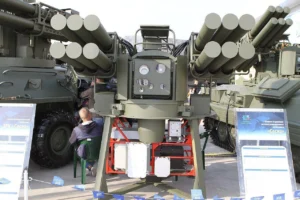
The Omych UGV is a tracked vehicle with a load capacity of “over half a tonne”, designed for logistics and towing equipment. The developers state that the drone can also travel underwater at depths of more than a metre. It can be driven either by a driver using the steering column or in remote control mode. There is also an Omych-Ogonyok modification — a platform that can carry Shmel, RPG-7, EW systems and drone detectors.
Arming a Shahed with an R-60 missile
This week, an R-60 air-to-air missile was spotted on a Russian Shahed strike drone. According to Serhii “Flesh” Beskrestnov, this combination is intended to destroy helicopters and tactical aircraft that hunt these drones.
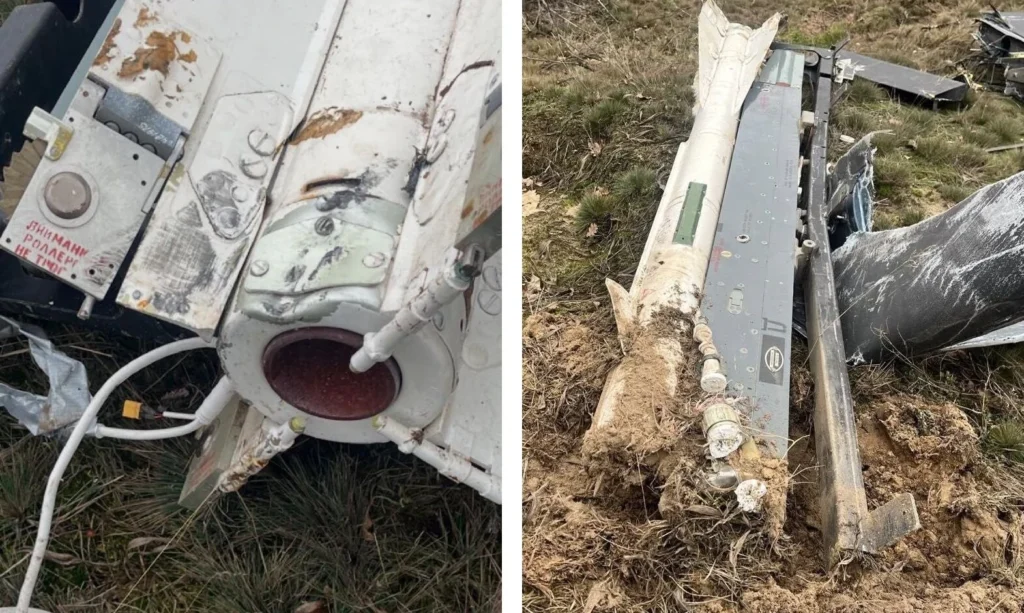
Proximity-detection module on a Zala UAV
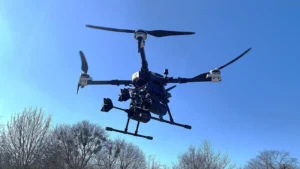
A proximity-detection module has been identified on the anti-aircraft FPV drones derived from the Zala UAV. Once it receives a signal from this device, the drone executes an evasive manoeuvre, assuming that an enemy interceptor is nearby.
The module features an antenna labelled 5.8 GHz, with a range of 4.9–6.2 GHz. The antenna signal feeds into a chip operating across all frequencies from 100 MHz to 6 GHz. Further signal tracking is more complex: processing is handled by an STM microprocessor, which then relays data to the flight controller.
It has been established that a standard 2.5-W VTX generates a sufficient signal level to trigger the detector at a distance of 8 metres. At the same time, it remains unclear why the regular video and telemetry transmitters do not cause false alarms — they are likely switched off during transmission.
In addition to the radio detector, which picks up signals from Ukrainian interceptor drones, the Zala is fitted with an overhead panoramic camera. Connected via HDMI to the onboard computer, it enables the drone to execute an evasive manoeuvre if the camera detects an enemy drone.
Patented UGV Kurier variant with EW
A patented variant of the Kurier robotic system has been unveiled, featuring an electronic-warfare package in place of armaments. No images or footage of prototypes are available in open sources, and there is no clarification on which specific EW systems are planned for the drone.
Orion-25
Russia is pursuing a new ekranoplan project, the Orion-25, whose first flying prototype was successfully tested in 2023. The aircraft’s approximate mass is around 14 tonnes, with seating for up to 30 passengers and a top speed of up to 500 km/h. Its range is up to 3,600 km, or up to 11 hours in the air.
Structurally, the Orion-25 is an enlarged version of the Orion-20 model and retains its layout — two front-mounted turboprop engines with tractor propellers.

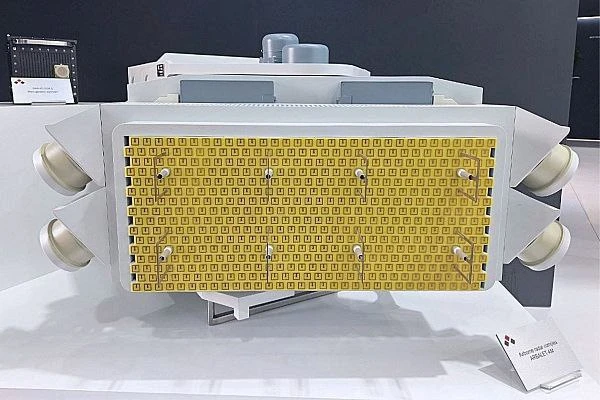
Aviation radar Arbalet-AM
At Dubai Airshow, the Radioelectronic Technologies Concern unveiled the multi-mode Arbalet-AM airborne radar suite, intended for installation on helicopters and aircraft. The complex is equipped with an active phased-array radar that provides enhanced low-probability-of-intercept operation and stable target tracking in conditions of heavy electronic interference.
The radar uses artificial intelligence to recognise air, ground and maritime objects and can classify ground targets. It is reported that the system has characteristics similar to the “Rezets” radar installed on Ka-52M helicopters.
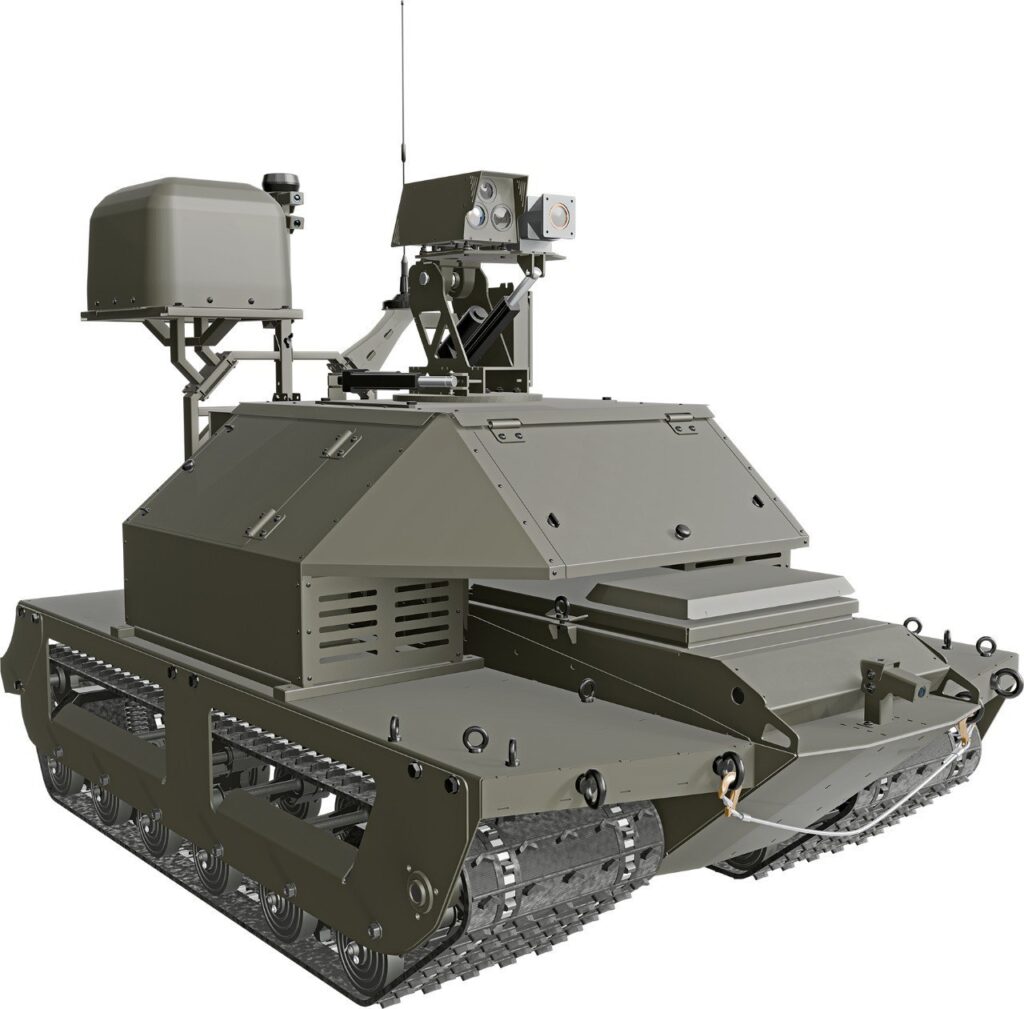
Anti-drone turret Lyudmyla
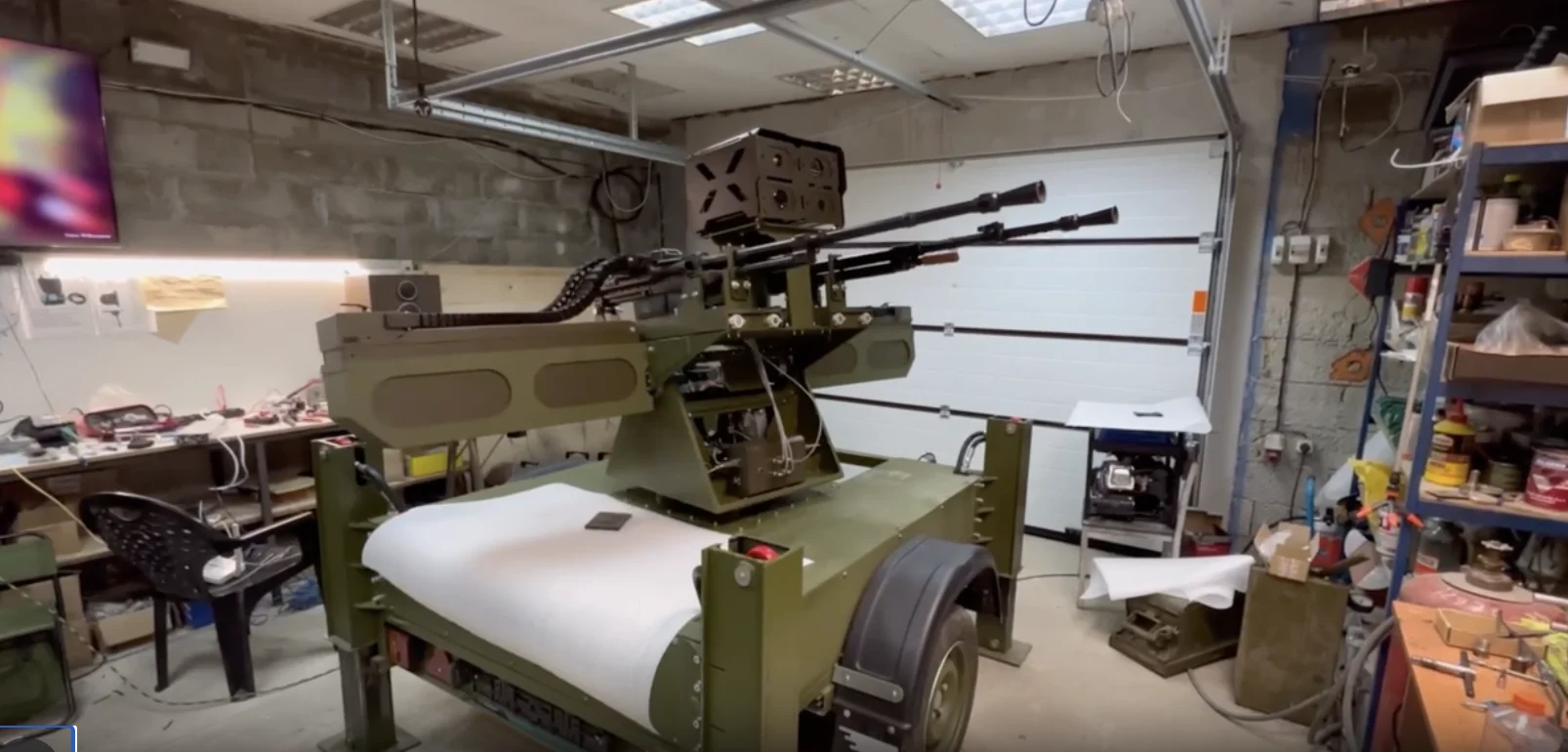
A version of an anti-drone turret with an electro-optical targeting system, named Lyudmyla, has been presented by volunteers from the Radart design bureau.
The systems, based on the 7.62-mm PKT and 12.7-mm NSVT, are equipped with a modern ballistic computer. According to the developers, they are capable of effectively intercepting small FPV drones at distances of several dozen metres and fire bursts of 15–20 rounds at ranges of 500–700 metres.
Silent motorcycle from Kalashnikov
The Kalashnikov Concern has presented a new model of silent, highly manoeuvrable motorcycle, the Izh-Enduro, with a trailer for military and civilian use. The motorcycle is said to reach speeds of up to 100 km/h, features simple controls and is equipped with a universal trailer capable of carrying up to 200 kg.
By submitting this form, you give Defender Media consent to the processing of personal data.
Надсилаючи цю форму, ви надаєте Defender Media згоду на обробку персональних даних.
Latest news
1

Volodymyr Zinovskyi has replaced TAF Industries founder Oleksandr Yakovenko as the company’s CEO
2
Skyeton unveils a version of Raybird UAV with a hydrogen-powered electric motor
3
The Ukrainian Council of Defence Industry launches the UCDI Investor Club. Its first project is a Ukrainian defence tech dealbook
4
Ukrainian CHUMA fibre-optic drones debut on Brave1 Market — carry up to 4 kg
5