China restricts the import of components for Ukrainian drones
Critical components were supplied in bulk from China due to lower costs and large production capacity
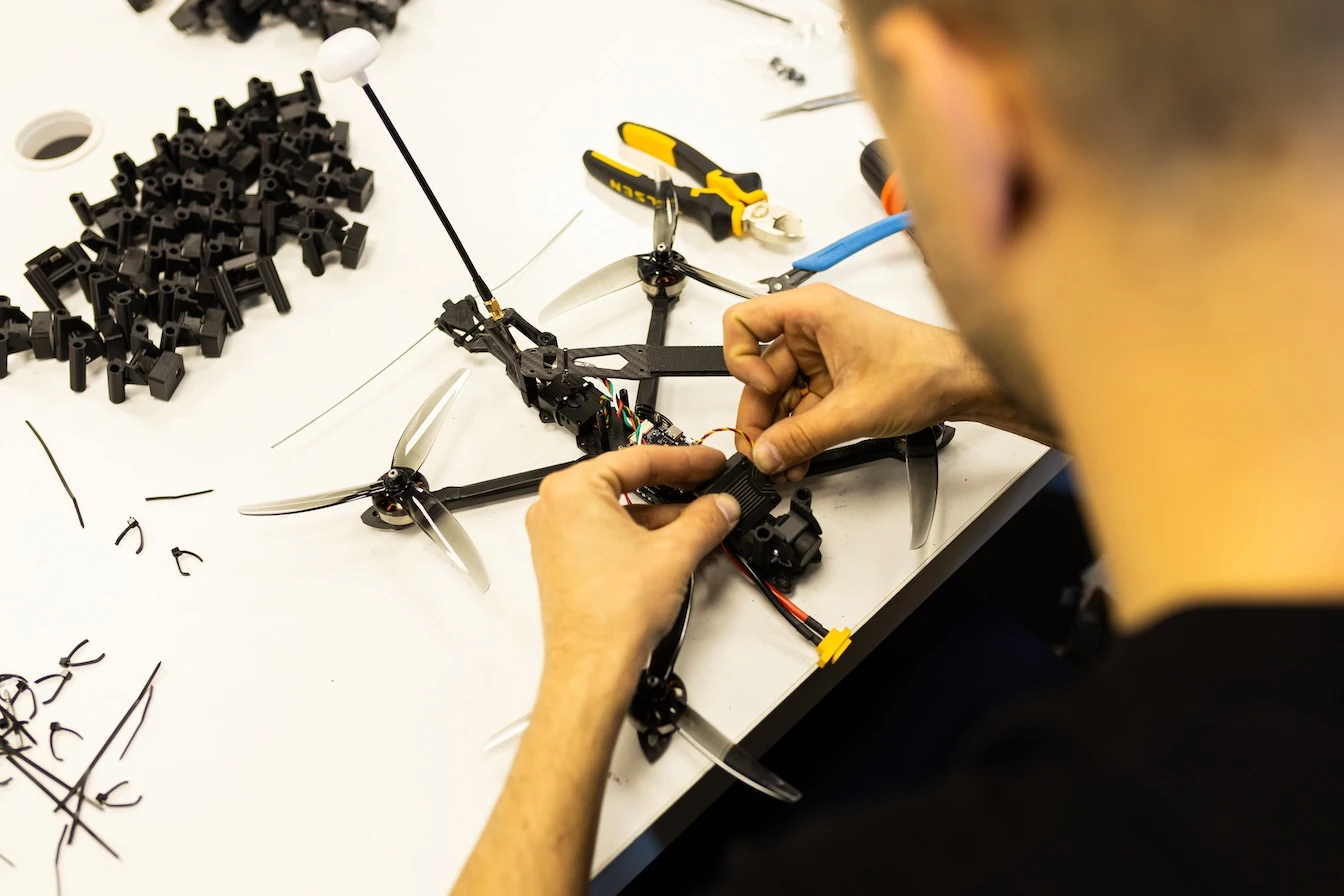
FPV drones manufacturing / Photo: General Cherry
China has introduced new restrictions on the export of technologies and parts used in the production of unmanned aerial vehicles. According to the German n-tv, Beijing is deliberately seeking to slow down the development of Ukraine’s drone industry, which has become one of the key factors in countering Russian aggression.
Analysts note that the decision was made in the wake of successful Ukrainian drone strikes on Russian targets. According to Hendrik Remmel, an expert at the German Institute for Defence and Strategic Studies (GIDS), such operations “put Moscow under military, economic and political pressure”, which is causing concern among Russia’s partners, particularly in China.
In addition to direct exports to Ukraine, China has also halted the shipment of electronics to EU countries if there is a suspicion that the equipment might eventually reach Ukraine. The co-founder of the Iron Cluster, Yurii Lomikovskyi, confirmed that attempts to make purchases through European intermediaries have repeatedly failed.
Although around 40% of components are now produced domestically in Ukraine, critically important elements were previously imported in bulk from China because of lower prices and the country’s large-scale production capabilities. The total value of Ukraine’s defence technology sector is estimated at $35–40 billion, employing more than 800 companies. The shortage of components directly affects the pace of serial production.
The Ukrainian side emphasises that these actions pose risks to the production rates of unmanned systems that have proven effective on the battlefield. For Ukraine, three areas are now crucial: diversifying supply sources (the EU, South Korea, Taiwan), replacing imported engines, batteries and autopilot systems, and establishing joint financial mechanisms with the EU to support serial production and R&D. These measures would help reduce dependence on Beijing’s political decisions.
At the same time, Lomikovskyi notes that achieving China’s level of efficiency will be difficult without long-term financing and joint research and development programmes with European partners. He urges European institutions to support Ukrainian start-ups, engineering, and the creation of serial production lines.
By submitting this form, you give Defender Media consent to the processing of personal data.
Надсилаючи цю форму, ви надаєте Defender Media згоду на обробку персональних даних.
Latest news
1
Volodymyr Zinovskyi has replaced TAF Industries founder Oleksandr Yakovenko as the company’s CEO
2
Skyeton unveils a version of Raybird UAV with a hydrogen-powered electric motor
3
The Ukrainian Council of Defence Industry launches the UCDI Investor Club. Its first project is a Ukrainian defence tech dealbook
4
Ukrainian CHUMA fibre-optic drones debut on Brave1 Market — carry up to 4 kg
5