Black Mirror #23. Zefir, Pantsir-ME, drones for children, and other novelties in Russian miltech
Review of new Russian miltech developments for the first week of September
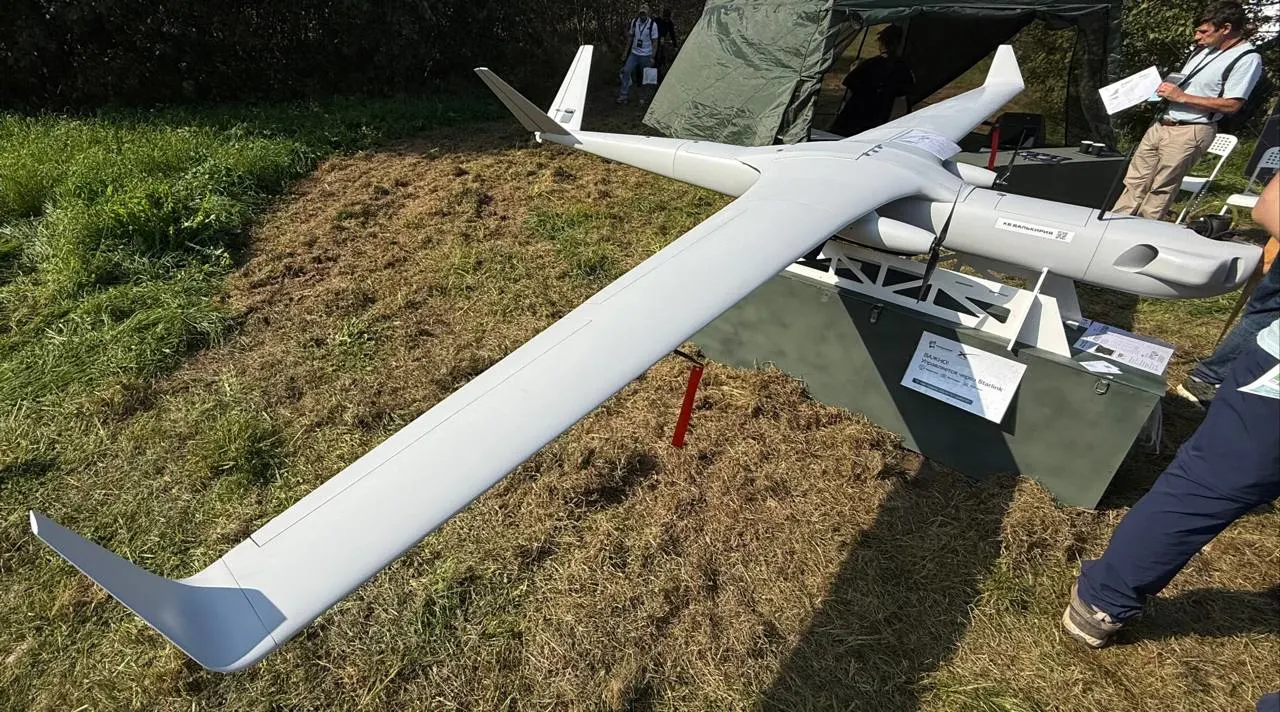
RD-8
Russian forces have been working on their own naval drones for a year and a half, according to Kyrylo Budanov, head of Ukraine’s Defence Intelligence. One of them – the Zefir – was recently used in combat. At the same time, Russia is developing underwater and aerial drones, working on deploying stratospheric communication platforms, piston engines for UAVs, and other robotic systems. In addition, the enemy is preparing its younger generation for war by introducing training drones for school and university students.
More details in Black Mirror #23.
Budanov on Russian naval drones
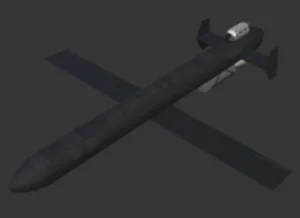
Russia has been working on the development of naval drones for more than a year and a half, said Kyrylo Budanov, head of Ukraine’s Defence Intelligence, in an interview with Apostrof TV. One example is the “Zefir” drone, which Russian forces recently used in combat.
At the same time, Budanov noted that Russian technology still lags far behind Ukraine’s Magura drones.
Drones will provide communication from the stratosphere
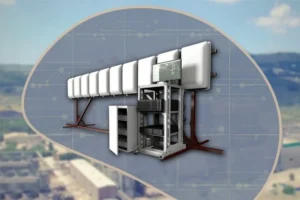
In 2027, Russia will begin deploying stratospheric platforms to provide 5G communication, which could become an alternative to space systems such as Starlink. The head of the Centre for Aerospace Technologies spoke about such plans.
So far, the plans are for a single instance, but even one stratostat with a set of equipment can provide communication for monitoring and controlling a certain number of drones.
If the tests are successful in 2026, then the deployment of stratospheric platforms may begin in 2027. Work on the project is underway with one of the leading mobile operators, which is interested in creating such local service areas in sparsely populated parts of the country.
The Belarusian SKY-TRUCK
Russia’s ally, Belarus, is also developing its military-industrial complex. The Minsk KB Unmanned Helicopters (UAVHELI) completed the first series of test flights of the SKY-TRUCK transport unmanned helicopter. Initially, the device was created to perform deliveries to offshore oil platforms, but as a result, the functionality of the machine was expanded.
What is promised by the characteristics:
- flight range up to 480 km;
- flight time up to 4 hours;
- load capacity up to 600 kg;
- maximum take-off weight – 2350 kg.
At the customer’s request, the helicopter can be equipped with various power plants, including Rolls-Royce 250-C20, Rolls-Royce 250-C30, Rolls-Royce 250-C47 engines, as well as the Russian VK-650V. However, it is unclear how the design bureau wants to obtain Rolls-Royce engines, since the company has been included in the sanctions lists of the EU, the USA, Canada and the UK.
New autonomous naval complexes
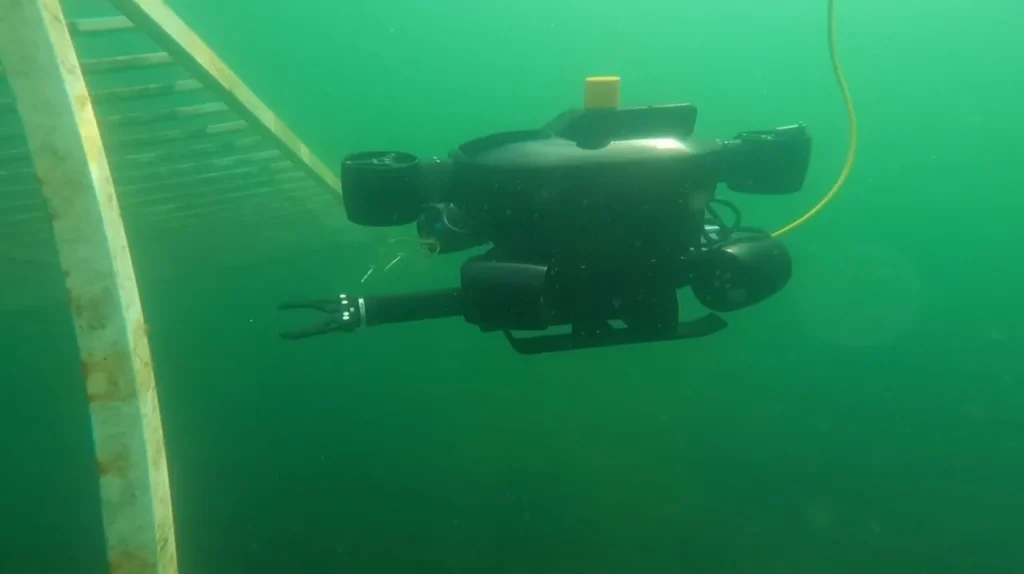
The new Russian company, RoboCorp, will be engaged in the development and production of underwater, surface, and flying autonomous systems. The company was registered in the Russian-occupied Sevastopol. It will be engaged in the full cycle of work, from design and production to the service of the devices. Now the company already has unmanned boats and a remote-controlled underwater vehicle, TNPA X1. The developers also promise to show the Pchela UAV for monitoring industrial facilities.
A company related to RoboCorp already has Wheelies robot control platforms, developments in the field of AI and a chip on a crystal with a neuroaccelerator.
Educational drones for Russian children
Drones for children were demonstrated at the Eastern Economic Forum in Russia. In particular, a line of educational UAVs developed on Sakhalin was shown at the stand of the Ministry of Industry and Trade. Four types of drones were presented for different age categories: from junior schoolchildren to college students.
Russia is developing the production of piston engines for UAVs
The Yaroslavl training and production centre will launch the production of engines for 1.5 billion rubles. Serial production of small-sized aircraft piston engines will be established at the Yaroslavl Region Research and Development Centre.
The region plans to produce up to 5,000 engines annually, which will largely cover Russia’s need for engines of this class. The engines are intended to be used not only in unmanned aircraft, but also adapted for water and marine applications.
Petersburg underwater drones
Petersburg LLC Underwater Drones and Moscow LLC Laboratory of Underwater Communication and Navigation have founded the company Morro (or Marine Robotics), which will perform work using underwater drones. According to the CEO of the new company, in the coming years, it will earn about 300 million rubles a year.
The Moscow company is engaged in underwater navigation systems, and the St. Petersburg company manufactures underwater vehicles under the brand name Trionics Lab. Both companies have long received requests for underwater service work, but the competencies and resources to carry them out separately were insufficient.
Giacinth-K in action
The first video of the firing of a battery of long-range self-propelled artillery systems 2S44 Giacinth-K on the chassis has appeared. The Russians used several (from 2 to 6) new Russian wheeled self-propelled artillery systems Giacinth-K, simultaneously in the war against Ukraine. The targets were detected by operators of Russian drones, who transmitted the coordinates to the gunners. Having received the task, the calculations of Giacinth-K quickly went into position, deployed the installations and fired a series of accurate shots from 152-mm rifled guns 2A36.
Giacinth-K can fire at a distance of up to 35 km with Krasnopol-M2 shells and up to 47 km with Krasnopol-D shells, or their modification with semi-active lasers.
Artillery complex that has no blind spots
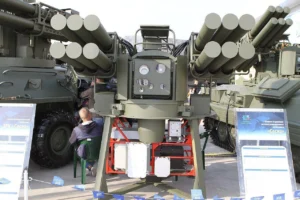
Ships of the Russian Navy will receive the Pantsir-ME artillery complex, which has no blind spots. Such powerful installations will be mass-produced for the needs of the Russian Navy. It has a radar-optical control system consisting of 3 radars (optical, long-range detection and target tracking). Thanks to this, the Pantsir-ME sees the target of attack in detail, even parachutes.
This is the only system in the world whose turret combines both artillery and multi-mode missile weapons.
Mother drone RD-8 with Starlink control
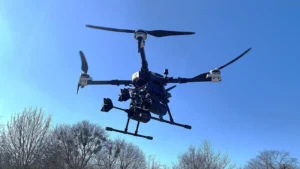
Russia’s Valkyria Design Bureau has unveiled the RD-8 drone-mothership, which, in addition to a standard radio channel, can also be controlled via Starlink or mobile networks. The presentation was spotted by the VD: Enemy Reconnaissance community, which monitors Russian developments.
According to the manufacturer’s website, the line includes several drones with Starlink or mobile control: RD-7, RD-8, RD-10, and RD-12. While Starlink is not operational in Russia, enemy drones could use this channel in Ukrainian rear areas.
The RD-8 is positioned as a drone for supporting assault troops and isolating the frontline up to 150 km deep. It is designed to clear strongpoints ahead of assaults using FPV drones.
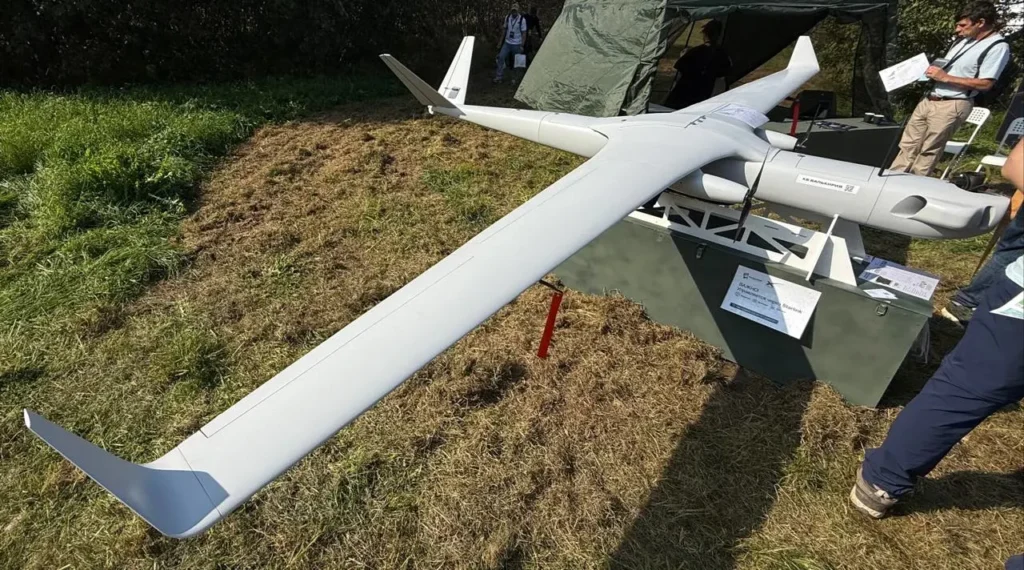
RD-8 specifications:
- Wingspan: 3.8 m
- Propulsion: two electric motors with hybrid power unit
- Fuel tank: 5 litres of petrol
- Take-off weight: 30 kg (recon configuration), 35 kg (mothership)
- Endurance: up to 4.5 h (recon), 3 h (mothership)
- Max altitude: up to 3 km
- Range: up to 150 km
- Cruise speed: 80 km/h, max speed: 200 km/h
The drone can carry two FPV drones with 3 kg warheads each. The recon variant is equipped with day and night cameras: the day camera has 30x zoom, while the night one features a thermal imager with a 640×512 pixel matrix.
By submitting this form, you give Defender Media consent to the processing of personal data.
Надсилаючи цю форму, ви надаєте Defender Media згоду на обробку персональних даних.
Latest news
1
Volodymyr Zinovskyi has replaced TAF Industries founder Oleksandr Yakovenko as the company’s CEO
2
Skyeton unveils a version of Raybird UAV with a hydrogen-powered electric motor
3
The Ukrainian Council of Defence Industry launches the UCDI Investor Club. Its first project is a Ukrainian defence tech dealbook
4
Ukrainian CHUMA fibre-optic drones debut on Brave1 Market — carry up to 4 kg
5