Black Mirror #16. Upgraded Lancet, Knyaz Vandal Novgorodsky, Partizan, and other new developments in Russian miltech
A review of new Russian miltech developments for the third decade of July

Source: Internet
The latest issue of Black Mirror comes out the morning after yet another massive Russian missile and drone attack on Ukrainian cities. This digest is produced by the Defender Media editorial team to help Ukrainian engineers and military personnel anticipate and prepare for future threats.
This week’s focus includes the evolving role of Russia’s “Knyaz Vandal Novgorodsky” drone, the expansion of the “Partizan” UAV line, new developments from ZALA, and the unmanned naval vessel Breeze. In addition, Russian forces are taking the first steps toward creating a fully autonomous UAV system capable of holding the front line for months without human intervention.
Details in the Black Mirror #16.
Drone for a high-speed communication system
The fiber-optic kamikaze drone Prince Vandal Novgorodsky has begun to be used for a high-speed communication system – with its help, fighters receive gigabit mobile Internet. This was reported by the general director of the Ushkuynik Research and Development Center.
According to him, there were several cases when the assault group took a support and “threw a drone having removed the media converter from there and inserted a regular Wi-Fi router instead”. In essence, this resulted in a high-speed communication system created on the go.
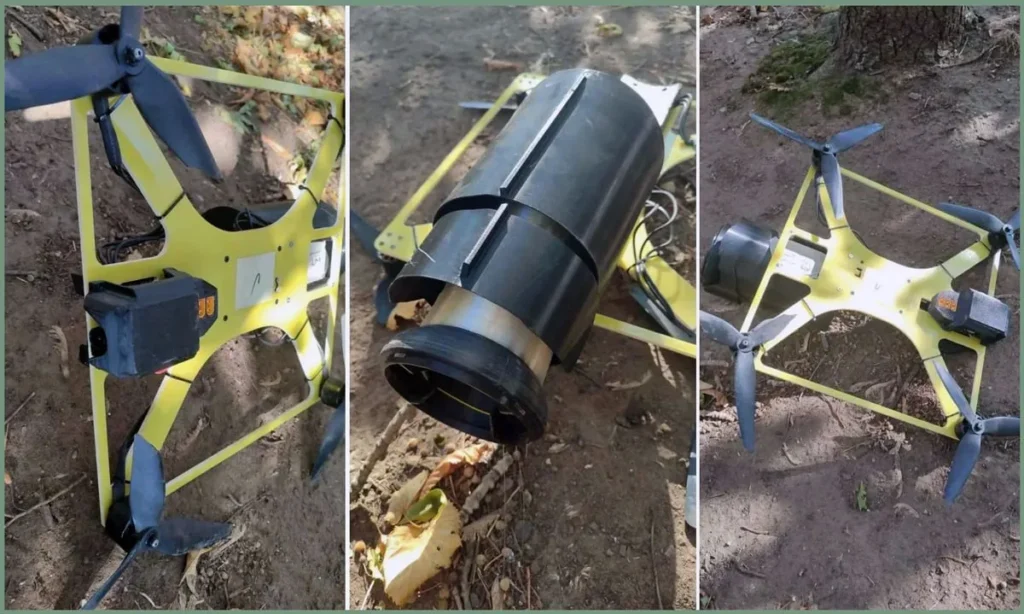
Another Partisan appeared in Russia
A specialised group of Partisan drones was created at the Reshetnev Siberian State University. They are capable of operating in harsh climatic conditions without stable communication. The development consists of two drones:
- Partisan-T is a signal repeater for controlling other UAVs;
- Partisan-R is a drone that monitors and delivers cargo to hard-to-reach areas.
According to the developers, the drone repeater is equipped with a high-capacity battery, a data transmission system and a powerful omnidirectional antenna. The multifunctional drone is designed for monitoring and delivering cargo and can deliver a payload weighing up to 5 kg.
Breeze USV
The Arkhangelsk region will be the first northern region of Russia where the practical use of marine drones will begin. The Breeze project is being implemented within an agreement signed between the government of the Arkhangelsk region and the companies Si Proekt and Bezekypazhnaya Logistika at the St. Petersburg International Economic Forum in 2025.
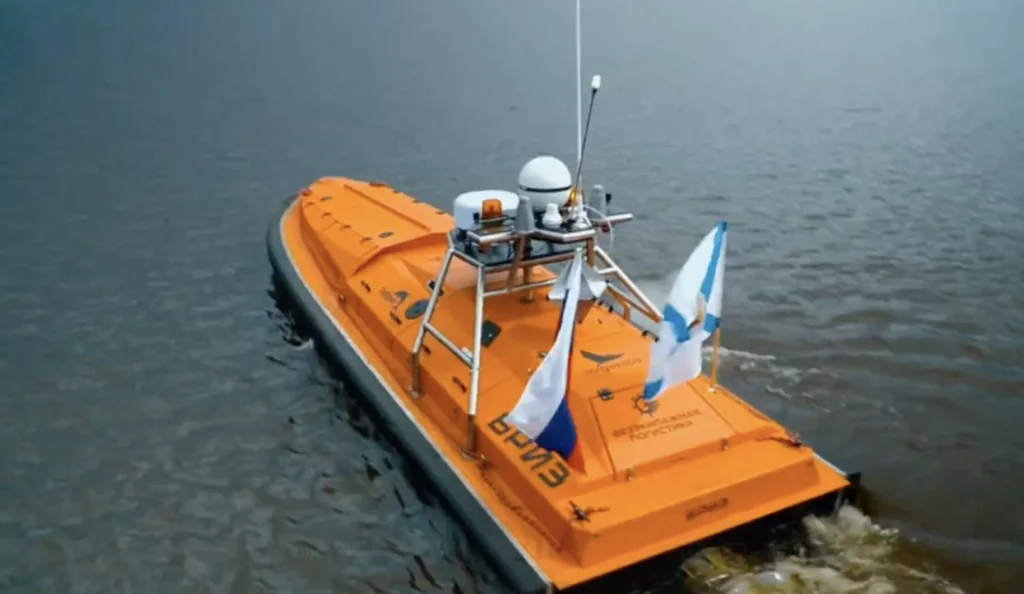
Breeze is a small vessel with a diesel engine, manufactured at a Yaroslavl plant. It is equipped with many domestic radio-electronic communication systems, which allow it to be operated in various modes. The vessel is equipped with an automatic identification system, as well as manual and automatic control systems. The technical characteristics of the boat allow it to transport up to 500 kg of cargo over considerable distances.
Meanwhile, a joint center for the production of marine drones has been opened in St. Petersburg on the basis of the defense-industrial enterprise Kingisepp Machine-Building Plant. It plans to produce several dozen marine drones for civilian purposes.
Compact radar for drones
At the Innopolis University training ground, Russians tested a radar complex for drones that weighs less than 750 grams. With its help, one can monitor forest fires, control river floods, observe agricultural work, etc.
The main advantage of the Vector-X radar with a synthesized aperture is the ability to operate in any weather and time of day.
New samples for electric rocket propulsion systems
The Russians tested the first sample of the conversion and control system for electric rocket propulsion systems.
JSC OKB “Fakel” (part of the State Corporation Roscosmos) tested the first sample of the SPU-1100 conversion and control system for electric rocket propulsion systems based on SPD-50M and SPD-70M. The tests were positive, which indicates the possibility of using the SPU as part of propulsion systems with a capacity of 300-400 W.
Currently, the Russians are working on the possibility of manufacturing conversion and control systems based exclusively on domestic components.
Autonomous operation of UAVs is not far off
Russia is developing a combat system for autonomous operation of UAVs, which will be able to independently maintain the line of combat contact. Such products will allow controlling a front hundreds of kilometers long without the participation of operators. Reconnaissance UAVs will patrol the territory themselves and call strike drones when detecting any target. Until the moment of initialization, the drones will be in special “nests” (hangars).
At the same time, there will be enough energy for the entire system and drone flights for two to three months. The software will allow connecting devices from different manufacturers to the system, capable of solving all kinds of tasks. The set stored in the nest will include a drone-sapper, FPV-kamikaze, as well as large tactical UAV-bombers and an interceptor drone for air defense purposes.
News from ZALA
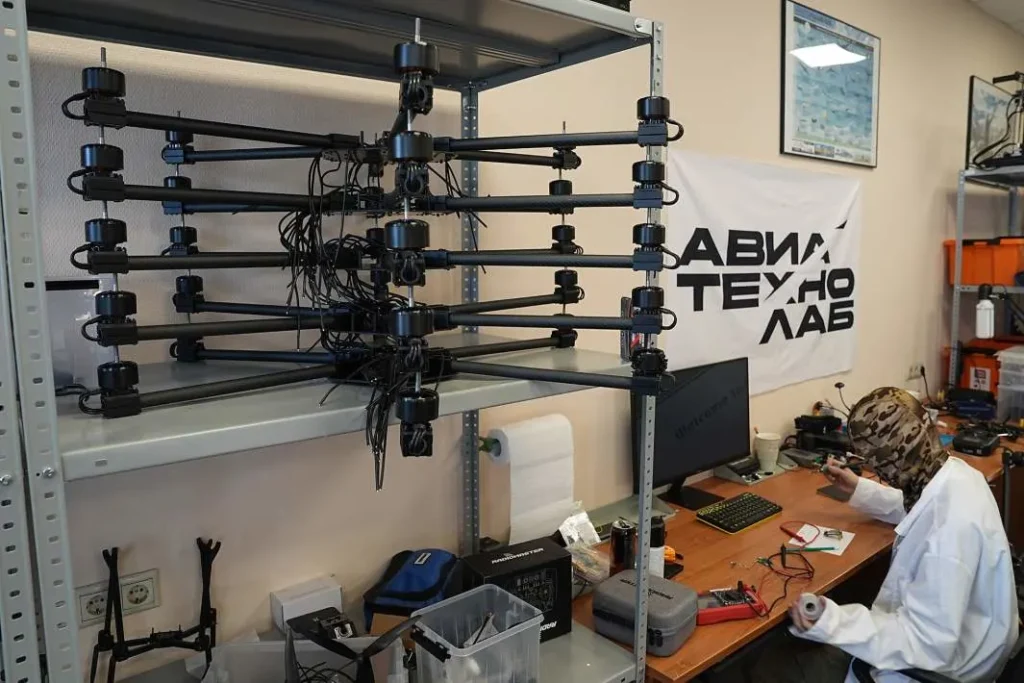
ZALA specialists have significantly redesigned the command and telemetry control modules of the optical-electronic reconnaissance UAV and the ZALA 421-16E HD control center, as well as the strike UAV-“kamikaze” Lancet and Linz-5. Also, additional pseudo-random frequency tuning modes were probably introduced, which significantly increased the protection of these systems.
Standard frequency ranges for controlling the Lancet UAV:
- 868-870 MHz – the main range, which transmits commands from the operator and returns telemetry from the UAV.
- 902-928 MHz – a backup frequency that may be in the control channel, but it was impossible to record a signal on this frequency due to interference.
Drones-waiters
Russians have new strategies. The Ukrainian military spotted a Russian drone-”waiter” with a solar battery on top.
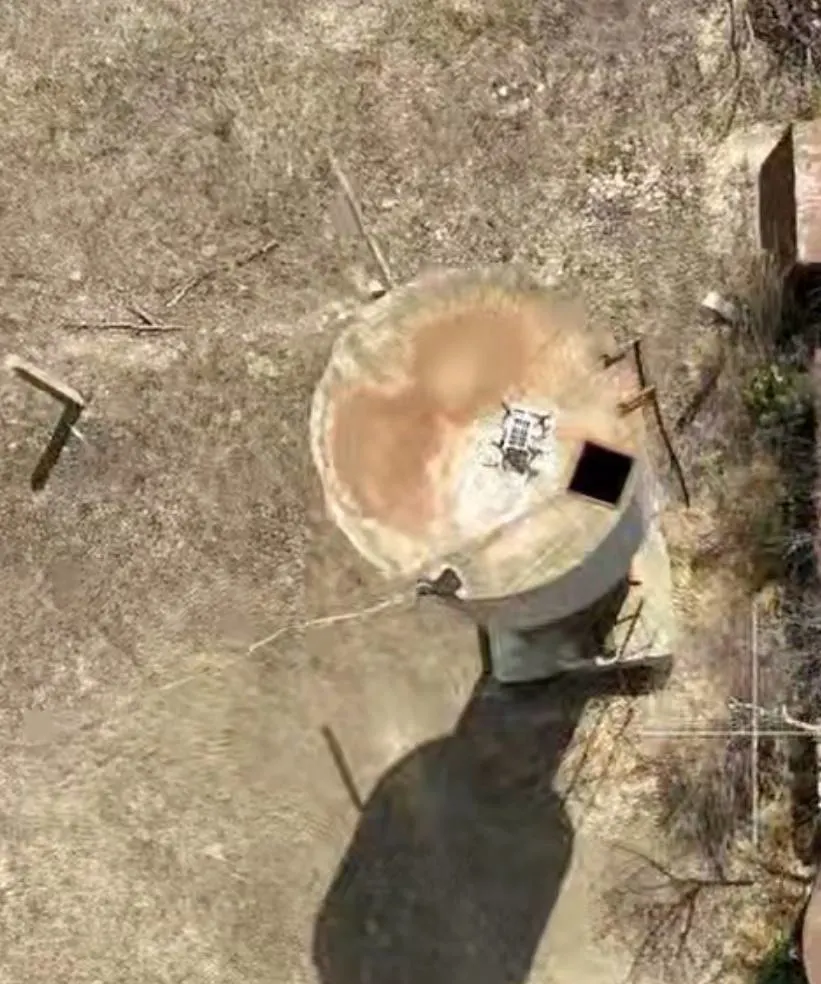
These drones have a variety of uses. They can carry a video camera to a high point, carry a beacon or repeater, or simply wait for a victim to attack. The solar panel is too small to power a complex system, but it can keep the drone on standby for a long time.
Belarus helps Russia in building rockets
The Belarusian defence-industrial complex is involved in the production of Russian missile weapons. Sighting systems, stabilisers, microcircuits, optical systems and other components from Minsk are integrated into Russian tanks, drones, missiles and aircraft. In addition, Minsk still officially supplies products to Rostec and the Almaz-Antey concern, with which it maintains direct correspondence despite international sanctions. Belarusian products have been found in the Kh-101, Kh-47M2, Kh-69, Kh-38 missiles, as well as in the S-300 and S-400 air defence systems.
By submitting this form, you give Defender Media consent to the processing of personal data.
Надсилаючи цю форму, ви надаєте Defender Media згоду на обробку персональних даних.
Latest news
1

Volodymyr Zinovskyi has replaced TAF Industries founder Oleksandr Yakovenko as the company’s CEO
2
Skyeton unveils a version of Raybird UAV with a hydrogen-powered electric motor
3
The Ukrainian Council of Defence Industry launches the UCDI Investor Club. Its first project is a Ukrainian defence tech dealbook
4
Ukrainian CHUMA fibre-optic drones debut on Brave1 Market — carry up to 4 kg
5