Acting fast and acting big: EDF and all it has to offer to Ukrainian Innovators
Defender’s columnist reports on European Defence Fund Info Days 2025
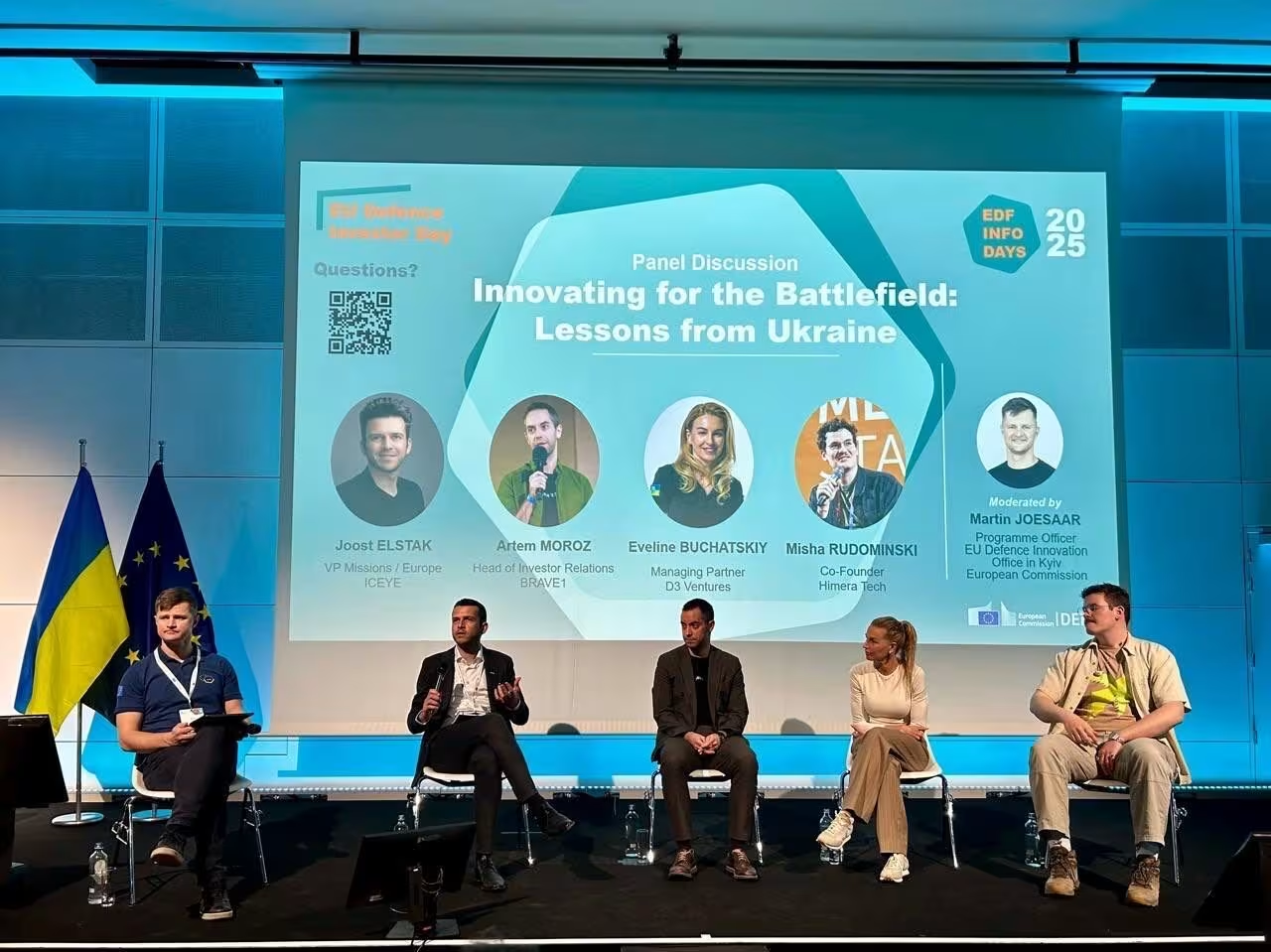
Image Credits: European Defence Fund
Brussels recently hosted one of the year’s key defence innovation events — the European Defence Fund (EDF) Info Days 2025. Among the attendees was Viktor Kharyton, who reports for Defender on what was discussed at the forum — and what funding opportunities, collaborations, and strategic prospects the EDF may offer to Ukrainian defence tech startups.
Geopolitical tensions are escalating globally, heating up the diplomatic — and increasingly defence — scene by the hour. Europe’s pursuit of strategic autonomy is no longer aspirational; it has become a pressing imperative. That message rang loud and clear from Defence and Space Commissioner Andrius Kubilius during the early April’s EDF forum in Brussels, a record-breaking event attended by over 5,000 innovators, policymakers, and industry leaders. As Commissioner Kubilius declared, “The world is dangerous. Europe now must take responsibility for its own defence. We scale up and speed up, acting fast and acting big.”
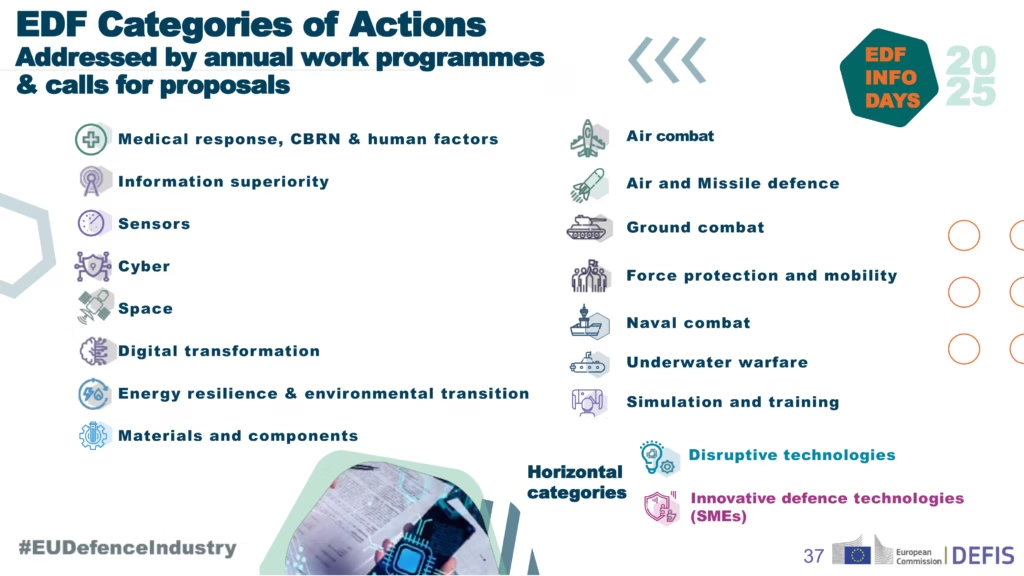
With a significant seven-year (2021-2027) budget of approximately €7.3 billion, the EDF is a cornerstone of Europe’s defence innovation strategy, aiming to boost defence innovation across the continent. Its expansive work programme spans critical sectors: from air and ground combat to naval warfare, cyber and space security, medical readiness, and energy resilience. Notably, disruptive technologies and small to medium-sized enterprises (SMEs), including those from Ukraine, are given strategic focus. But a focus does not mean an easier path to funding.
The EDF is the European Union’s flagship initiative to drive collaborative defence research and development (R&D) among EU Member States and associated countries. The 2025 Work Programme targets a broad spectrum of capability areas, with additional mechanisms under the EU Defence Innovation Scheme (EUDIS) aimed at supporting SMEs and mid-caps.
What’s in store for Ukrainian defence innovators
Historically, the EDF funding has focused on EU member states. Yet, Brussels’ continued solidarity with Ukraine is opening new doors. While direct funding remains largely restricted, multiple entry points have emerged:
EU Defence Innovation Scheme (EUDIS): Ukrainian innovators are encouraged to participate through EUDIS, offering cascade funding — financial support to third parties (FSTP) — of up to €60,000 per entity. EUDIS hackathons specifically focus on Ukraine’s urgent battlefield needs, welcoming Ukrainian citizen participation.
Associated Partnerships and Supplier Opportunities: Ukrainian entities can join EDF consortia as associated partners or suppliers. While direct costs aren’t eligible for EDF grants, participating companies can still significantly benefit from tech transfers, market access, and integration into Europe’s defence ecosystem.
EU-established Entities with Ukrainian Ownership: Companies registered within the EU but owned by Ukrainian entities or individuals are eligible as beneficiaries or subcontractors, contingent upon appropriate guarantees.
Engaging with the EDF requires navigating complex eligibility and compliance frameworks. With all 2025 proposal calls closing on October 16, Ukrainian innovators should consider the following:
- Consortium Formation: Generally, at least three independent eligible entities from three different EU member states or Norway are needed to form a consortium. Special conditions apply for disruptive technologies, requiring fewer participants.
- Regulatory Compliance and Intellectual Property: Compliance with EU security standards, regulatory frameworks, and intellectual property rights protection is critical. EDF-funded projects must remain free from external control by non-associated third countries.
- Funding Mechanics and Management: EDF grants can be based either on actual eligible costs or lump-sum payments contingent upon successful project completion. Thus demonstrating efficient financial and project management is essential for Ukrainian participants to ensure compliance and maximize benefits.
To fully leverage EDF opportunities, Ukrainian innovators should make active use of resources curated by the EDF ecosystem for both technical and informal bits of cooperation. Defender Media has compiled a go-to toolkit:
- EDF General Info & Tutorials
- EU Funding & Tender Portal
- EUDIS Accelerators & Matchmaking
- Enterprise Europe Network and EDA B2B Platform
These platforms provide the whole spectrum of materials for innovators to evaluate their willingness and/or readiness to engage with the EDF, as well as facilitate connections with investors, industry leaders, and prospective project partners.
Lessons from the battlefield: final thoughts
Ukraine’s hard-won experience has put rapid innovation at the center of modern defence development — and EDF has clearly taken note. To emphasize this point, the final session of Info Days 2025 was a high-level panel titled “Innovating for the Battlefield,” moderated by Martin Joesaar, head of the EU Defence Innovation Office in Kyiv. Featuring voices from D3 VC, BRAVE1 defence-tech cluster, a Ukrainian startup Himera, and a EU defence contractor ICEYE, the panel laid bare the stakes and realities of innovation under fire.
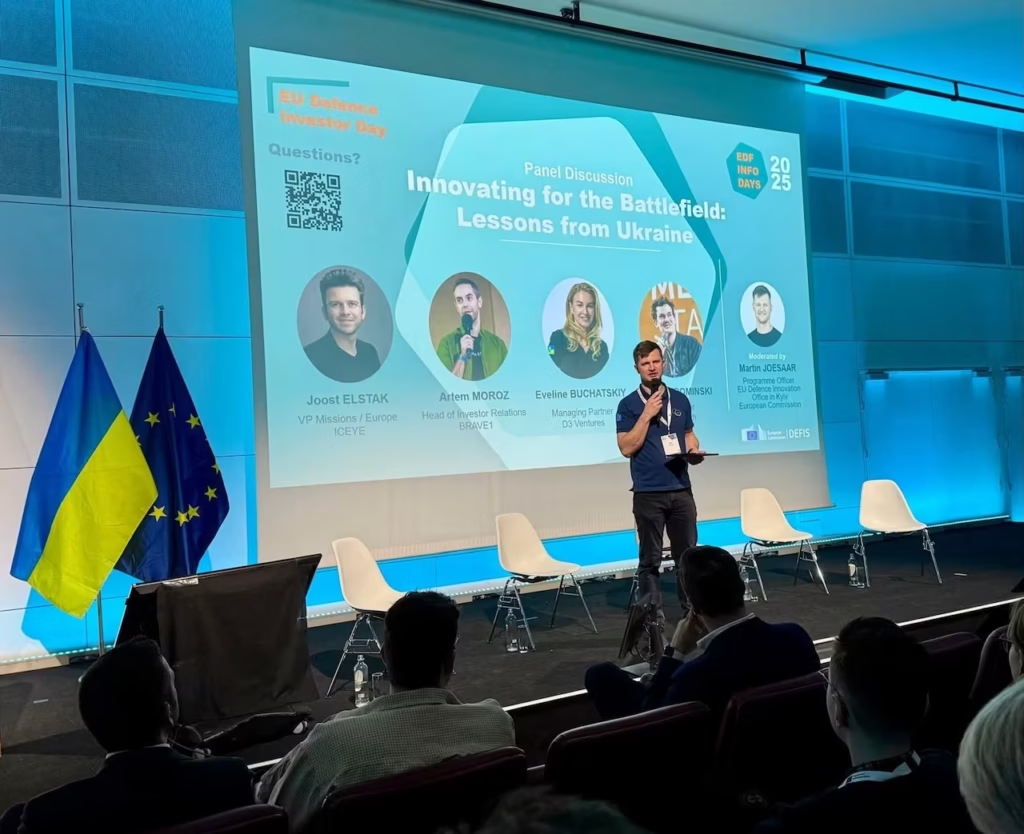
“The pace of innovation is the most important among what we have today. 180 days is the time you have to develop a solution and start scaling it up. After that, the enemy most probably has a counter-measure,” said Artem Moroz, Head of Investor Relations at BRAVE1.
Moroz also cautioned against battlefield naïveté: “Your solution cannot be considered working until you test it in real-life conditions. 90% of the solutions we see fail when they get to the battlefield. EDF is therefore about results.”
Himera Tech co-founder Mykhailo Rudominskyi reinforced this, noting how battlefield standards have evolved: “Now it is probably harder than 2022. Back then, whatever you could get to the frontline was taken. Now, nobody wants to waste time. If [the Armed Forces of Ukraine] see it might work, they might test it.”
As Europe continues to accelerate its defence agenda, Ukrainian innovators are more than contributors — they are battle-hardened catalysts for change. For those ready to navigate the Brussels bureaucracy and deliver results, the EDF holds not just funding, but a framework for meaningful impact.
By mastering the complexities of EDF participation, Ukrainian defence tech leaders can help shape the future of European security — and secure their place within it.
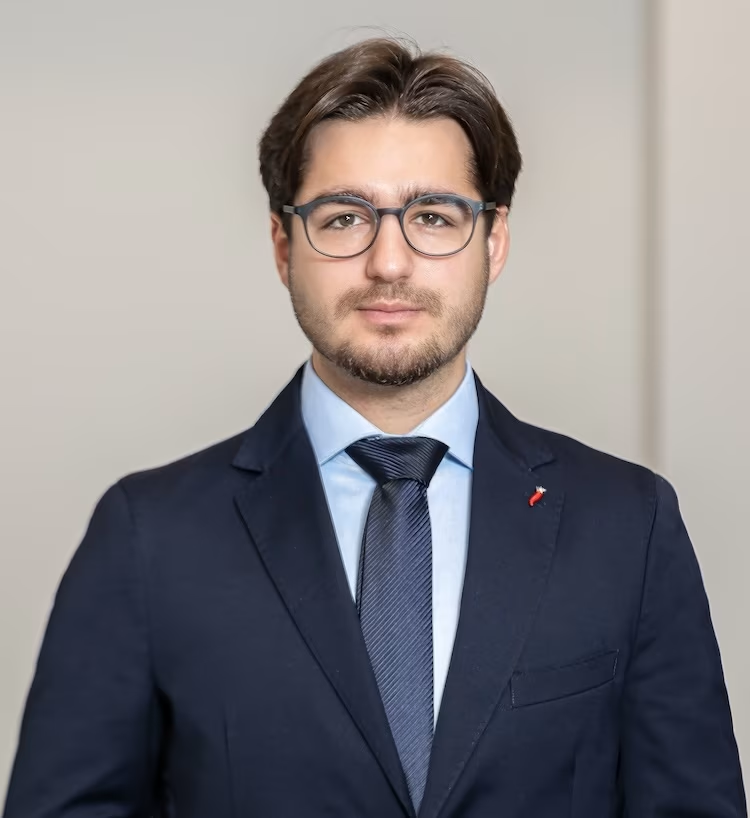
Viktor Kharyton
Viktor Kharyton is a columnist at Defender Media, who writes about Ukrainian defence tech at the intersection with European and international affairs, strategic communications and AI. Viktor consults for organizations spanning defence and security, energy, agriculture, and healthcare sectors
By submitting this form, you give Defender Media consent to the processing of personal data.
Надсилаючи цю форму, ви надаєте Defender Media згоду на обробку персональних даних.
Latest news
1
Volodymyr Zinovskyi has replaced TAF Industries founder Oleksandr Yakovenko as the company’s CEO
2

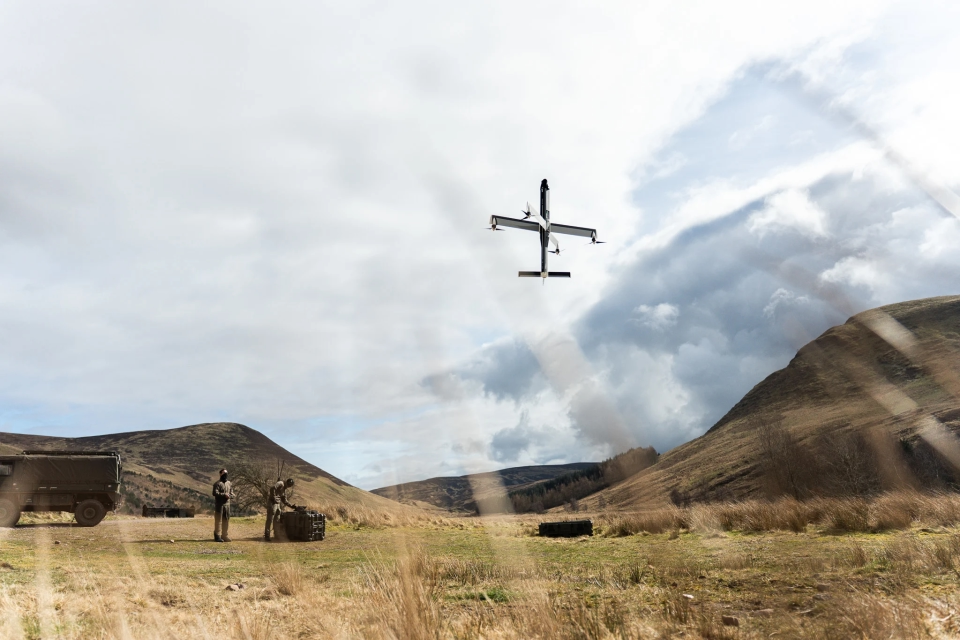
Skyeton unveils a version of Raybird UAV with a hydrogen-powered electric motor
3
The Ukrainian Council of Defence Industry launches the UCDI Investor Club. Its first project is a Ukrainian defence tech dealbook
4
Ukrainian CHUMA fibre-optic drones debut on Brave1 Market — carry up to 4 kg
5