Piranha Tech launches city-defence system against small strike and reconnaissance drones
Details and photos from the presentation of new products by Ukrainian EW developers
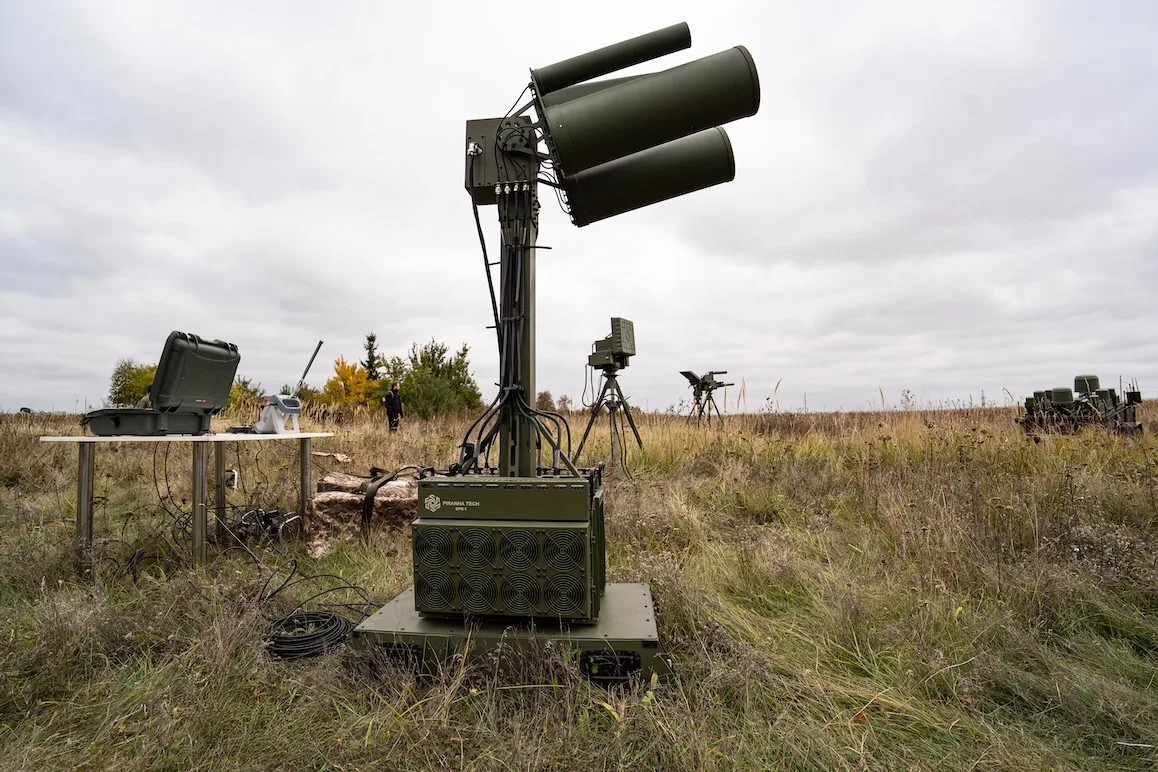
Image source: Piranha Tech
Ukrainian defence tech company Piranha Tech has unveiled an updated range of electronic warfare systems and software solutions designed to protect large areas from small strike and reconnaissance drones. Defender Media shares details and photos from the presentation.
“We’re presenting a group of products that create an ecosystem capable of protecting an entire city. With it, it’s possible to build first and second rings of EW defence around a city,” explained Anatolii Khrapchynskyi, Deputy Director of Piranha Tech, during the presentation.
The company notes that EW systems alone do not guarantee the destruction of enemy drones. Therefore, Piranha Tech is developing networked scenarios where EW interacts with radars, early-warning systems, and command posts. This approach enables wider area coverage, better sector coordination, and faster response to emerging threats, the company says.
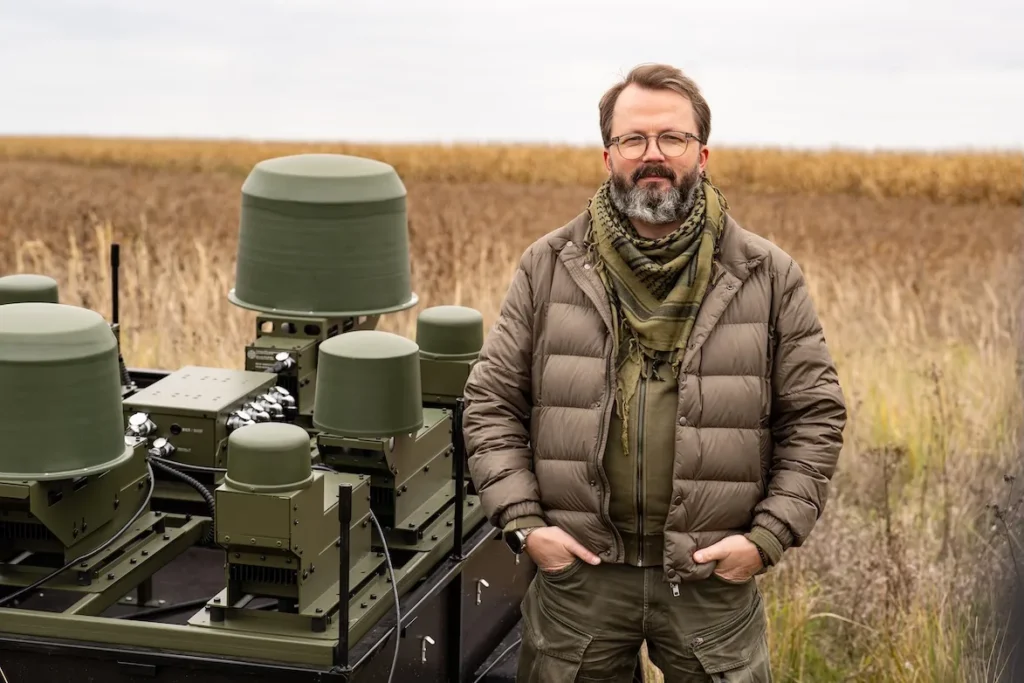
The key novelty of the presentation was the Sky Defender system, which integrates radars, detection modules, dome-based solutions, and remote jamming units. Piranha Tech’s Head of Commercial Department, Mykhailo Ruzhynskyi, explained that all components are synchronised via a command post and remotely controlled from the operator’s console.
According to Ruzhynskyi, the software is fairly straightforward. The main radar defines directions and distributes zones of responsibility between devices. When an enemy UAV enters a zone, the system automatically calculates the effective ranges and response algorithms for each element—detection, jamming, or interception. The software is scalable, assigning operator roles (for instance, an interceptor operator controls only their module, while an EW operator works on their panel), yet all roles are integrated into a unified control system. “The system can already cover vast territories, including the entire territory of Ukraine,” Ruzhynskyi noted.
Currently, the company is working on adding an AI-based simulation feature that will detect configuration errors when deploying protection systems.
Ruzhynskyi also explained that beyond the large-scale platform, the company offers smaller, individual programs such as Ground Control for interceptors and War Jammer for EW coordination. These tools are designed to operate in setups of any size: the company has already tested integration of 20–30 units and connected up to fifty devices working from a single command post in various modes.
He added that the systems support remote power activation, generator operation in hazardous areas, data storage on servers, and individual software profiles for each device. Custom detection and control modules can also be developed upon request.
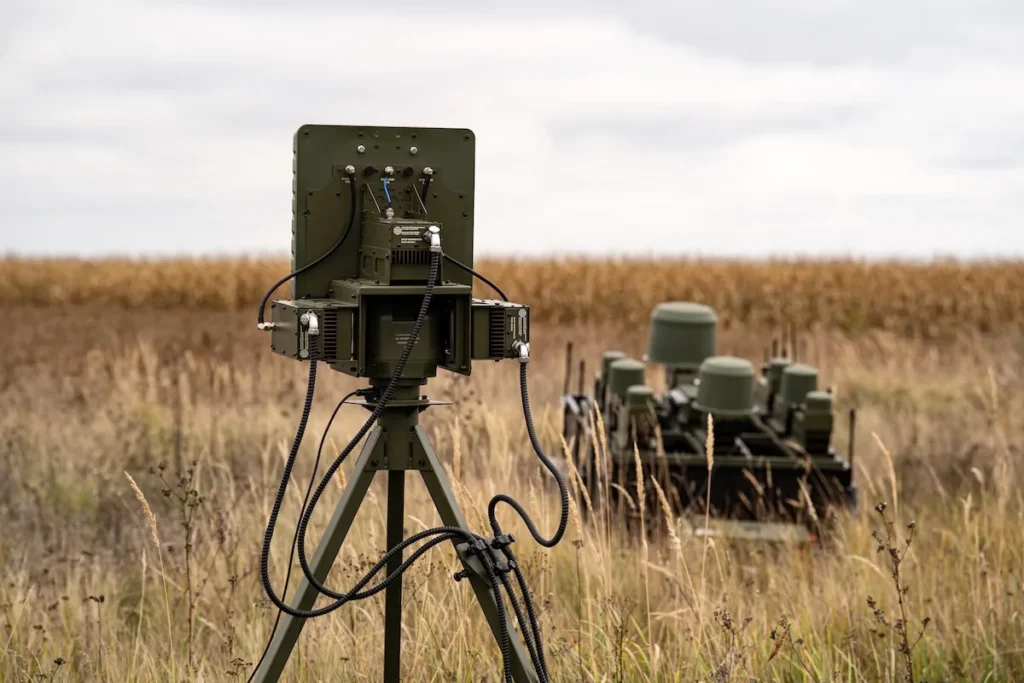
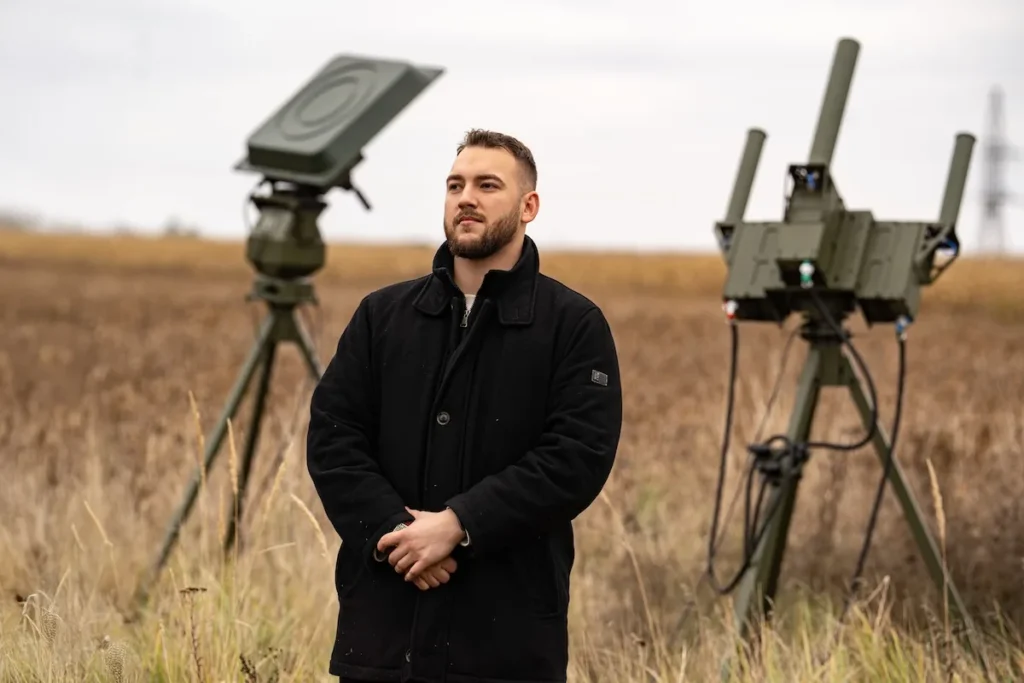
Piranha Tech also showcased its updated range of EW systems—both directional and dome-based. These include the SPR system, the DF-M mobile countermeasure complex, and the T system.
During the demonstration, EW units engaged Mavic and FPV drones, showcasing the full operational cycle: the system detects a drone’s video frequency, automatically activates jamming, and transmits the status to the operator’s console.
According to Ruzhynskyi, the jamming power in the demonstrated configurations can reach up to 200 W per channel, while detection modules operate across a wide analogue range—from 300 to 7000. The FPV video reception screen is positioned near the operator’s console, while antennas can be deployed at safer distances, connected to the control system via Ethernet cable.
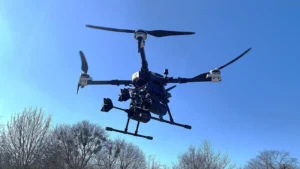
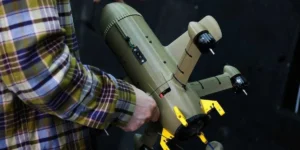
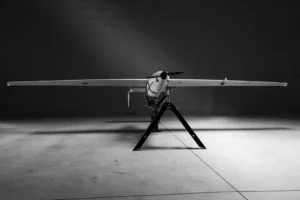
In late September, Defender Media reported that Piranha Tech is entering the UAV market, presenting two interceptor drones – Hunter and Riki.
By submitting this form, you give Defender Media consent to the processing of personal data.
Надсилаючи цю форму, ви надаєте Defender Media згоду на обробку персональних даних.
Latest news
1

Volodymyr Zinovskyi has replaced TAF Industries founder Oleksandr Yakovenko as the company’s CEO
2
Skyeton unveils a version of Raybird UAV with a hydrogen-powered electric motor
3
The Ukrainian Council of Defence Industry launches the UCDI Investor Club. Its first project is a Ukrainian defence tech dealbook
4
Ukrainian CHUMA fibre-optic drones debut on Brave1 Market — carry up to 4 kg
5